Before the Incas: The Stone Citadel of Tiwanaku
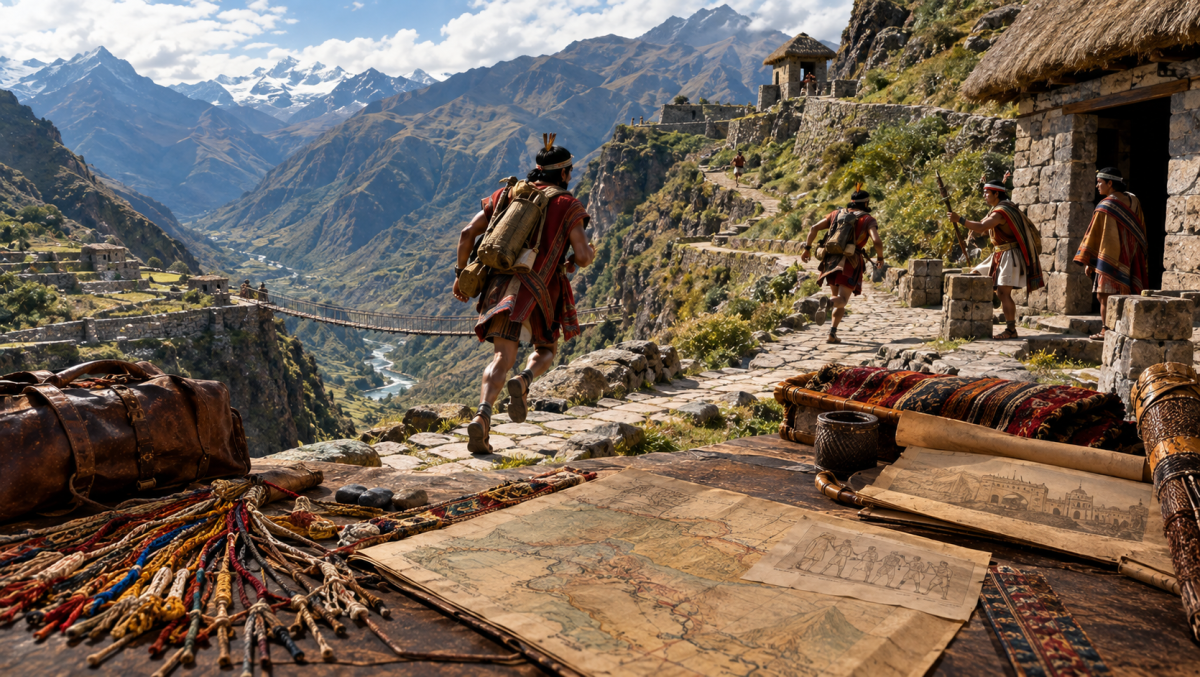
When studying the rich tapestry of global history, it is a common phenomenon for one magnificent empire to overshadow its predecessors. In the Middle East, the grand Islamic caliphates often dominate the historical imagination, sometimes eclipsing the incredible achievements of the ancient Sumerians, Akkadians, or Nabataeans who laid the foundational stones of civilization in the region. A remarkably similar dynamic exists in South America. When the world thinks of ancient Andean civilizations, the mind immediately turns to the Inca Empire and the mountain citadel of Machu Picchu. Yet, centuries before the first Inca emperor ever took the throne, a towering, highly advanced civilization dominated the high-altitude plains of the Andes. Located near the southern shores of Lake Titicaca in modern-day Bolivia, the ancient city of Tiwanaku stands as a monumental testament to a precursor empire that shaped the cultural, architectural, and spiritual destiny of a continent.
A Metropolis in the Clouds
To understand the sheer magnitude of Tiwanaku’s achievement, one must first understand its geography. The city is situated on the Altiplano, a sweeping Andean plateau that sits at an astonishing elevation of over 12,500 feet (3,800 meters) above sea level. At this altitude, the air is thin, the nights are freezing, and the environment is notoriously unforgiving. Yet, despite these harsh conditions, Tiwanaku blossomed into a thriving metropolis.
Between 500 and 1000 CE, at the peak of its golden age, the city was home to an estimated 20,000 to 40,000 inhabitants. It was not merely a ceremonial center, but a bustling urban hub featuring monumental stone pyramids, expansive sunken courtyards, and complex residential neighborhoods. Much like the great oasis cities of the Arabian Peninsula, Tiwanaku became a vital nexus of culture and trade, drawing people, goods, and ideas from across the vast Andean region.
Master Stonemasons of the Andes
The architectural legacy of Tiwanaku is defined by its megalithic stonework, which rivals some of the greatest ancient engineering feats in the world, evoking comparisons to the colossal stone blocks of Baalbek in Lebanon. The builders of Tiwanaku quarried massive blocks of andesite and red sandstone—some weighing over 130 tons—and transported them across the lake and rolling plains without the use of wheels or draft animals.
Their stone-cutting precision remains a subject of intense admiration and study. In the nearby associated site of Pumapunku, the stone blocks are cut with such razor-sharp, geometric perfection that they resemble modern machine-milled concrete. The architects utilized a highly sophisticated system of interlocking stones and metal I-shaped cramps (often poured with molten copper or bronze) to hold the massive blocks together. This innovative technique provided the structures with incredible resilience against the frequent, devastating earthquakes that plague the Andean region.
The Gateway of the Sun
The most famous and enduring symbol of this ancient city is the Inti Punku, or the Gateway of the Sun. Carved entirely from a single, massive block of andesite weighing approximately 10 tons, this solitary archway is a masterpiece of pre-Columbian art and astronomical science.
The face of the gateway is adorned with intricate, deeply etched bas-relief carvings. At its center stands a central figure widely believed to be the "Staff God," a supreme creator deity who is often identified as Viracocha in later Andean mythology. The deity is surrounded by 48 winged effigies—some with human faces and others with the heads of condors—all kneeling in reverence. Beyond its religious significance, researchers believe the Gateway of the Sun functioned as a highly accurate astronomical calendar. The precise positioning of the carvings helped the priests and agricultural planners track the solar year, solstices, and equinoxes, which was essential for survival in an environment where the planting season was incredibly short.
Conquering the Climate: The Genius of Suka Kollus
In traditional Arab culture, the ability to harness and manage water in a desert environment is a hallmark of a great and wise civilization. The people of Tiwanaku faced a similar existential challenge: how to feed tens of thousands of people on a freezing, arid plateau. Their solution was an ingenious system of raised-field agriculture known as suka kollus.
This system involved creating elevated planting mounds separated by shallow, water-filled canals. During the day, the intense high-altitude sun would heat the water in the canals. At night, when temperatures plummeted below freezing, the water slowly released this stored heat, creating a warm microclimate that acted as a protective thermal blanket over the crops. Furthermore, the canals were stocked with fish, and the resulting nutrient-rich sludge at the bottom was dredged up and used as organic fertilizer. This brilliant closed-loop agricultural system allowed Tiwanaku to produce massive surpluses of potatoes and quinoa, providing the economic foundation needed to build their stone empire.
A Peaceful Expansion and the Llama Caravans
Unlike many ancient empires that expanded strictly through military conquest and bloodshed, archaeological evidence suggests that Tiwanaku projected its power primarily through economic dominance, religious prestige, and cultural influence. They established vast trade networks that reached from the Pacific coast of modern-day Chile to the humid jungles of the Amazon basin.
The lifeblood of this trade network was the llama. Much like the camel is deeply respected in the Arab world as the "ship of the desert," the llama was the irreplaceable ship of the Andes. Massive caravans of llamas, capable of carrying heavy loads across treacherous mountain passes, transported valuable goods such as obsidian, turquoise, marine shells, and coca leaves. This vibrant trade integrated diverse regional cultures under the overarching spiritual and economic umbrella of Tiwanaku.
The Fading of an Empire
Despite its brilliance, the empire of Tiwanaku eventually succumbed to forces beyond its control. Around 1000 CE, the Andean region experienced a drastic and prolonged climate shift. Decades of severe drought caused the water levels of Lake Titicaca to drop significantly, completely disabling the suka kollus agricultural system. Without the ability to produce food, the massive urban center could no longer sustain its population. The centralized authority collapsed, and the people dispersed into smaller, decentralized settlements across the Altiplano.
Conclusion
When the Incas rose to power centuries later, they discovered the abandoned, colossal stone ruins of Tiwanaku. They were so awestruck by the sheer scale and precision of the architecture that they incorporated the site into their own imperial mythology, claiming it was the sacred birthplace of humanity where their creator god first breathed life into the world. Today, Tiwanaku stands proudly as a UNESCO World Heritage site. It serves as a profound reminder that greatness is not solely defined by the empires that are remembered most loudly, but by the foundational civilizations that dared to build metropolises in the clouds, proving that human ingenuity can flourish in even the most challenging environments on Earth.