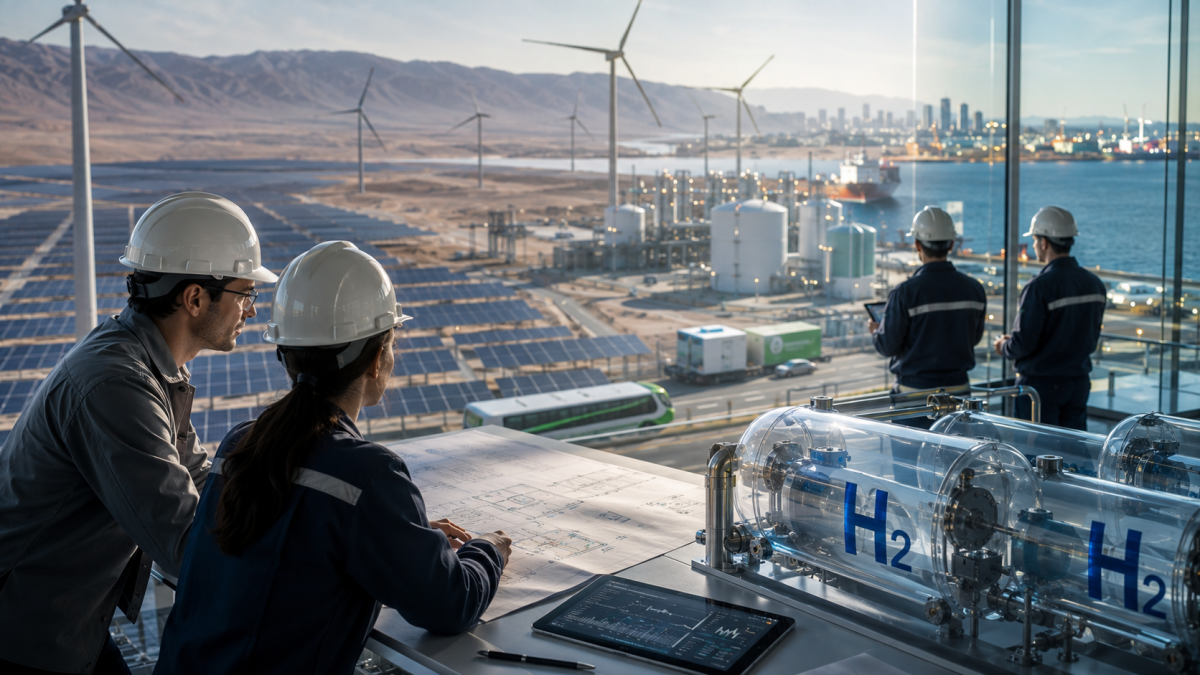
The Green Hydrogen Gold Rush: Why Chile and Brazil are the New Energy Superpowers
For the past century, global geopolitical power was heavily dictated by a geographic lottery: the presence of subterranean fossil fuels. The nations that controlled the flow of oil and natural gas inherently controlled the global economy. However, as the world accelerates its desperate pivot toward decarbonization in 2026, the foundational metrics of energy supremacy are undergoing a radical realignment. The new global currency is no longer crude oil; it is green hydrogen. In this unprecedented transition, the geographic lottery has been redrawn, and the ultimate victors are not located in the Middle East or Eastern Europe. Driven by an unparalleled abundance of solar radiation and fierce coastal winds, Chile and Brazil are rapidly ascending as the undisputed energy superpowers of the new green economy.
Decoding the Green Hydrogen Phenomenon
To understand the magnitude of this geopolitical shift, it is essential to define what makes green hydrogen so revolutionary. Hydrogen is the most abundant element in the universe and carries immense energy potential, but it rarely exists freely in nature; it must be separated from other elements, most commonly water (H2O).
Historically, this separation process relied on burning fossil fuels, resulting in "grey" or "blue" hydrogen, which still released carbon into the atmosphere. Green hydrogen entirely breaks this cycle. It utilizes the process of electrolysis—passing an electric current through water to separate the hydrogen and oxygen atoms—powered exclusively by renewable energy sources like wind or solar. The result is a highly versatile, zero-emission fuel capable of decarbonizing heavy industries that cannot simply be plugged into an electrical grid, such as maritime shipping, aviation, steel manufacturing, and heavy-duty logistics.
Chile: The Laboratory of the Extremes
Chile’s ascension as a green hydrogen titan is a masterclass in leveraging extreme geography. The country’s topography is uniquely perfectly suited for generating the massive amounts of cheap, renewable electricity required to make electrolysis economically viable. In the far north, the Atacama Desert boasts the highest levels of solar radiation on the planet, allowing for immensely efficient photovoltaic generation. Conversely, in the deep south, the Magallanes region of Patagonia experiences some of the strongest, most consistent onshore winds in the world.
The Chilean government recognized this unparalleled strategic advantage early on, launching an aggressive National Green Hydrogen Strategy with a singular, audacious goal: to produce the cheapest green hydrogen on earth by 2030. To achieve this, Chile has opened its doors to massive foreign direct investment, partnering with European and Asian energy conglomerates to build sprawling electrolysis plants and specialized export terminals. The country is not merely looking to fuel its own domestic mining operations; it is explicitly building an infrastructure designed to export liquid green ammonia (the most efficient carrier for hydrogen) across the Pacific and the Atlantic.
Brazil: The Giant Awakes
While Chile leverages its geographic extremes, Brazil enters the green hydrogen arena with the sheer, undeniable force of scale and an already sophisticated industrial base. Brazil possesses one of the cleanest energy matrices globally, with the vast majority of its domestic electricity already generated by robust hydroelectric networks. However, the true engine of Brazil's green hydrogen ambitions lies along its northeastern coastline.
States like Ceará and Rio Grande do Norte are blessed with relentless, high-capacity trade winds that blow consistently year-round, ideal for massive offshore and onshore wind farms. The crown jewel of this burgeoning empire is the Port of Pecém in Ceará. Operating as an advanced industrial hub and Free Trade Zone, Pecém has secured billions of dollars in memorandums of understanding from international energy giants to develop one of the largest green hydrogen production and export hubs in the Americas. Because Brazil already possesses deep expertise in complex agribusiness, chemical engineering, and deep-water offshore drilling, the country is uniquely equipped to scale up green hydrogen infrastructure faster than almost any other emerging market.
The European Connection: Redrawing Global Trade Routes
The driving force behind this Latin American gold rush is the immense, urgent demand emanating from the Global North, particularly the European Union. Following severe geopolitical shocks to its energy security earlier in the decade, Europe has mandated a rapid, structural divorce from imported fossil fuels. However, the European continent simply does not possess the landmass or the optimal weather conditions to produce enough renewable energy to meet its own heavy industrial demands.
Consequently, entirely new trans-oceanic trade routes are being forged. Massive partnerships are being cemented between Latin American producers and major European logistical hubs, most notably the Port of Rotterdam in the Netherlands, which is positioning itself as the primary gateway for green hydrogen entering the European market. Ships carrying millions of tons of Brazilian and Chilean green ammonia will soon traverse the Atlantic, effectively replacing the oil tankers of the 20th century and permanently intertwining the economic destinies of Europe and South America.
Navigating the Bottlenecks: Capital, Water, and Infrastructure
Despite the overwhelming optimism, the path to green hydrogen supremacy is heavily laden with formidable structural challenges. The primary hurdle is the staggering capital expenditure required. Building gigawatt-scale wind and solar farms, constructing cutting-edge electrolyzer facilities, and retrofitting deep-water ports requires hundreds of billions of dollars in sustained, long-term financing.
Furthermore, the electrolysis process is incredibly water-intensive. In regions like the Atacama Desert, which is already the driest non-polar desert on earth, utilizing scarce freshwater reserves for energy production is ecologically and politically impossible. Therefore, the green hydrogen industry must concurrently build massive, renewable-powered desalination plants to process seawater, adding a significant layer of technical complexity and cost to the overall production chain. Finally, domestic regulatory frameworks must be carefully managed to ensure that this energy boom benefits the local populations and respects indigenous territories, avoiding the extractive, exploitative models of the past.
Conclusion
The dawn of the green hydrogen era represents one of the most profound economic and environmental pivots in modern history. The global reliance on concentrated fossil fuel reserves is slowly being replaced by an reliance on the inexhaustible forces of sun and wind. In this new geopolitical reality, Chile and Brazil are no longer categorized merely as emerging economies heavily dependent on the export of raw, unprocessed commodities. Through visionary policy, massive infrastructural investment, and geographic serendipity, they are establishing themselves at the absolute vanguard of the energy transition. As the massive electrolyzers in Patagonia and Ceará power up, the Latin American giants are actively writing the first chapter of the post-carbon world, securing their positions as the indispensable energy superpowers of the future.