Peru is one of the cradles of civilization, with human settlements dating back to 14,000 BCE. Archaeological evidence from Lauricocha and Toquepala includes cave paintings depicting hunting scenes. By 4000 BCE, inhabitants domesticated llamas and guinea pigs and cultivated potatoes, maize, and cotton. By 3000 BCE, ceremonial temples were built along the coast, such as in Caral, the oldest civilization in the Americas.
During the Initial Period (2500-1200 BCE), stepped temples and circular plazas emerged, as seen in Sechín and Kotosh. Later, the Chavín culture (1000-300 BCE) expanded, known for its feline deity, represented in the Lanzón Monolithic and Raimondi Stela. Meanwhile, along the central coast, the Paracas culture (700 BCE) became famous for its intricate textiles and burial traditions.
In the early centuries CE, after Chavín’s decline, various regional chiefdoms emerged. The Mochica (100-800 CE) stood out for their realistic ceramic art and monumental pyramids like Huaca del Sol and Huaca de la Luna. Later, the Wari (550-1200 CE) formed the first Andean empire, inheriting elements from Tiahuanaco and laying the foundations for the Inca Empire (Tahuantinsuyo) through extensive road networks and administrative systems. The decline of Wari led to the rise of the Chimú, who built Chan Chan, the world’s largest adobe city, and the Chachapoyas, known for Kuélap, an impressive mountain fortress.
The Rise and Fall of the Inca Empire
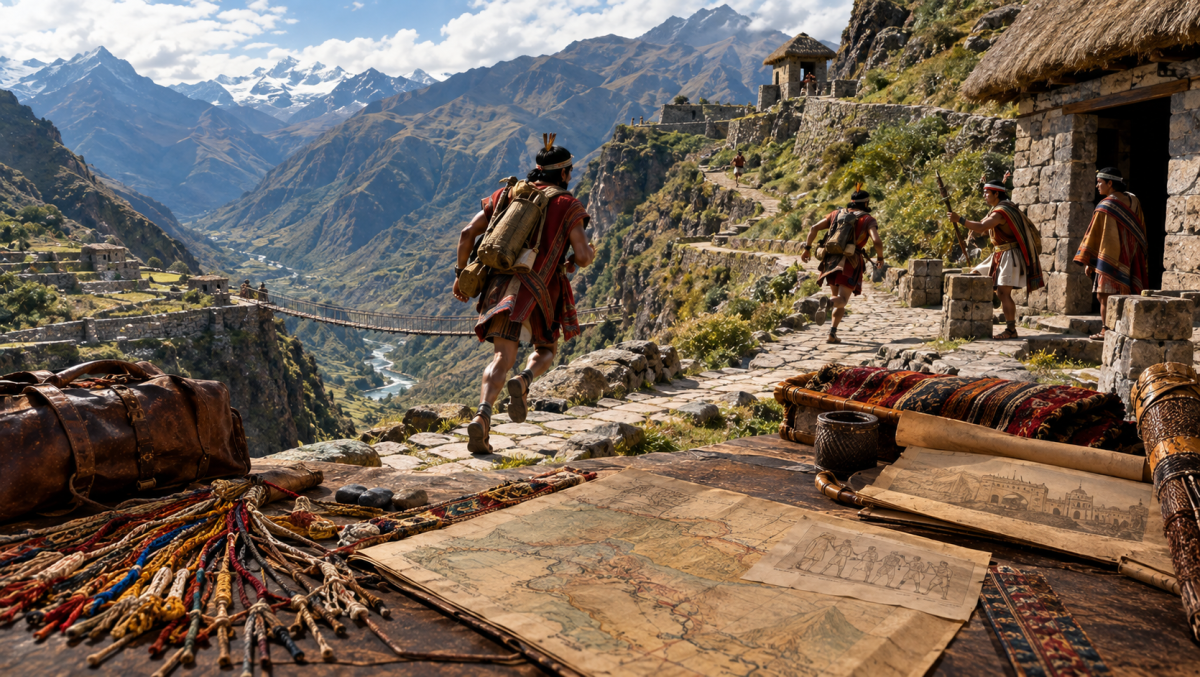
The Incas, originating from Cusco, began expanding in the 15th century under Pachacútec, who transformed their kingdom into the vast Tahuantinsuyo, ruling from Ecuador to Chile. They improved administration, expanded agriculture with terracing, and built an extensive road system. However, after the death of Huayna Cápac, his sons Atahualpa and Huáscar engaged in a civil war that weakened the empire just before the arrival of the Spanish.
In 1532, Francisco Pizarro landed in Peru and captured Atahualpa in Cajamarca. Despite receiving a colossal ransom in gold and silver, the Spanish executed him in 1533. The conquest triggered a social and demographic crisis, reducing the indigenous population from 10 million to just 600,000 within a century due to disease and exploitation.
The Viceroyalty and the Struggle for Independence
In 1535, Pizarro founded Lima as the capital of the Viceroyalty of Peru, which remained the center of Spanish rule in South America for over 200 years. However, the exploitation of indigenous people through the encomienda system led to growing resistance. In 1780, Túpac Amaru II led an indigenous rebellion, which was brutally suppressed.
In 1820, General José de San Martín landed on the coast and declared independence in 1821. However, royalist forces remained strong until 1824, when Simón Bolívar and Antonio José de Sucre decisively defeated the Spanish at the Battles of Junín and Ayacucho, securing full independence.
Republic and Political Instability
After independence, Peru faced over 20 government changes in two decades, with conflicts among military caudillos. Stability arrived with Ramón Castilla (1845-1863), who abolished slavery and modernized the country through revenues from the guano trade. However, in 1879, Peru entered the War of the Pacific against Chile, losing Tarapacá and Arica in 1883.
At the end of the 19th century, Peru developed a national identity, influenced by the Indigenismo movement, promoted by intellectuals such as Ricardo Palma and José Carlos Mariátegui. In 1924, Víctor Raúl Haya de la Torre founded the APRA party, advocating for social justice and economic independence.
Dictatorships and Internal Conflict in the 20th Century
The 20th century was marked by coups and authoritarian regimes. In 1968, Juan Velasco Alvarado led a military government, nationalizing industries and implementing land reforms. However, his policies led to economic decline, and he was replaced in 1975.
In 1980, Peru returned to democracy with Fernando Belaúnde Terry, but that same year, Shining Path (Sendero Luminoso), a Maoist guerrilla movement led by Abimael Guzmán, began a violent insurgency.
In 1990, Alberto Fujimori became president, implementing an economic shock plan. In 1992, he dissolved Congress and captured Guzmán, weakening Shining Path. However, his government was marred by corruption and human rights violations. In 2000, he fled to Japan after a corruption scandal, was extradited in 2007, and sentenced for crimes against humanity.
The 21st Century: Growth and Crisis
The new millennium brought economic stability but also political scandals. Alejandro Toledo (2001-2006), the first Quechua-origin president, faced corruption issues. Alan García returned to power in 2006, achieving economic stability but facing protests over Amazonian resource exploitation.
In 2011, Ollanta Humala promoted social inclusion, but his popularity declined due to conflicts with indigenous communities. In 2016, Pedro Pablo Kuczynski won the presidency but resigned in 2018 after a corruption scandal.
Since then, Peru has faced significant political instability, with multiple presidential changes. Despite this, it remains one of Latin America’s fastest-growing economies, though challenges persist in corruption, inequality, and social conflicts.