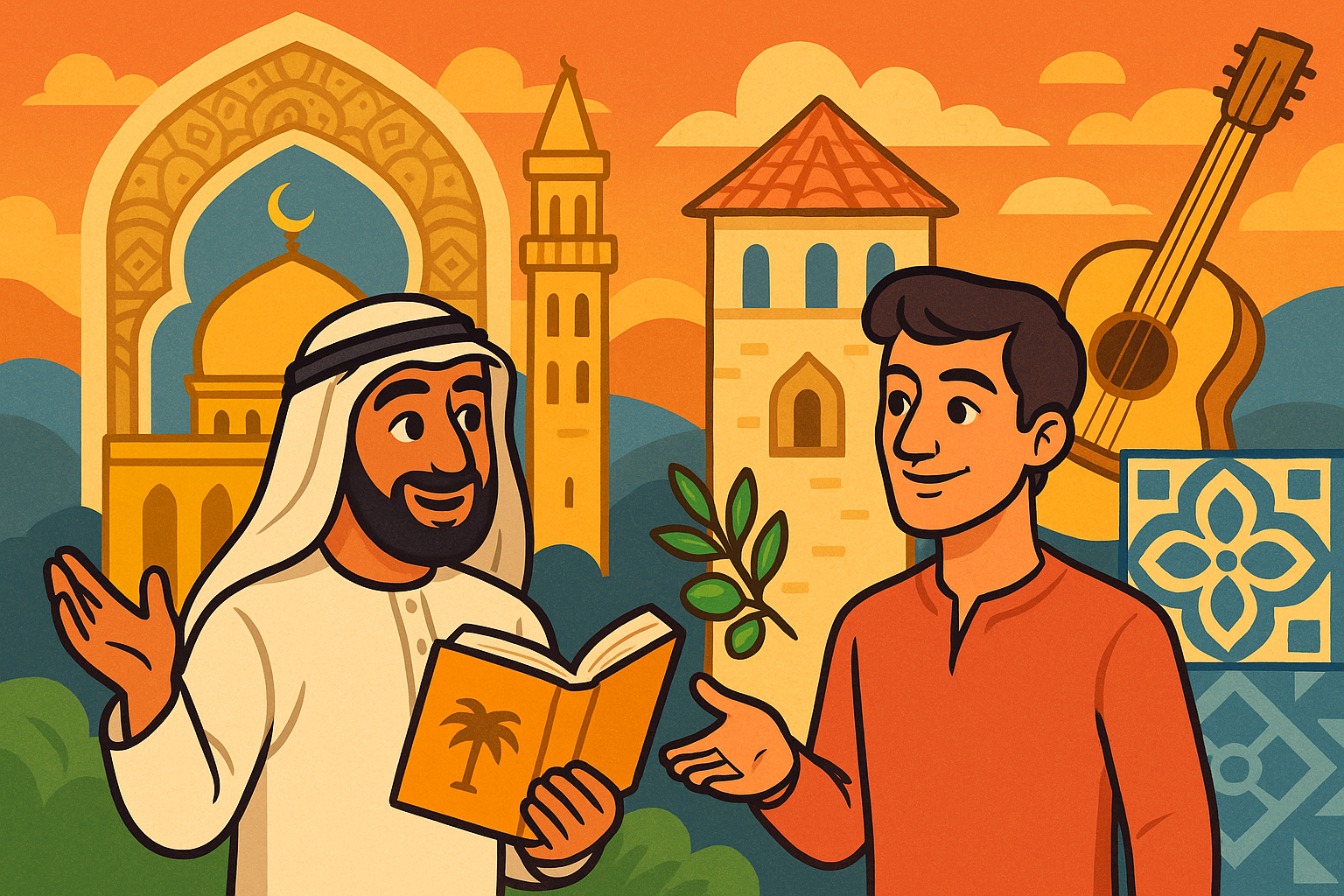
The Arab and Spanish cultures are characterized by a long and complex history of religious interaction, leading to the exchange of values, beliefs, and rituals. This exchange embodies the coexistence of various religions, particularly Islam, Christianity, and Judaism, which have played a pivotal role in shaping the cultural and religious identities of both peoples. In this article, we explore the shared religious traditions between Arab and Spanish cultures and how they have contributed to fostering mutual understanding.
The Influence of Islam
Islam has had a profound impact on Spanish culture since the Islamic conquest in the eighth century. During the period of Al-Andalus, Muslims established a rich civilization that offered immense contributions in philosophy, science, and the arts. Not only were mosques built, but schools, libraries, and research centers, such as the one in Toledo, also played a crucial role in the transmission of knowledge. Spanish communities adopted many Islamic traditions, such as Ramadan celebrations and Eid al-Adha, highlighting how these customs became part of the local culture.
The Influence of Christianity
After the end of Islamic rule in Spain, the influence of Christianity continued to shape the Spanish identity. The Catholic Church played a prominent role in social and political life. However, the ties to the Islamic heritage were not severed. This is evident in Spanish architecture, where many Catholic churches incorporate elements of Islamic architecture, such as arches and decorations. The Cathedral of Córdoba is a remarkable example of this interaction.
The Jewish Heritage
In addition to Islam and Christianity, Jews also played an important role in shaping Spanish culture. Jewish communities thrived in Al-Andalus, contributing to sciences, philosophy, and literature. Jewish philosophers like Maimonides enriched both Arab and Spanish philosophical thought. Many Spanish customs and traditions carry Jewish influences, reflecting the religious and cultural diversity of the country.
Spiritual Traditions
The Arab and Spanish cultures share many spiritual values, such as the importance of family, hospitality, and generosity. Social and religious occasions in both cultures showcase the spirit of cooperation and community. Religious celebrations, such as Eid al-Fitr and Christmas, serve as opportunities for family and community bonding, strengthening human connections.
Celebrations and Rituals
Celebrations and rituals are fundamental parts of the cultural and religious identity of both peoples. Festivals like the Feria de Abril in Spain, which reflect popular traditions, are celebrated alongside Islamic festivities, symbolizing religious diversity. These events represent opportunities for dialogue between different religions and for promoting mutual understanding.
Conclusion
The shared religious traditions between Arab and Spanish cultures illustrate how cultural and religious interaction can contribute to the formation of multiple identities. By valuing these traditions, we can foster dialogue among different cultures and religions, contributing to the building of a more understanding and tolerant society. Exploring these religious ties reinforces individuals' ability to transcend cultural and religious boundaries, opening doors to a deeper understanding of our shared humanity.