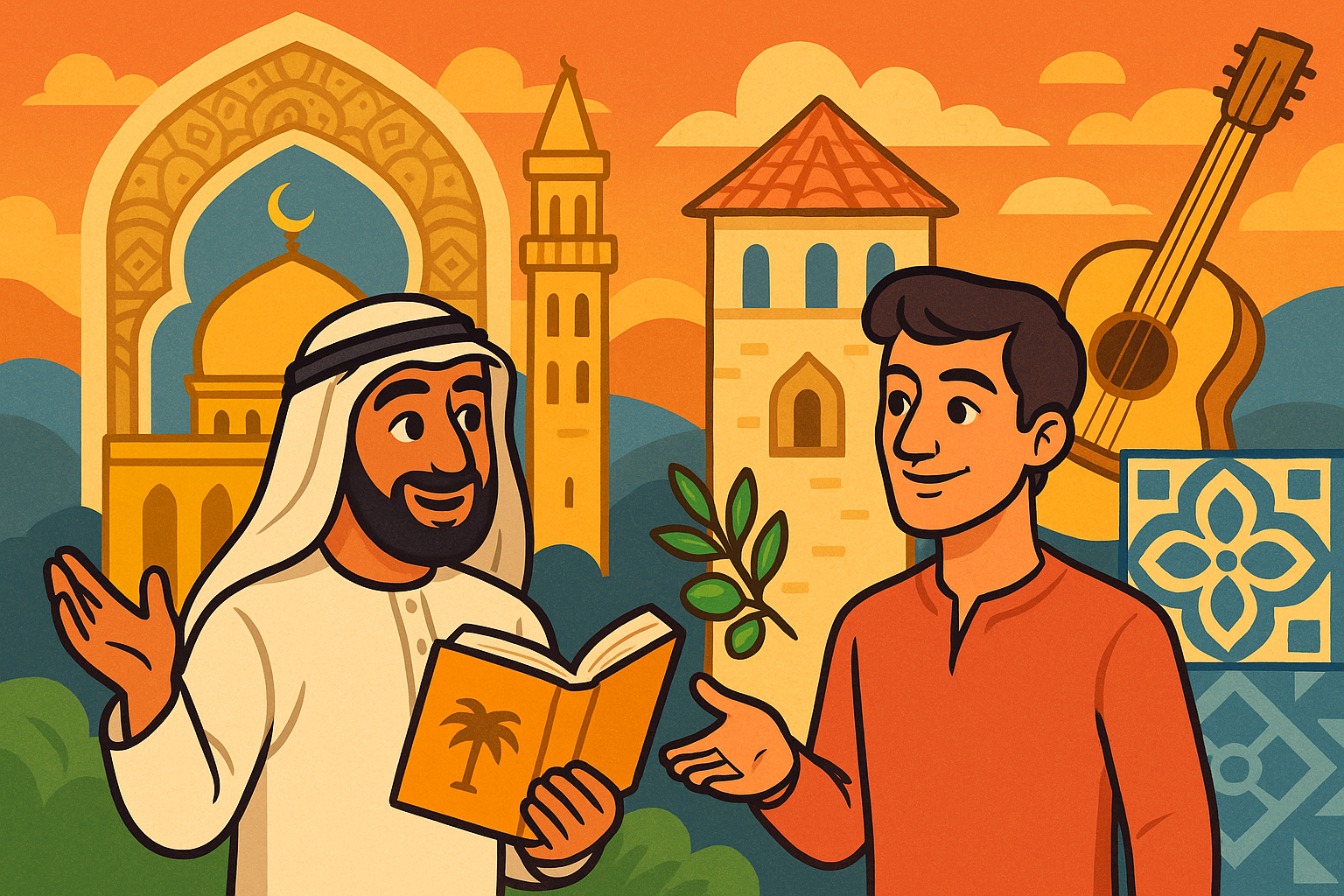
Introduction: Al-Andalus as a Melting Pot for Human and Cultural Interaction Al-Andalus was never merely a geographical region that witnessed political and military successions; it was a radiant beacon of civilization and a unique melting pot where diverse cultures, religions, and ethnicities seamlessly merged. Arabic literature is considered one of the most profound sources that shaped and influenced Spanish literature, especially during that golden era which witnessed an unprecedented intellectual and cultural exchange in medieval history. Through their prolific works, Arab writers and thinkers shed light on philosophical, human, and aesthetic issues that continue to resonate in global literature today. In this article, we explore the multifaceted dimensions of Arabic literature's impact on Spanish literature, highlighting the key milestones, writers, and literary works that paved the way for this extraordinary cultural exchange.
The Golden Age of Translation: From Toledo to Europe During the period of Islamic rule, Andalusian cities like Córdoba, Seville, Granada, and Toledo became vital cultural hubs, bringing together Arab, Christian, and Jewish scholars in an environment of intellectual tolerance. The defining moment in this communication was the launch of the great translation movement, specifically in the "Toledo School of Translators," patronized by King Alfonso X (Alfonso the Wise). Through this school, the foundational Arabic books in literature, philosophy, science, and medicine were translated into Latin and the emerging Castilian language. These translations were not merely the transfer of texts; they served as a robust cultural bridge through which profound ideas, innovative literary styles, and expansive imagination crossed into the Spanish and European minds, ultimately paving the way for the Renaissance.
Arabic Poetry: A Revolution in Rhythm and Style Spanish poetry was radically and directly influenced by Arabic literature, specifically through the Andalusian invention of poetic forms liberated from the constraints of traditional classical poetry, most notably the "Muwashshahat" and "Zajal." This new poetic structure broke the rigidity of monorhyme and allowed for a multiplicity of meters and the intertwining of languages, as the Muwashshah often concluded with a "Kharja" (jarcha) written in the local Romance language (Mozarabic).
Spanish poets, particularly the wandering troubadours, adopted this musical and poetic form and developed it, leading to the emergence of authentic Spanish poetic structures such as the "Villancico." This influence did not stop in the Middle Ages but extended to reach the great poets of Spain in the modern era. Perhaps the most prominent example is the great Spanish poet Federico García Lorca, who was deeply saturated with the spirit and heritage of Al-Andalus. In his works, especially in "Diván del Tamarit" and "Romancero Gitano" (Gypsy Ballads), Lorca utilized numerous symbols, techniques, and rhetorical imagery derived directly from Arabic Sufi and courtly love poetry, imbuing his verses with a unique melancholy and depth.
Arabic Prose: The Early Roots of the Modern Novel The cross-cultural influence was not limited to metered poetry; it extended powerfully to leave an indelible mark on the art of Spanish prose. Major Arabic narrative works, such as "One Thousand and One Nights" (The Arabian Nights) and "Kalila wa Dimna," are considered among the most important sources that shaped the narrative imagination in the Iberian Peninsula. The book "Kalila wa Dimna" (translated by order of Alfonso X) introduced the Spanish to the art of allegorical fables told through the voices of animals.
Furthermore, the "frame story" technique (a story from which other stories branch out), which characterized "One Thousand and One Nights," clearly influenced the structure of European narratives. Most importantly, the Arabic art of "Maqamat" significantly influenced the emergence of the picaresque novel in Spain, such as the famous "Lazarillo de Tormes." One cannot discuss Spanish prose without paying homage to Miguel de Cervantes' masterpiece, "Don Quixote," widely considered the first modern European novel. Cervantes employed a highly brilliant narrative technique by claiming that the original manuscript was written in Arabic by a Moorish historian named "Cide Hamete Benengeli," a clear and symbolic acknowledgment of the profound Arabic imprint on the art of Spanish storytelling.
Arab Philosophers and Thinkers: Shaping the Iberian Mind Arab philosophers and thinkers made massive contributions to the enhancement and shaping of intellectual and philosophical literature in both Al-Andalus and Christian Spain. Great names such as Averroes (Ibn Rushd), who reinterpreted Aristotle, Avicenna (Ibn Sina), and the Andalusian Sufi philosopher Muhyiddin Ibn Arabi, left a colossal intellectual legacy that addressed deep existential themes regarding the Creator, epistemology, ethics, and reason.
This legacy permeated the writings of many Spanish thinkers and theologians, who drew inspiration from Arabic literary styles in philosophical discourse, utilizing the literature of epistles and dialogues to seek the truth. This intellectual fusion led to the development of Spanish philosophical literature and the emergence of intellectual currents that embraced rationalism and Sufi contemplation derived from the Andalusian heritage.
Folklore and Language: A Legacy Breathing in Daily Life Far away from the halls of palaces and schools of translators, the greatest impact of Arabic literature lay in its seamless integration into Spanish folklore and daily life. Arabic folktales, wisdom, and proverbs spread and settled deep within the Spanish collective consciousness. Many Spanish fairy tales told to children today contain narrative structures and imaginative elements derived directly from Arab heritage.
This influence is also manifested most beautifully in the Spanish language itself, which absorbed thousands of words with Arabic roots (approximately 4,000 words), especially in the fields of agriculture, architecture, administration, and the arts. Almost every Spanish word beginning with the definite article "Al-" is a living witness to this monumental linguistic and literary integration.
Conclusion The influence of Arabic literature on Spanish literature is not merely a passing chapter in a history book; it is an integral part of the genetic makeup and DNA of both cultures. These complex and beautiful cultural interactions have enriched Spanish literature, granting it rhetorical colors and narrative paths it would not have known without the Arab presence in Al-Andalus. By exploring and documenting these deep literary connections, we can better understand our shared cultural heritage today, and utilize this bright history as a fundamental pillar to promote cultural and civilizational dialogue in our contemporary world, affirming that literature and art remain the most enduring bridges between nations.