Lake Yojoa, Honduras: A Patient Introduction to Birdwatching
Introduction
The most useful first question on a birdwatching walk is often not “What is its name?” but “What is it doing?” A shape on a branch, a movement beside the water or a repeated call can begin a small investigation. Around Honduras’s Lake Yojoa, the pleasure of watching comes from learning to connect those clues with a varied landscape. For Arab travellers and readers planning a family nature experience, the lake region offers a good reason to slow the pace, observe carefully and let local knowledge guide the day.
Think of a region, not one viewpoint
The official Honduras Travel birding guide describes the Lake Yojoa area as combining wetlands and cloud forest. It also identifies Los Naranjos and Cerro Azul Meámbar among places associated with bird observation. [1] This is a useful starting point for planning because “a visit to the lake” can mean several different experiences. A waterside stop and a forest walk should not be treated as interchangeable windows onto exactly the same surroundings.
Begin by choosing the kind of outing the group can enjoy. A short session beside an accessible viewpoint may suit beginners better than a long route with frequent transfers. A second outing can explore a contrasting habitat. Ask the site or guide about current access, walking surfaces, resting opportunities and transport before deciding. Distances on a map do not describe the time needed to watch, and a crowded itinerary can leave little room for the patient attention that makes birdwatching worthwhile.
Local knowledge makes the landscape readable
Aves Honduras documents the Clorofonias birdwatching club in the Yojoa basin, with activities linked to conservation, nature tourism, scientific data and environmental education. [2] The presence of a local learning community is part of the region’s interest. Birdwatching is more than a visitor arriving with equipment. It also depends on people who return to the same places, notice changes and develop a detailed understanding of where and how to look.
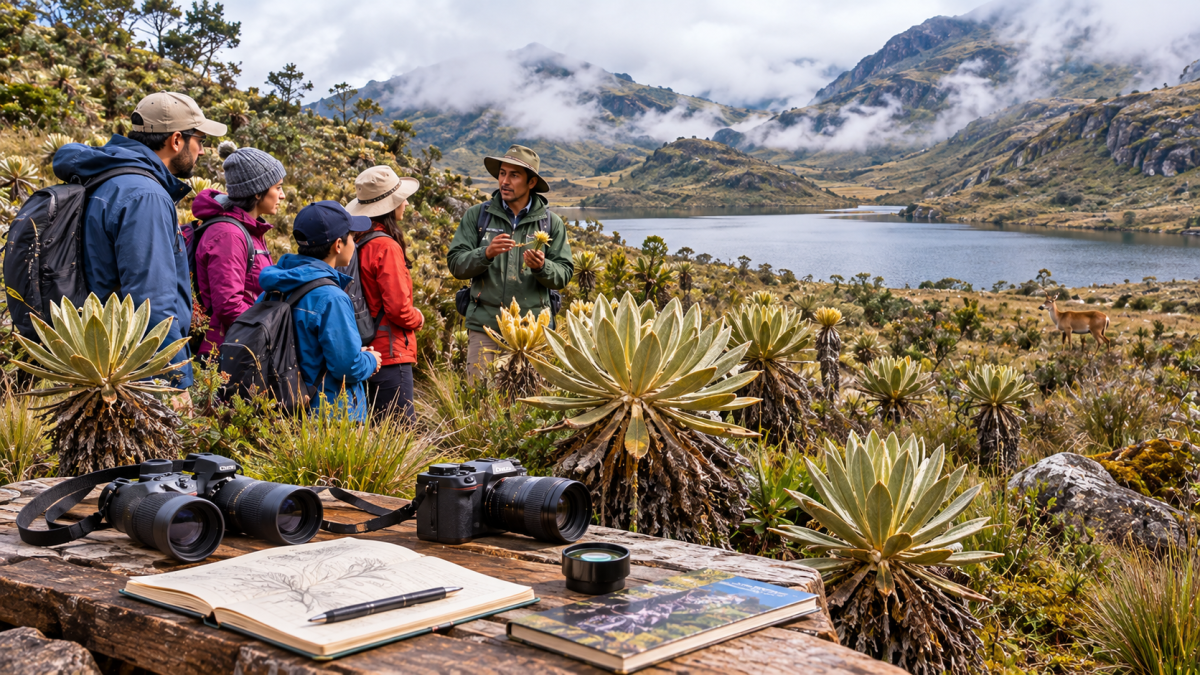
When arranging a guided outing, explain the group’s level and language needs. A beginner may prefer help with binoculars and a few well-observed birds rather than a rapid sequence of names. Ask whether the route can include time for questions and a short review afterwards. If travelling with children, request a realistic pace. A guide’s value can lie in explaining a small movement that everyone would otherwise overlook, not only in locating a long list of sought-after species.
Learn to describe before identifying
At the first stop, practise locating a bird without immediately raising binoculars. Choose an obvious landmark such as a fork in a tree, find the bird with the unaided eye, and then bring the binoculars up while keeping that position in mind. If it disappears, lower the binoculars and look again. A few unhurried attempts usually make a shared outing more comfortable than repeatedly pointing towards an unspecified patch of leaves.
Once the bird is in view, build a description. Compare its size with something familiar, notice the outline of the bill and tail, and record where it sits or moves. Avoid relying entirely on one flash of colour. Backlighting, distance and movement can make a brief impression misleading. A notebook can hold an uncertain observation without forcing it into a definite name. The point is to preserve what was actually seen so that a guide or reference can help afterwards.
Use digital records as clues
eBird’s Explore tools provide regional information and shared birding locations, with options to examine recent visits and illustrated checklists. [3] Before an outing, these can help a reader understand what others have recorded in an area. They are especially useful for forming questions for a guide. A previous record, however, describes an observation, not an appointment with a bird. It should never become a promise attached to a booking or a measure of whether the day has succeeded.
Read the date and the location of a report together. A record from another habitat or an earlier season may have limited relevance to the planned stop. It is also worth asking whether a familiar place name covers a large area. Instead of trying to collect every species mentioned online, choose a modest learning goal: describe a waterside bird clearly, distinguish two silhouettes, or follow one feeding behaviour without interruption.
Make a record that remains useful
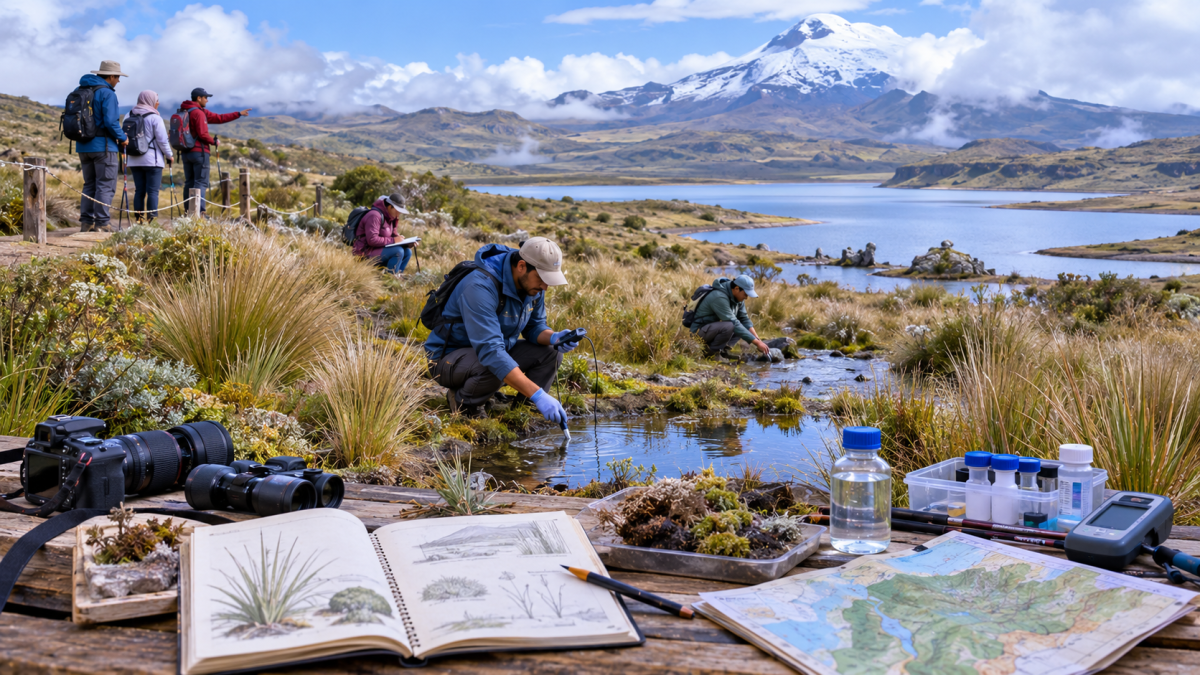
eBird’s guidance on documenting sightings emphasizes observation conditions and supporting details, especially when identification is difficult. [4] For a personal notebook, a simple entry can include date, place, habitat, approximate duration and the features noticed. Separate a direct observation from an interpretation. “Long bill seen in profile” is a different statement from “probably the bird shown in the guidebook.” Keeping both, with uncertainty made clear, is more useful than presenting a guess as settled.
Aves Honduras’s field report from its 2023 Yojoa gathering describes outings at the lake and in the surrounding region. [5] Such reports show how a day in the field can become shared knowledge when observations are recorded. A beginner need not imitate an expert survey. A short, honest record of a few birds can become the foundation for better observation on the next walk.
Let the bird set the distance
The American Birding Association’s ethics code calls for minimizing disturbance to birds and habitat, and for consideration towards other people using the same space. [6] On a family outing, translate that principle into a quiet, predictable pace. Stay on the agreed route, allow others a clear view and give a bird room to continue its activity. A close photograph is optional; an undisturbed encounter is the more valuable outcome.
For a first visit, choose listening over playing calls from a phone. Follow site instructions and the guide’s advice, especially around sensitive places. Keep the camera from dictating every movement. If the bird moves away, let the moment end and review what was learned. This approach leaves time to notice the setting as well: the height of a perch, the shelter of vegetation and the difference between an open edge and a shaded trail.
Conclusion
Lake Yojoa is best approached as a landscape to learn from, supported by local observers and thoughtful preparation. The lasting reward may be a precise description, a newly understood behaviour or the ability to find a bird in the binoculars without help. Those modest achievements make the next outing richer. A good introduction to birdwatching therefore ends with greater attention, rather than merely a longer list of names.