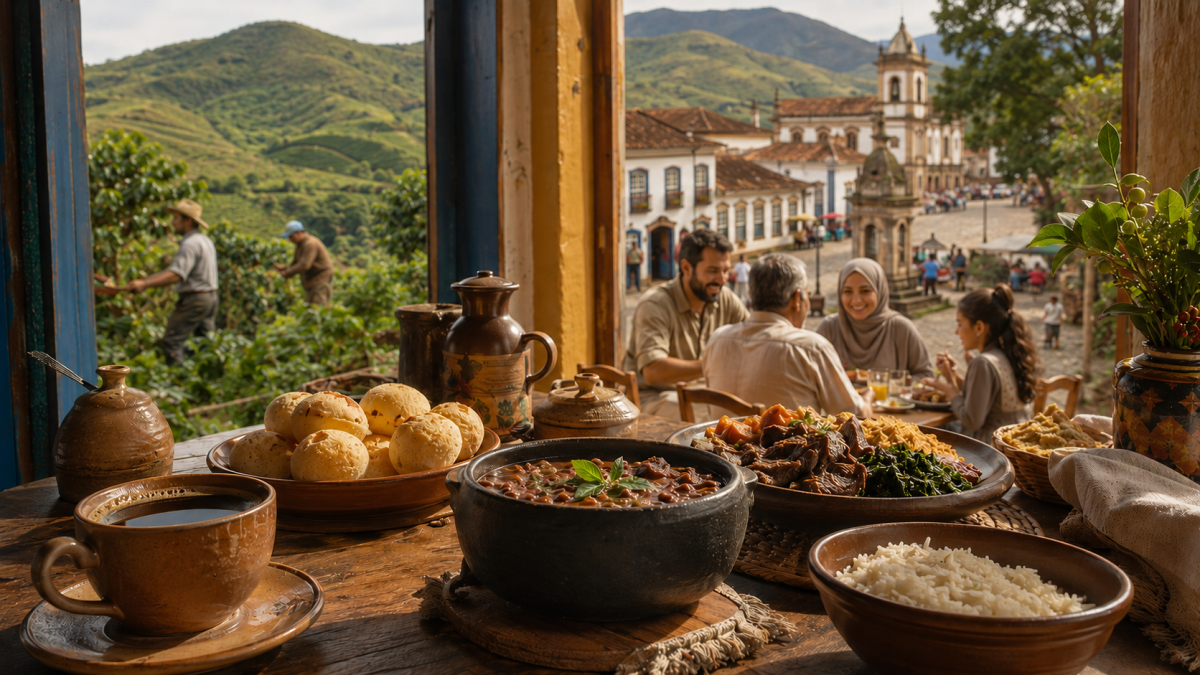
The New Rio: Discovering the Culinary Heartland of Minas Gerais, Brazil
When international travelers envision a vacation in Brazil, the vibrant, bustling beaches of Rio de Janeiro or the dense, mysterious jungles of the Amazon are usually the first images that dominate their itineraries. However, for Arab travelers seeking a destination that deeply resonates with their cultural values—specifically a profound emphasis on family, exceptional hospitality, safety, and rich, halal-friendly culinary traditions—the true soul of Brazil lies far away from the crowded coastlines. Nestled securely behind majestic coastal mountain ranges is the vast, rolling state of Minas Gerais.
Widely revered by Brazilians themselves as the undisputed culinary and historical heartland of the country, Minas Gerais offers a serene, safe, and culturally profound alternative to the typical, fast-paced tourist hubs. It is a deeply traditional region where the warmth of the local people mirrors the legendary hospitality of the Middle East, offering a vacation experience that is relaxing, culturally enriching, and perfectly suited for families.
The Warmth of "Mineiro" Hospitality
To truly understand the magic of Minas Gerais, one must first understand the Mineiros (the native people of the state). In Arab culture, the concept of Karam (boundless generosity and hospitality) is a foundational pillar of a functioning society. Travelers arriving from the Gulf and the broader Middle East will find a striking, beautiful parallel in the traditional Mineiro way of life.
Mineiros are famous throughout South America for their polite, soft-spoken, and deeply welcoming nature. Their culture is not centered around loud nightlife or crowded beaches, but rather around the home, the family dining table, and the joyful reception of guests. Visitors to this state are rarely treated merely as passing tourists; they are embraced as honored friends. There is a deep respect for elders and a strong emphasis on maintaining close-knit extended family networks. This cultural foundation makes the region an incredibly comfortable, safe, and respectful environment for Arab families traveling abroad, providing peace of mind that is sometimes difficult to find in more chaotic global tourist capitals.
A Shared Passion: The World's Best Coffee
Across the Middle East, coffee is far more than a morning beverage; it is a cornerstone of Arab hospitality, an essential daily ritual of welcome, respect, and deep conversation. In Minas Gerais, you will find a culture that matches this intense passion bean for bean. The state is the largest producer of coffee in Brazil, which in turn stands as the largest coffee producer in the entire world.
However, Minas Gerais is not just about massive agricultural quantity; it is globally recognized for extraordinary, artisanal quality. The high-altitude, nutrient-rich regions, such as the Serra da Mantiqueira and the Cerrado Mineiro, produce some of the finest specialty Arabica beans on the planet. Visitors can arrange private tours of stunning, lush green coffee plantations. Here, families can walk through the fields, learn about the meticulous, sustainable harvesting and roasting processes, and participate in traditional farm-to-cup tastings. The Mineiro ritual of offering a cafezinho (a small, strong cup of freshly brewed coffee) to anyone who walks through the door—often served alongside warm conversation and a gentle smile—will feel deeply familiar, nostalgic, and comforting to Middle Eastern visitors.
Halal-Friendly Culinary Delights
Ask anyone from São Paulo to Bahia where the best food in Brazil is cooked, and the answer will universally be Minas Gerais. For Arab travelers, the local cuisine is a revelation. It offers a wealth of magnificent, naturally halal-friendly options that focus heavily on fresh, farm-to-table ingredients, completely bypassing the processed foods found in major cities.
Pão de Queijo (Cheese Bread): This is the undisputed culinary symbol of Minas Gerais. Made from indigenous cassava flour and local artisan cheese, these warm, chewy, naturally gluten-free cheese rolls are baked fresh in every home and bakery throughout the day. They are the perfect, savory accompaniment to a morning or afternoon coffee.
A Familiar Stew - Frango com Quiabo: A classic, historical Mineiro dish is Frango com Quiabo (Chicken with Okra). Simmered slowly in heavy iron pots with rich tomatoes, onions, garlic, and local herbs, this hearty, comforting stew shares a remarkable culinary DNA with the beloved Middle Eastern dish Bamia. It is typically served over perfectly fluffy white rice and offers a beautiful taste of home in a foreign land.
Premium Beef and the Churrasco Experience: It is a little-known fact that Brazil is the largest exporter of halal-certified meat and poultry in the world. Because of this massive export industry, the domestic infrastructure for high-quality, halal-compliant meat is vast. While in the capital city of Belo Horizonte or the countryside, travelers can safely and easily enjoy the legendary Brazilian barbecue (churrasco) culture. High-end steakhouses focus on world-class, slow-roasted cuts of beef like Picanha (top sirloin cap). By dining at premium establishments or those specifically catering to halal-conscious guests, travelers can enjoy exquisite meats completely free from pork or cross-contamination.
Tropical Juices: In place of the alcoholic beverages common in Western tourism, Minas Gerais boasts an incredible array of fresh, exotic fruit juices (sucos). From fresh passion fruit (maracujá) to cashew fruit (caju) and guava (goiaba), the beverage culture is vibrant, refreshing, and entirely family-friendly.
Sweet Traditions: The Mineiro "Doces"
No meal in a Mineiro home is considered complete without something sweet to finish it, and the region’s confectioners are absolute masters of their craft. The state is famous for its doces (sweets), particularly those made from fresh, farm-sourced milk and local tropical fruits.
The crown jewel of the region is Doce de Leite, a rich, velvety caramel made by slowly simmering pure milk and sugar for hours until it thickens into a golden paste. Another beloved treat is Goiabada, a dense, sweet guava marmalade. In a beautiful display of culinary harmony, Mineiros often serve a thick slice of sweet Goiabada alongside a slice of fresh, slightly salty white cheese—a combination affectionately known across Brazil as Romeu e Julieta (Romeo and Juliet). For travelers with a sweet tooth who are accustomed to the rich, complex desserts of the Middle East, the traditional sweets of Minas will be a delightful and highly addictive discovery.
Colonial Charm and Peaceful Exploration
Beyond the magnificent food and coffee, Minas Gerais is visually stunning and deeply steeped in history. During the 18th century, the region was the center of a massive global gold and diamond rush, the immense wealth of which funded the construction of breathtaking colonial towns tucked into the mountains.
Cities like Ouro Preto, Mariana, and Tiradentes look as though they have been perfectly frozen in time. Their steep cobblestone streets, rolling green hills, and brilliantly preserved Portuguese colonial architecture offer incredibly picturesque and peaceful walking tours. Historically, Portuguese architecture carries subtle Moorish and Islamic design influences originating from the Iberian Peninsula, adding a fascinating layer of hidden history for Arab tourists to discover.
Unlike the crowded, high-energy coastlines of Rio, these mountain towns offer a tranquil, secure, and highly relaxed pace of life. Families can safely wander the streets at night, browse local artisan craft markets, and enjoy the cool, crisp mountain air without the anxiety often associated with navigating major Latin American metropolises.
Nature and Eco-Tourism for the Family
If you are worried that skipping the beach means missing out on nature, Minas Gerais provides an spectacular alternative. The state is famous for its dramatic landscapes, massive waterfalls, and crystal-clear lakes. Regions like the Serra do Cipó offer gentle hiking trails suitable for all ages, leading to stunning natural pools. Meanwhile, the region of Capitólio, often called the "Sea of Minas," features massive freshwater lakes surrounded by towering canyons, where families can rent private pontoon boats for a day of peaceful sailing, swimming, and picnicking on the water.
Conclusion
While the iconic beaches of Rio de Janeiro will always maintain their global appeal, the modern, discerning Arab traveler looking for cultural substance, deep safety, and sensory delight should set their sights inland toward the mountains of Minas Gerais. With its unparalleled, world-class coffee culture, magnificent and comforting halal-friendly cuisine, and a deeply ingrained tradition of family-oriented hospitality, Minas Gerais transcends the typical vacation. It feels less like a foreign tourist destination and much more like a warm, welcoming home away from home.