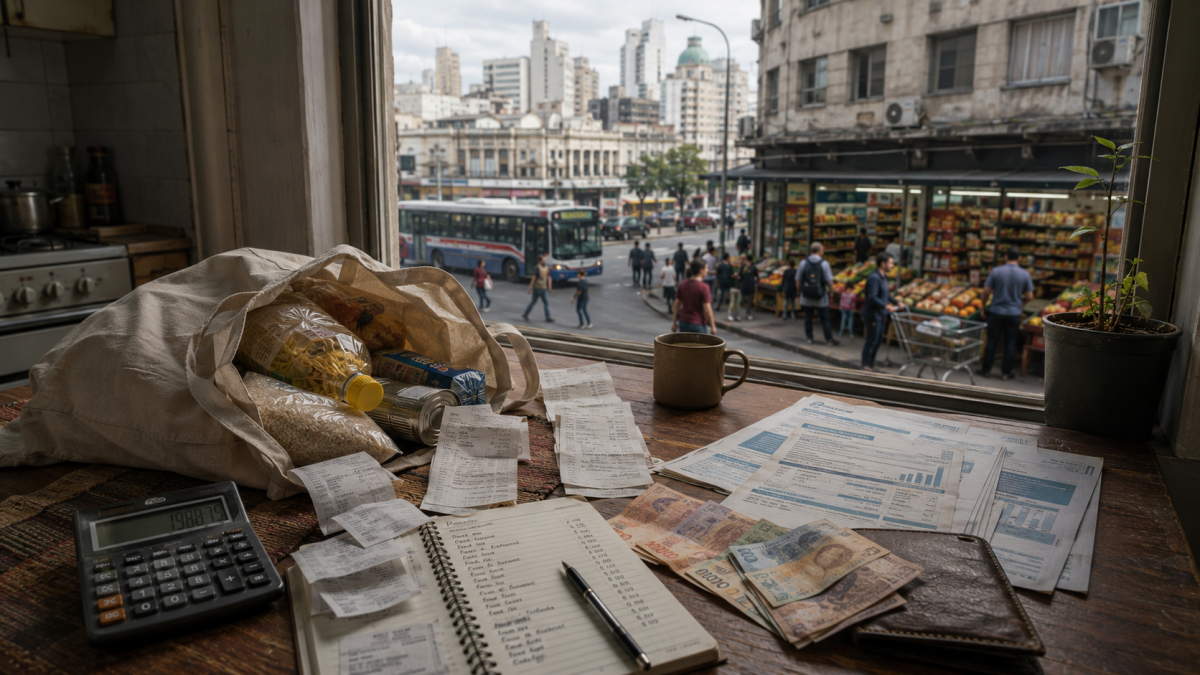
The Human Cost: The Harsh Reality of Living in Argentina’s Economic Crisis
When international financial institutions and foreign investors look at Argentina in 2026, they often point to macroeconomic spreadsheets. They highlight the government’s hard-fought fiscal surpluses, the accumulation of central bank reserves, and the deceleration of inflation from the dizzying, triple-digit peaks of the recent past. However, there is a profound, tragic disconnect between the numbers celebrated on Wall Street and the brutal reality experienced on the streets of Buenos Aires, Rosario, and Córdoba. For the average Argentine citizen, the country’s ongoing economic "stabilization" has come at a devastating, almost unimaginable human cost. To truly understand Argentina today, one must look past the macroeconomic victories and confront the daily, exhausting struggle for survival in an economy that feels virtually impossible to navigate.
The Destruction of the Local Wage
The core of the Argentine nightmare is the absolute destruction of local purchasing power. While the rate of inflation may have slowed by 2026, the damage has already been done. Prices for essential goods—food, medicine, and clothing—have skyrocketed to near-international levels, yet local salaries remain anchored in a decimated currency. The phenomenon known as the "liquidation of wages" has created a massive demographic of the "working poor." Today, holding a formal, full-time job is no longer a guarantee against poverty. Teachers, nurses, and administrative workers frequently find that their monthly salaries barely cover the cost of basic groceries, leaving nothing for rent, utilities, or emergencies. The middle class, once the pride of Argentina and the largest in Latin America, is rapidly vanishing, pushed down the socioeconomic ladder by relentless financial pressure.
The Death of the Asado: A Changing Diet
Perhaps nothing illustrates the harsh reality of the Argentine crisis more vividly than the transformation of the national diet. Argentina is globally renowned for its beef; the weekend asado (barbecue) was not just a meal, but a sacred cultural institution, a right enjoyed by both the rich and the working class. Today, for millions of families, beef has become an unattainable luxury item. Annual per capita beef consumption has plummeted to historic lows. Instead, families have been forced to adopt carb-heavy, nutrient-poor diets to stretch their evaporating pesos. Pasta, rice, and cheap bread have replaced protein. In lower-income neighborhoods, parents routinely skip meals so their children can eat, a heartbreaking reality in a country that produces enough food to feed hundreds of millions of people worldwide.
Austerity and the Utility Shock
The aggressive austerity measures implemented to balance the national budget have struck households with overwhelming force. For decades, Argentines relied on heavily subsidized public services. As the government aggressively slashed these subsidies to achieve a fiscal surplus, the cost of living exploded overnight. Electricity, water, and gas bills have multiplied exponentially, forcing families to make impossible choices between heating their homes in the winter or putting food on the table. Public transportation fares have soared, meaning that for many suburban workers, simply commuting to their jobs consumes a massive, unsustainable percentage of their daily wages.
The Collapse of the Social Safety Net
As the economic noose tightens, the social safety net has frayed to the breaking point. The poverty rate remains staggeringly high, with roughly one-third of the population living below the poverty line, and child poverty statistics painting an even grimmer picture. Soup kitchens and community pantries (comedores populares) across the country are completely overwhelmed. Previously, these charities primarily served the chronically unemployed or destitute; today, they are flooded with formally employed workers, retirees, and entire families who simply cannot make their paychecks last until the end of the month. Homelessness in major urban centers has visibly surged, with families sleeping on mattresses under the glittering awnings of high-end boutiques in the capital.
The Expat Bubble vs. The Local Despair
The harshness of the Argentine reality is exacerbated by the jarring inequality visible in its major cities. Because of the favorable exchange rate, expats, digital nomads, and tourists earning in U.S. Dollars or Euros live in a parallel universe. For a foreigner with foreign currency, Buenos Aires remains a highly affordable playground of world-class dining, luxury apartments, and vibrant nightlife. This creates a deep, silent resentment. Locals earning in pesos are forced to serve in cafes they could never afford to eat in, and they are increasingly priced out of their own neighborhoods as landlords pivot to lucrative short-term tourist rentals priced exclusively in dollars.
The Psychological Exhaustion
Beyond the physical deprivation, the most pervasive element of living in Argentina is the psychological exhaustion. Surviving in a hyper-volatile economy requires constant, draining mental gymnastics. Argentines must be amateur economists just to navigate a trip to the supermarket. They rush to spend their paychecks the moment they arrive, knowing the money will be worth less the following week. There is a deep, collective trauma born from decades of broken promises, wiped-out savings, and systemic instability. Young professionals, seeing no viable path to homeownership or financial security, are leaving the country in droves, creating a massive brain drain as the nation’s brightest minds seek stability in Europe or North America.
Conclusion
While macroeconomic charts may show signs of a slow, painful healing process, the reality on the ground in Argentina is a testament to extreme hardship. Living in Argentina on a local wage is an exercise in extreme resilience, characterized by constant sacrifice, shrinking horizons, and a daily battle against financial ruin. Until the numbers on the economists' spreadsheets translate into real purchasing power and food on the table, the human cost of Argentina's economic crisis will remain one of the great tragedies of the modern Americas.