The Heartbeat of Culture: The Importance of Family in Latin America
To truly understand Latin America, one must look beyond its breathtaking geography, dynamic economies, and complex political histories. The true foundation of the region—the absolute bedrock upon which societies from Mexico to Argentina are built—is the family. In many Western cultures, the social trajectory is heavily geared toward individualism; success is often measured by one's ability to leave the nest, assert independence, and carve out a solitary path. In Latin America, the paradigm is reversed. The individual is understood first and foremost through their connection to the collective family unit. This profound, enduring dedication to kinship is not merely a cultural quirk; it is the fundamental organizing principle of Latin American life.
Understanding 'Familismo'
Sociologists and anthropologists use the term familismo (or familism) to describe this deeply ingrained cultural value. Familismo dictates that the needs, honor, and well-being of the family supersede those of the individual. It is an unwritten social contract characterized by intense feelings of loyalty, solidarity, and reciprocity among relatives.
Under this framework, personal decisions—ranging from what career to pursue, who to marry, or where to live—are rarely made in isolation. They are weighed against how they will impact the broader family. Success is viewed as a collective achievement to be shared, while failure or hardship is a burden to be shouldered collectively. This creates a psychological environment where individuals rarely feel entirely alone, buoyed by the constant presence and unconditional support of their kin.
Beyond the Nuclear Unit: The Power of Extended Kinship
When discussing the importance of family in Latin America, it is crucial to recognize that "family" rarely refers strictly to the nuclear unit of parents and young children. The Latin American family is a sprawling, deeply interconnected network that includes grandparents, aunts, uncles, cousins, and second cousins.
Extended family members are not peripheral figures seen only on major holidays; they are deeply involved in daily life. Multigenerational living arrangements are common and entirely devoid of the stigma sometimes attached to them in the Global North. Grandparents play an active, vital role in raising children, passing down traditions, language, and moral guidance. Even when families do not live under the same roof, they often reside in the same neighborhood or town, ensuring that the physical proximity matches their emotional closeness.
The Institution of Compadrazgo
The Latin American concept of family extends even beyond bloodlines through the powerful cultural institution of compadrazgo (co-parenting or godparenting). Rooted in Catholic traditions of baptism, compadrazgo creates a deeply formalized bond of "fictive kin."
When parents choose godparents (padrinos) for their child, they are not merely selecting a sponsor for a religious ceremony. They are forging a lifelong alliance. The compadres (co-parents) become an extension of the family, expected to provide spiritual guidance, emotional support, and, if necessary, financial assistance to the child. This system brilliantly expands a family's social and economic safety net, weaving the broader community into the tight-knit fabric of the family.
An Economic and Social Safety Net
Historically, many Latin American nations have experienced periods of severe economic volatility and lacked the robust, state-sponsored social welfare programs found in parts of Europe. In the absence of a reliable state safety net, the family became the ultimate mechanism for survival and upward mobility.
If a family member loses a job, experiences a medical emergency, or needs capital to start a small business, the extended family is expected to pool their resources to help. Elder care is almost exclusively handled within the home, as placing aging parents in nursing facilities is often viewed with deep cultural reluctance. The family is the bank, the hospital, the employment agency, and the retirement plan all rolled into one. This economic interdependence continually reinforces the bonds of familismo.
The Gathering of the Clan: Food, Faith, and Sundays
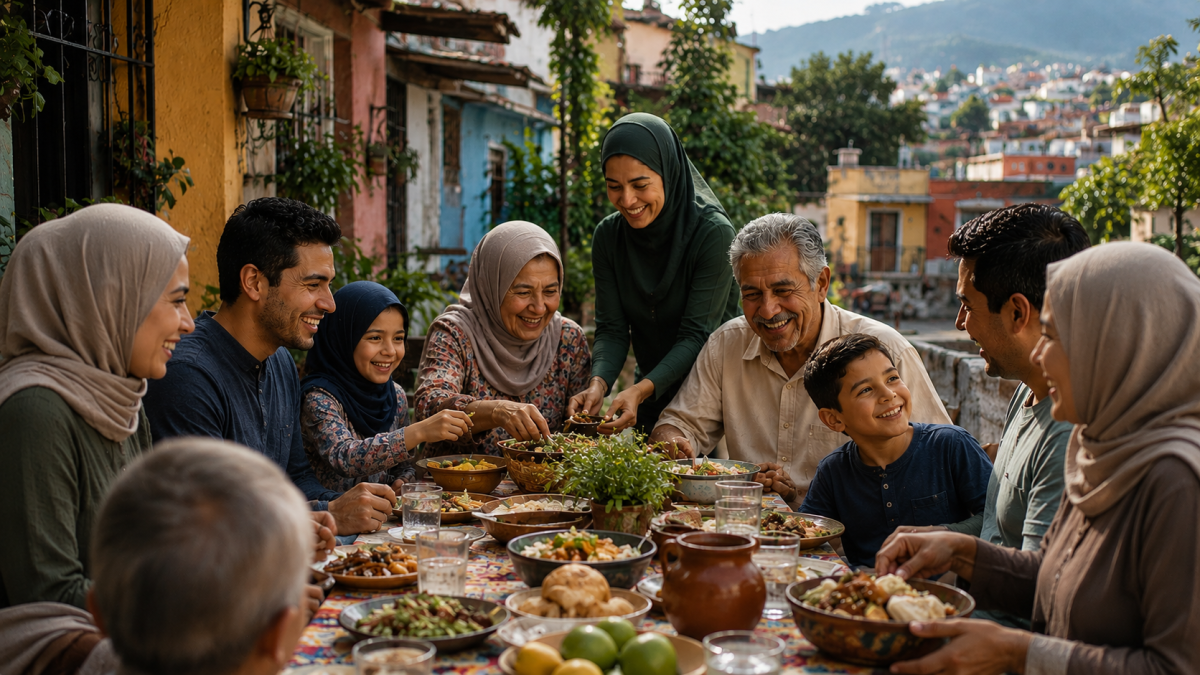
The strength of the Latin American family is continually renewed through the ritual of gathering. Throughout the region, the weekend—particularly Sunday—is fiercely protected as family time. The "Sunday lunch" is a non-negotiable cultural institution, where extended families gather around massive tables to share a meal, argue about politics or football, tell stories, and reconnect.
These gatherings are the physical manifestation of familismo. Whether it is an asado in Argentina, a feijoada in Brazil, or a heavy meal of tamales in Mexico, food serves as the great unifier. Birthdays, weddings, and religious milestones are celebrated with massive, inclusive fiestas. In Latin America, joy is meant to be shared loudly, and grief is meant to be dispersed among many shoulders.
Modernization and the Resilience of Tradition
It is important to acknowledge that the Latin American family is not a static institution. The region is undergoing rapid modernization. Massive urbanization has pulled young people away from rural, ancestral homes and into sprawling megacities. The rising cost of living has led to a significant decrease in birth rates, shrinking the size of the modern nuclear family. Furthermore, the vital and increasing participation of women in the formal workforce has shifted traditional gender roles and domestic dynamics.
However, while the structure of the family is adapting to the 21st century, the spirit of familismo remains incredibly resilient. Technology, particularly the ubiquitous use of WhatsApp family group chats, has simply digitized the traditional kinship network, allowing families separated by cities or international borders to maintain constant, daily contact.
Conclusion
The importance of family as a concept in Latin America cannot be overstated. It is the lens through which individuals view themselves and their place in the world. While the region continues to evolve economically and politically, the deeply rooted values of loyalty, respect, and collective responsibility remain the emotional anchor of society. In a rapidly changing and often unpredictable world, the Latin American family stands as an enduring sanctuary—a testament to the profound strength found in community and the irreplaceable value of coming home.