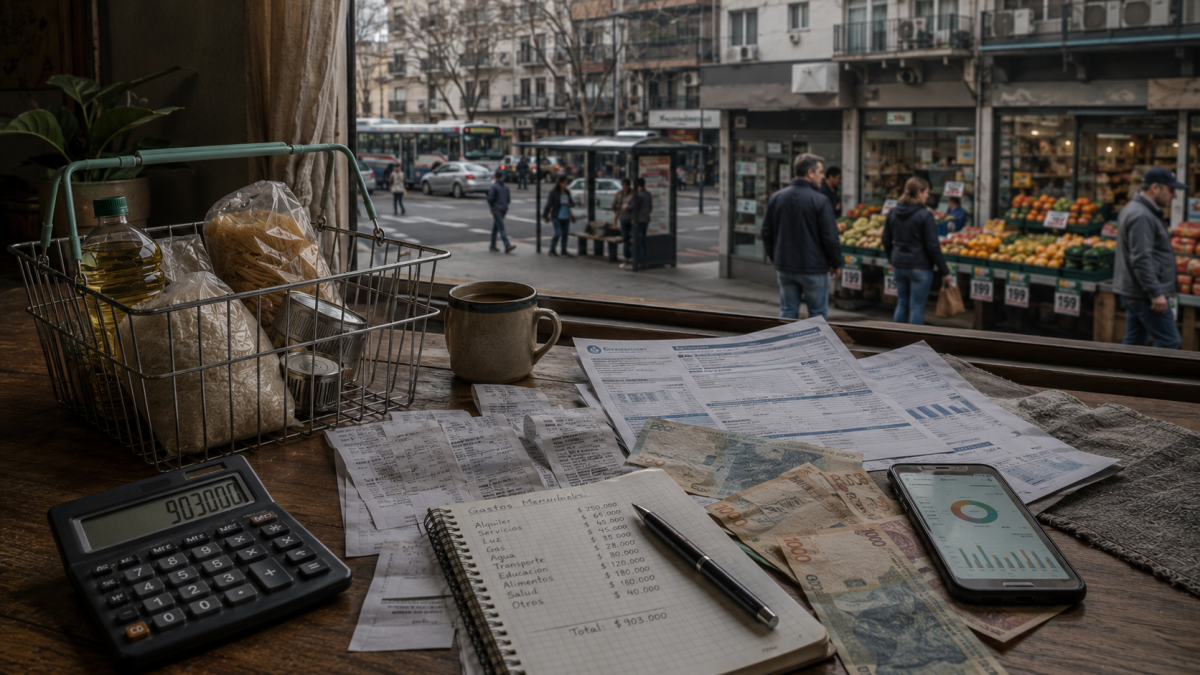
The End of the Bargain: Why Life and Basic Needs in Argentina Have Become So Expensive in 2026
For the better part of the last decade, international media, digital nomads, and travel vloggers painted a singular, highly enticing picture of Argentina: it was a breathtakingly beautiful country where foreign currency made you effectively rich. Armed with U.S. Dollars or Euros, a foreigner could live a life of luxury, dine at world-class steakhouses, and rent beautiful apartments in the heart of Buenos Aires for a fraction of what it would cost in Miami, London, or Madrid. However, this golden era of geographical arbitrage has come to a screeching halt. As expats and prospective immigrants actively debate "Is Moving to Argentina Still Worth it in 2026?", the reality on the ground has shifted dramatically. Today, Argentina has become one of the most expensive countries in Latin America in terms of hard currency, creating a landscape where fulfilling basic everyday needs requires a surprisingly high budget.
The "Inflation in Dollars" Phenomenon
To understand why life in Argentina has become so expensive, one must understand the macroeconomic shifts that culminated in 2026. For years, the country operated with severe currency controls and a massive gap between the official exchange rate and the parallel black-market rate, widely known as the "Blue Dollar." Foreigners and locals with savings simply exchanged their dollars on the parallel market, doubling or tripling their purchasing power instantly.
However, following sweeping economic reforms to stabilize the country, the government aggressively closed this gap. The official and parallel exchange rates converged, but domestic inflation in Argentine pesos continued to rise before eventually slowing down. This created a brutal economic phenomenon known locally as "inflation in dollars." The prices of everyday goods and services shot up, but the dollar no longer stretched to cover them. By mid-2026, data revealed that Argentina’s cost of living in U.S. dollars had surged by over 75% compared to late 2023, surpassing Brazil and making it one of the priciest nations in the region. What used to cost $10 USD a few years ago now routinely costs $25 USD.
Housing: A Market Priced Beyond Local Reach
The most immediate shock for anyone living in Argentina today is the cost of housing. Following the repeal of highly restrictive rental laws, the supply of available apartments surged, but the prices normalized to international standards. In desirable Buenos Aires neighborhoods like Palermo, Recoleta, or Belgrano, a standard one-bedroom apartment routinely rents for $500 to $1,000 USD per month.
While this might seem reasonable to a software developer arriving from San Francisco, it is an astronomical figure within the local economy. The average net monthly salary in Argentina hovers around $700 to $800 USD. Consequently, the basic need for shelter consumes nearly the entirety of a local worker's paycheck. Even in interior cities like Mendoza and Córdoba, rent prices have climbed steadily, forcing families to move further away from urban centers or share increasingly cramped living spaces.
The Utility Shock: Paying the Real Price
For nearly two decades, the Argentine government heavily subsidized basic utilities to keep the population somewhat insulated from economic turmoil. Electricity, natural gas, public transportation, and water were artificially cheap, often costing only a few dollars a month. As part of the 2026 fiscal austerity measures aimed at achieving a national budget surplus, these subsidies were aggressively slashed.
The result has been a violent "utility shock" (tarifazo). Today, a standard 85-square-meter apartment can easily generate a combined monthly utility bill of $120 to $150 USD, particularly during the hot summer months requiring air conditioning or the freezing winters demanding gas heating. Public transport fares, once practically free, have also multiplied, turning the daily commute into a significant financial burden for the working class.
Supermarket Sticker Shock: The Cost of Eating
Argentina was historically the breadbasket of the world, famous for dirt-cheap beef, endless wheat, and affordable dairy. Yet, walking into a supermarket in 2026 tells a different story. Food prices have aligned with, and in some cases exceeded, European averages. A basic liter of milk costs nearly $1.50 USD, a dozen eggs approach $3.00 USD, and the price of a kilogram of local cheese can easily top $10.00 USD.
The high cost of groceries is driven by a combination of high logistical costs, heavy taxation, and corporate concentration in the food supply chain. Furthermore, the cost of eating out—long a staple of the vibrant Argentine social life—has skyrocketed. Recent economic indices show that dining out in Argentina is now roughly 59% more expensive than the Latin American average. A mid-range, three-course meal for two now frequently exceeds $60 to $80 USD.
The Luxury of Clothing and Technology
While food and rent are difficult, acquiring manufactured goods, clothing, and technology borders on the impossible for average earners. Argentina maintains steep protectionist tariffs on imported goods. As a result, the country is consistently one of the most expensive places on earth to buy electronics or branded apparel.
A standard pair of Levi’s jeans costs upwards of $105 USD, while a pair of mid-range Nike running shoes will set a buyer back $125 USD or more. Purchasing a new laptop or smartphone often costs 50% to 100% more than it would in the United States. For locals, buying a car or upgrading a computer requires massive saving efforts or navigating punishingly high-interest credit installments.
Conclusion: A New Financial Reality
The narrative of Argentina as the ultimate cheap paradise is officially dead. While the country retains its unparalleled cultural richness, stunning geography, and vibrant lifestyle, it demands a highly realistic financial approach. In 2026, a single person aiming for a comfortable, middle-class life in Buenos Aires must budget between $1,500 and $2,000 USD per month. For the local population, this new reality is a grueling test of endurance, as they navigate an economy where basic needs—a roof, a warm home, and a full fridge—have morphed into luxury privileges.