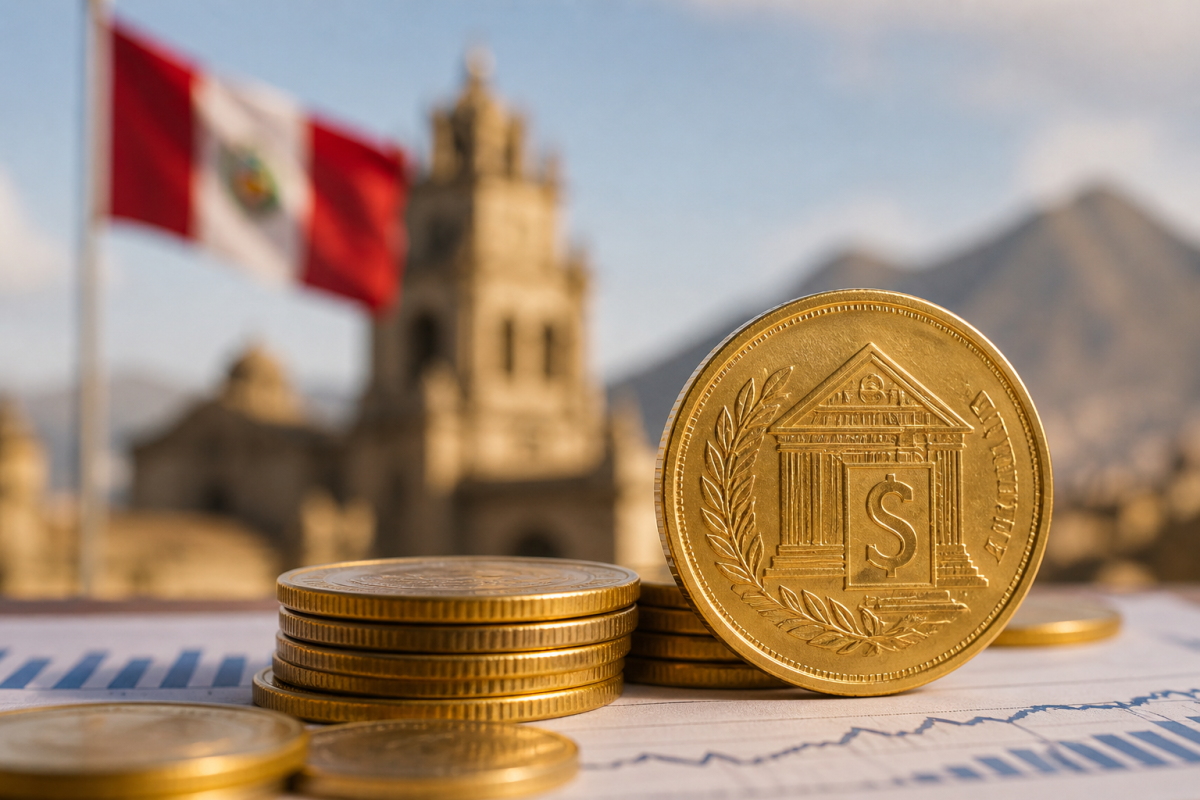
The Strongest Latin Currency in Latin America: The Peruvian Sol’s Economic Miracle
The economic tapestry of Latin America is historically characterized by rapid growth phases interrupted by bouts of severe volatility, hyperinflation, and political instability. Within this context, maintaining a stable fiat currency is a monumental challenge for any central bank. However, over the past few decades, one currency has consistently defied the regional trend. When discussing the strongest latin currency in latin America, the spotlight firmly belongs to the Peruvian Sol. Despite internal political shifts, external commodity shocks, and global economic uncertainties, the Sol has retained its purchasing power and exchange rate stability better than any of its regional peers.
Defining "Strength" in Latin American Currencies
To understand why the Peruvian Sol is deemed the strongest latin currency in latin America, it is crucial to define what "strength" means in the context of foreign exchange and macroeconomics. Currency strength is not necessarily about the absolute nominal exchange rate, such as how many units it takes to buy one U.S. Dollar. Rather, it is measured by its stability over time, its resilience against depreciation during global crises, and its ability to preserve purchasing power through low domestic inflation. A strong currency provides economic certainty. It allows businesses to plan long-term investments, enables consumers to save without fear of sudden wealth erosion, and attracts foreign direct investment by mitigating exchange rate risks. By all these vital metrics, the Peruvian Sol has proven exceptionally robust.
Rising from the Ashes: The Historical Context
The remarkable strength of the Peruvian Sol today is born from a highly traumatic economic past. In the late 1980s, Peru experienced one of the most devastating periods of hyperinflation in modern history, with annual inflation rates soaring into the thousands of percent. The national currency at the time, the Inti, became virtually worthless, wiping out the savings of millions. In 1991, the government introduced a drastic macroeconomic stabilization plan that birthed the Nuevo Sol, later simply renamed the Sol. This painful history forged an unshakeable national consensus regarding the absolute necessity of macroeconomic stability. Since its introduction over three decades ago, the Sol has been the cornerstone of Peru's economic recovery, transforming the nation into one of the region's most reliable emerging economies.
The Anchor of Independence: The Central Reserve Bank of Peru
The single most critical factor behind the Sol's title as the strongest latin currency in latin America is the institutional independence of the Central Reserve Bank of Peru (BCRP). Led by long-serving Governor Julio Velarde, who is widely recognized globally as one of the best central bankers in emerging markets, the BCRP has successfully decoupled monetary policy from the country's notoriously turbulent political landscape. While presidents and cabinets may change frequently in Lima, the BCRP remains an isolated technocratic fortress. This independence ensures that money is never printed to finance fiscal deficits—a practice that has historically doomed other Latin American currencies. The BCRP's proactive, cautious, and data-driven approach to adjusting interest rates has consistently anchored inflation expectations.
The Fortress of Net International Reserves
Another vital pillar supporting the Peruvian currency is the country's massive accumulation of Net International Reserves (NIR). In recent years, Peru's reserves have represented approximately 28 percent of its Gross Domestic Product (GDP), one of the highest ratios not just in Latin America, but across all emerging markets globally. These reserves act as a powerful shock absorber. When global panic strikes and capital flows out of emerging markets, the BCRP has the dollar liquidity necessary to intervene directly in the foreign exchange market to smooth out extreme volatility. This prevents the sharp, sudden depreciations that routinely damage other regional currencies and continually reinforces international confidence in the Sol.
Low Inflation and Fiscal Discipline
A currency's strength is intimately tied to the fiscal health of the government that issues it. Peru has historically maintained a highly disciplined approach to public finances. By keeping public debt levels relatively low compared to GDP and managing controlled fiscal deficits, the country avoids the vicious debt-trap cycles that inevitably lead to currency devaluation. Consequently, Peru has boasted some of the lowest average inflation rates in the region over the last quarter-century. While other nations struggle with double-digit inflation that rapidly erodes the real value of their money, the Sol’s purchasing power remains steady, making it the premier store of value for Peruvian citizens and foreign investors alike.
Raw Materials and Global Trade
Peru is a global mining powerhouse, ranking among the world's top producers of copper, gold, and zinc. The global demand for these raw materials, heavily driven by the green energy transition and global manufacturing, has resulted in massive and sustained export revenues. This continuous influx of foreign currency naturally strengthens the domestic currency in the foreign exchange market. However, unlike nations that suffer from the "resource curse," Peru has actively pursued a diversified web of free trade agreements across the globe. By opening its markets to Asia, Europe, and North America, Peru ensures that its export sector remains competitive and dynamic, continually feeding the strength of the Sol without becoming overly reliant on a single trading partner.
Comparing Regional Heavyweights: Mexico and Brazil
To truly appreciate why the Sol is the strongest latin currency in latin America, it must be compared to its major regional counterparts. The Mexican Peso has experienced periods of significant strength—sometimes dubbed the "Super Peso" by financial media—driven by high interest rates, robust remittances, and nearshoring investments. However, the Mexican currency has historically demonstrated higher volatility, reacting sharply to political shifts and economic adjustments from the United States. The Brazilian Real was introduced in 1994 to curb hyperinflation and remains the most heavily traded currency in the region. Yet, Brazil has faced recurring fiscal challenges, rising debt levels, and political headwinds that have led to steep depreciations of the Real over the past decade. Compared to both heavyweights, the Sol offers a much flatter, more predictable long-term trajectory.
The Stark Contrast: Chile and Argentina
Further south, the Chilean Peso was long considered the gold standard for stability in Latin America. However, recent years marked by social unrest, constitutional rewrites, and shifting economic policies have injected notable volatility into the Chilean market, causing its currency to depreciate significantly compared to historical norms. The most extreme contrast, of course, is the Argentine Peso. Decades of heavy state intervention, massive fiscal deficits financed by central bank money printing, and a total lack of monetary independence have resulted in chronic hyperinflation and a collapsing currency value. The ongoing Argentine scenario serves as a sobering and constant reminder to policymakers of what happens when the foundational pillars supporting a currency are abandoned.
A Regional Safe Haven Phenomenon
The sustained strength of the Peruvian Sol has led to a fascinating new economic phenomenon in South America: it is increasingly being treated as a regional safe-haven asset. In border towns stretching into Bolivia and Brazil, citizens and cross-border merchants have begun actively preferring the Sol over their own national currencies for daily transactions and savings. For individuals living in economies plagued by dollar shortages, strict capital controls, or rapid devaluation, the Sol offers a highly liquid, incredibly stable, and easily accessible alternative to the U.S. Dollar. This organic, grassroots adoption of the Peruvian currency outside its sovereign borders is perhaps the most undeniable proof of its elite status.
Conclusion
In an emerging market landscape where economic certainty is a rare and highly prized commodity, the Peruvian Sol stands as a testament to the power of sound macroeconomic management. Through strict central bank independence, the buildup of massive international reserves, and an unwavering, decades-long commitment to fiscal discipline, Peru has crafted a currency that not only survives global economic crises but thrives amid them. While long-term challenges remain—including the urgent need to translate this macroeconomic stability into broader infrastructure and social development—the financial foundation is undeniably solid. As long as these fundamental economic principles are protected by its institutions, the Peruvian Sol is perfectly positioned to maintain its undisputed title as the strongest latin currency in latin America for many years to come.