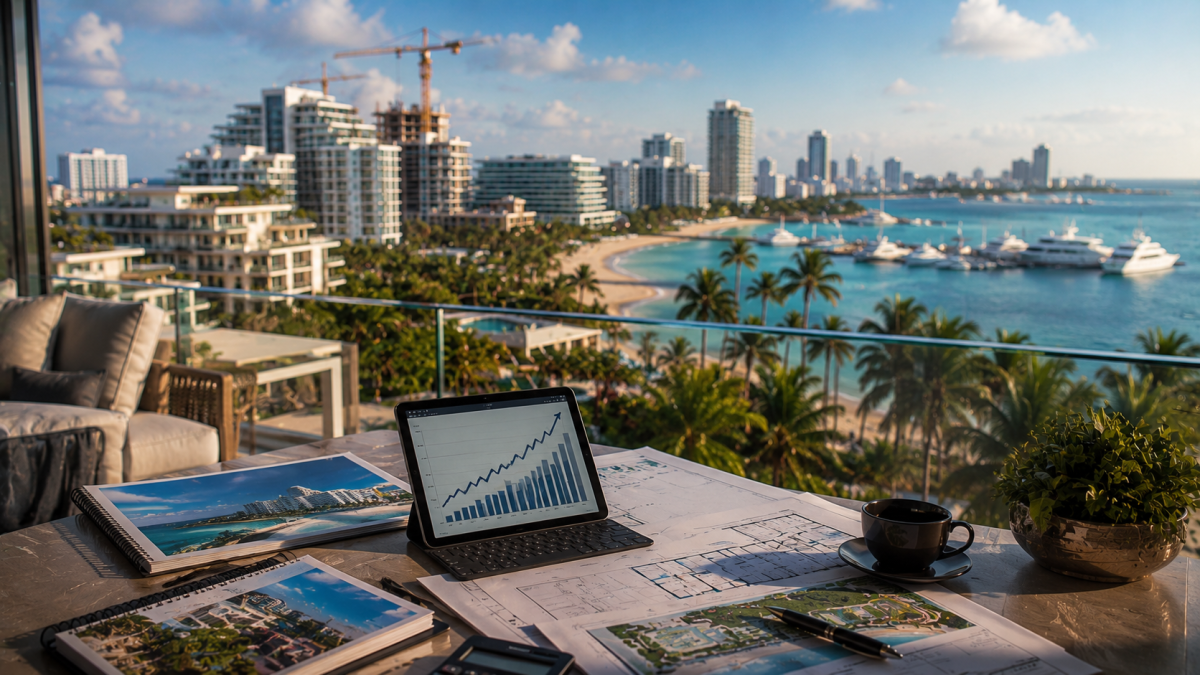
Real Estate 2.0: Why Investors are Swapping Europe for Beachfront Property in the Dominican Republic
For generations, the pinnacle of international real estate investment was heavily concentrated across the Atlantic. Purchasing a rustic villa in Tuscany, a sea-view apartment in the Spanish Costa del Sol, or a chic pied-à-terre in Paris was considered the ultimate fiduciary triumph. However, as we navigate the complex economic realities of 2026, the global capital flow is undergoing a massive paradigm shift. Investors are increasingly frustrated by Europe’s staggering property taxes, severe bureaucratic inertia, mounting energy costs, and heavily regulated short-term rental markets. In search of a more agile, highly profitable alternative, savvy global capital is aggressively pivoting toward the Caribbean. At the absolute epicenter of this "Real Estate 2.0" movement is the Dominican Republic.
Far from being just a picturesque vacation destination, the Dominican Republic has quietly matured into an economic juggernaut. It currently boasts some of the highest Foreign Direct Investment (FDI) rates in the hemisphere, driven largely by a sophisticated, highly incentivized real estate sector. For international investors, the math is becoming impossible to ignore: the Dominican Republic offers a rare convergence of accessible luxury, phenomenal rental yields, and some of the most aggressive tax incentives on the planet.
The Financial Masterstroke: The CONFOTUR Law
To understand the Dominican real estate boom, one must first look at the legal framework designed to attract foreign capital. The absolute cornerstone of this strategy is Law 158-01, widely known as CONFOTUR. In most European nations, acquiring property comes with a punitive barrage of stamp duties, transfer taxes, and escalating annual property taxes. The Dominican government, recognizing the value of sustained foreign investment, took the exact opposite approach.
When an investor purchases a pre-construction or newly built property within a CONFOTUR-approved development, they are granted remarkable financial privileges. First, the standard 3 percent property transfer tax is completely waived. More importantly, the investor is entirely exempt from the 1 percent annual property tax (IPI) for up to 15 years. Over the lifespan of an investment, this translates into tens of thousands of dollars in preserved capital. This indirect subsidy allows developers to build world-class, resort-style amenities—infinity pools, private beach clubs, and high-end fitness centers—while keeping the barrier to entry astonishingly low for the end buyer.
Beating the European Yields
Capital naturally flows toward the path of highest return, and this is where the Dominican Republic decisively outmaneuvers traditional European markets. In established Golden Visa hotspots across southern Europe, gross rental yields have stagnated, typically hovering between an uninspiring 3 to 4 percent. Once inflation and heavy taxation are factored in, the net return often sits dangerously close to zero.
Conversely, the Dominican Republic’s short-term rental market is operating at a blistering pace. Fuelled by record-breaking annual tourist arrivals—frequently exceeding eight million visitors—the demand for high-quality Airbnb and vacation rentals is insatiable. Recent 2026 data indicates that the countrywide gross rental yield sits comfortably above 8.5 percent. In premier, highly sought-after neighborhoods in the capital of Santo Domingo, those yields can breach 9 percent. Even in established resort hubs, properties routinely achieve occupancy rates of 75 percent or higher during the high season. For the modern investor, an oceanfront property is no longer just a lifestyle asset; it is a serious, high-velocity income-generating business.
Accessible Luxury and Price Per Square Meter
The concept of "accessible luxury" is frequently utilized in real estate marketing, but it rarely survives a rigorous financial audit. In the Dominican Republic, however, the price-to-quality ratio is genuinely staggering. As of early 2026, the average price per square meter in premium Caribbean hubs like Punta Cana sits around $2,500. This means a spectacular, modern, two-bedroom condo mere steps from the turquoise waters of the Caribbean can often be acquired for under $300,000.
Attempting to find comparable newly built, beachfront luxury with world-class amenities in the south of France, the Amalfi Coast, or even secondary European markets is virtually impossible at that price point. The Dominican Republic allows investors to enter the luxury tier of the market without over-leveraging their portfolios.
The Hotspots: From Metropolitan Chic to European Flair
The Dominican real estate market is remarkably diverse, catering to several distinct investment strategies.
For those seeking passive, resort-style income, Punta Cana and Cap Cana remain the undisputed heavyweights. These master-planned communities offer turnkey investments characterized by immaculate golf courses, massive private marinas, and high-end security. The property management infrastructure here is highly developed, allowing foreign investors to operate highly profitable rentals from thousands of miles away without ever changing a lightbulb.
Alternatively, the Samaná Peninsula—specifically the vibrant beach town of Las Terrenas—is capturing the attention of the bohemian and expatriate investor class. Las Terrenas is fascinating because it actively mirrors the charm of a Mediterranean coastal village. Originally settled by French and Italian expatriates decades ago, the town boasts an incredibly sophisticated culinary scene, artisanal bakeries, and boutique eco-villas. Property values here have seen aggressive double-digit appreciation, making it a premier destination for those who want European cultural flair coupled with Caribbean weather and high capital growth.
Finally, for the purely analytical investor, the capital city of Santo Domingo represents a pure play on the country’s booming corporate economy. The city is the financial nervous system of the Caribbean, demanding a constant supply of high-end executive rentals. Investing in luxury towers in neighborhoods like Piantini or Naco provides consistent, year-round corporate tenancy that is entirely immune to the seasonal fluctuations of the coastal tourism markets.
The Golden Visa Equivalent
While Portugal, Spain, and Greece have spent recent years severely restricting, diluting, or entirely closing their Golden Visa residency programs under domestic political pressure, the Dominican Republic remains wide open. The nation offers a highly streamlined Investor Visa program. By committing $200,000 to the local economy—with real estate explicitly qualifying—investors can rapidly acquire legal residency. This provides an invaluable secondary base of operations, significant tax residency advantages, and a vital hedge against global geopolitical instability.
Conclusion
The romantic allure of European real estate will undoubtedly always exist, but the pragmatic realities of modern investment require an unsentimental approach to capital allocation. The Dominican Republic has masterfully engineered an economic environment that welcomes, rather than penalizes, foreign capital. By combining the aggressive tax breaks of the CONFOTUR law with world-class construction, spectacular rental yields, and unmatched geographic beauty, the nation has moved far beyond its reputation as an all-inclusive resort destination. For the discerning global investor looking to maximize both lifestyle and financial return in 2026, swapping the Mediterranean for the Caribbean is no longer just an option; it is the definitive strategy of Real Estate 2.0.