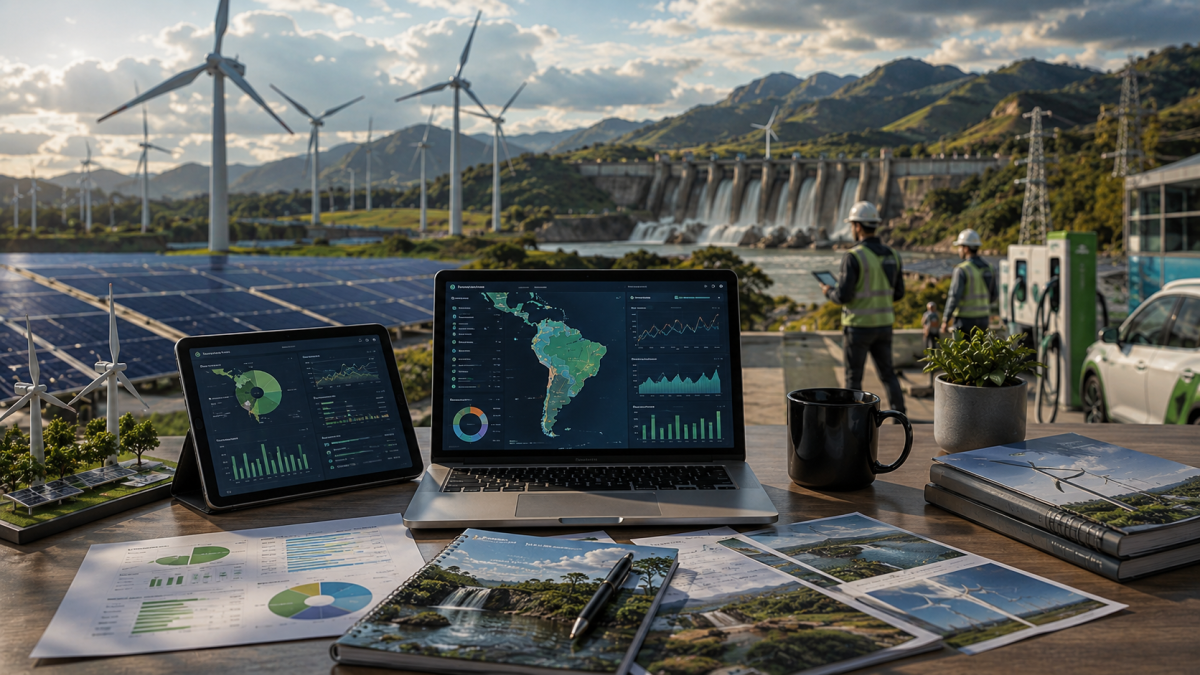
Powering the Future: How 6 Latin American Nations Reached 80% Renewable Energy
While much of the developed world struggles to decarbonize its electrical grids, Latin America is quietly leading the global green revolution. By 2026, data shows the region generating roughly 65% to 70% of its overall electricity from clean sources—more than double the global average. This staggering achievement is driven by a combination of rich natural geography, proactive government policies, and massive foreign direct investment in climate tech.
However, within this regional success story, six standout nations have completely shattered the global average, pushing their national electricity grids past the 80% renewable mark. Here is a statistical deep dive into how these six countries are powering the future.
1. Paraguay: The 100% Hydropower Giant
Paraguay is a global statistical anomaly, generating 100% of its electricity from renewable sources. The secret to this absolute dominance is water. The country is home to the Itaipu Dam, a massive hydroelectric facility shared with Brazil on the Paraná River.
Statistically, Itaipu generates so much electricity that Paraguay cannot consume it all domestically. The country uses less than 20% of its generated share to power its entire national grid, exporting the massive surplus to neighboring Brazil and Argentina. This makes Paraguay not just a consumer of 100% green energy, but one of the world’s largest net exporters of clean power.
2. Costa Rica: The Eco-Pioneer (99% Renewable)
Costa Rica has long been the poster child for environmental sustainability, and its energy data proves the hype is real. The Central American nation consistently operates its grid on over 99% renewable energy.
While hydropower accounts for the lion’s share (roughly 70%), Costa Rica’s true success lies in its diversification. To combat dry seasons that lower river levels, the country has heavily invested in geothermal energy, tapping into its volcanic mountain ranges. Geothermal power provides a stable, "always-on" baseload that accounts for about 14% of the grid, supplemented by growing wind and solar infrastructure.
3. Uruguay: The Wind Energy Miracle (98% Renewable)
Uruguay’s transition is arguably the most impressive because it was achieved remarkably fast. Just fifteen years ago, Uruguay was heavily dependent on imported fossil fuels. Today, the country generates up to 98% of its electricity from renewables.
The statistical driver behind Uruguay's success is wind energy. The government utilized its flat, coastal geography and instituted highly favorable regulatory frameworks to attract private wind farm developers. Today, wind power accounts for nearly 40% of the national electricity matrix—one of the highest percentages in the world—seamlessly complementing its foundational hydroelectric dams.
4. Brazil: Scaling Solar and Hydro for a Megacity Grid (90%+ Renewable)
It is one thing for a small nation to reach 80% renewable energy; it is a monumental feat for an industrial superpower of over 215 million people to do so. Brazil's electricity matrix regularly hovers between 85% and 95% renewable, depending on seasonal rainfall.
While legacy hydropower provides the massive backbone for megacities like São Paulo and Rio de Janeiro, Brazil’s 2026 data shows an explosive surge in solar power. Solar generation recently surpassed fossil fuels for the first time in the country’s history. Distributed generation (rooftop solar panels) and massive utility-scale photovoltaic parks in the sun-drenched Northeast have driven this growth, pushing Brazil to the absolute forefront of the global energy transition.
5. Colombia: The Andean Hydro Backbone (85%+ Renewable)
Colombia consistently generates between 80% and 90% of its electricity from renewable sources. Like many of its neighbors, the data heavily skews toward hydropower, which accounts for roughly 70% of the country's installed capacity.
However, relying solely on hydro leaves the grid vulnerable to the El Niño weather phenomenon, which causes severe droughts. To counter this, Colombia’s recent statistics show a massive pivot toward wind and solar. Mega-projects in the northern La Guajira desert—a region boasting some of the best wind and solar radiation metrics on the continent—are rapidly diversifying the grid and ensuring the country stays firmly above the 80% green threshold.
6. Ecuador: The Equatorial Powerhouse (80%+ Renewable)
Rounding out the list is Ecuador, which has systematically transformed its power sector over the last decade. In 2026, the country reliably sources over 80% of its electricity from renewables.
Ecuador’s strategy involved a massive, state-led infrastructure push to build a network of modern hydroelectric plants, most notably the Coca Codo Sinclair dam. By leveraging the steep drops of the Andes mountains into the Amazon basin, Ecuador shifted from being an importer of expensive, dirty diesel fuel to a self-sufficient green energy producer, even exporting its clean energy surplus to Colombia and Peru during peak seasons.
Conclusion
While the global dialogue around climate change often focuses on the shortcomings of major polluters, the data from Latin America offers a highly optimistic blueprint. By combining geographic blessings with strategic infrastructure investments, Paraguay, Costa Rica, Uruguay, Brazil, Colombia, and Ecuador prove that running modern, growing economies on over 80% renewable energy is not a futuristic dream—it is a statistical reality today.