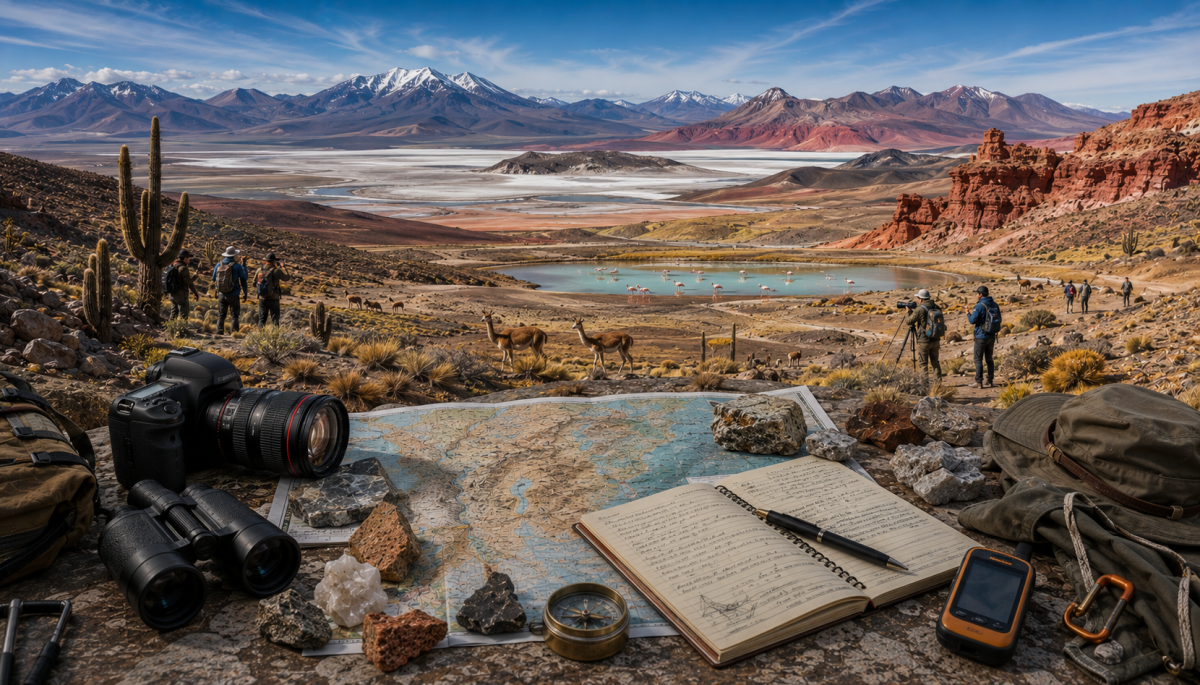
Land of Extremes: Exploring the Deserts of Argentina
When visualizing the landscape of Argentina, the global imagination is typically saturated with images of the fertile, endless green plains of the Pampas, the towering, snow-capped peaks of the Andes, or the dense, subtropical rainforests surrounding the Iguazú Falls. However, this vast South American nation is also defined by an immense "arid diagonal"—a sweeping stretch of deserts and dry steppes that run from the high-altitude northwest all the way down to the freezing southern tip of the continent. The deserts of Argentina are not monotonous seas of sand; they are incredibly diverse, extreme, and biologically fascinating ecosystems. Characterized by dramatic temperature shifts, bizarre geological formations carved by relentless winds, and highly adapted flora and fauna, these arid regions represent some of the most beautiful and untamed frontiers on the planet. For adventurous travelers, geologists, and nature enthusiasts, exploring the deserts of Argentina is an unforgettable journey into the raw power of the natural world.
The Patagonian Desert: The Freezing Expanse of the South
Covering an astonishing 673,000 square kilometers, the Patagonian Desert is the largest desert in Argentina and the eighth-largest desert in the entire world. Unlike the scorching hot deserts of the Sahara or the Middle East, the Patagonian Desert is classified as a cold winter desert. Located primarily in the southern region of the country, stretching from the Andes mountains to the Atlantic Ocean, its climate is defined by fierce, relentless western winds and incredibly low precipitation. The Andes act as a massive physical barrier, completely blocking the moisture-laden winds coming from the Pacific Ocean, creating a harsh "rain shadow" effect over the Patagonian steppes.
The landscape here is dominated by vast, sweeping gravel plains, thorny shrubs, and tuft grasses. It is a harsh, unforgiving environment, yet it supports a remarkable array of highly adapted wildlife. Visitors traveling through the endless stretches of Route 40 will frequently spot herds of guanacos (a wild relative of the llama) sprinting across the plains, ostrich-like rheas (choiques), and the Patagonian mara, a strange, rabbit-like rodent that thrives in the brush. Furthermore, this desert is a holy grail for paleontologists. The arid, rocky terrain of provinces like Neuquén and Chubut has perfectly preserved some of the largest dinosaur fossils ever discovered on Earth, including the colossal Argentinosaurus.
The Puna: High-Altitude Deserts and Salt Flats
Traveling to the absolute opposite end of the country, into the northwestern provinces of Jujuy, Salta, and Catamarca, the landscape shifts into the dramatic, high-altitude desert known as the Puna (part of the larger Puna de Atacama plateau). Situated at elevations ranging from 3,000 to over 4,500 meters above sea level, this is a desert of extreme atmospheric conditions. The air is incredibly thin, the solar radiation is intense, and the temperature fluctuations are violent—dropping from blistering heat during the day to freezing temperatures the moment the sun sets.
The defining visual features of the Puna are its towering, dormant stratovolcanoes and its massive, blindingly white salt flats (salares). The most famous of these is the Salinas Grandes, a massive expanse of crystallized salt that stretches for hundreds of square kilometers. During the dry season, the salt flat cracks into perfect, infinite hexagonal patterns, creating a mesmerizing optical illusion where the horizon seems to disappear. In the rainy season, a thin layer of water covers the salt, turning the entire desert into a massive, perfect mirror that reflects the Andean sky.
The Puna is also characterized by highly specialized ecosystems, such as high-altitude lagoons (like Laguna Colorada) which are colored vivid reds and greens by unique algae. These toxic, highly alkaline lakes serve as the primary feeding and breeding grounds for massive flocks of Andean flamingos, providing a brilliant splash of pink against the desolate, rocky landscape.
The Monte Desert: The Land of Canyons and Cacti
Bridging the geographical gap between the high Puna in the north and the freezing Patagonian steppes in the south is the Monte Desert. This vast eco-region runs parallel to the Andes mountains, covering central-western provinces like Mendoza, San Juan, and La Rioja. The Monte Desert is characterized by sandy plains, rocky plateaus, and deep, dry canyons carved by ancient, long-vanished rivers.
The flora of the Monte Desert is iconic, dominated by sprawling creosote bushes (jarilla) and massive, towering cardón cacti that stand like ancient sentinels across the rocky hillsides. The true jewel of the Monte Desert, however, is its geology. In the province of San Juan, the Ischigualasto Provincial Park—famously known as the "Valley of the Moon"—offers a landscape so utterly alien that it genuinely feels extraterrestrial. The relentless desert winds have sculpted the soft, multi-colored clay and sandstone into bizarre, gravity-defying pillars, spherical boulders, and smooth, ashen valleys. Like Patagonia, Ischigualasto is a UNESCO World Heritage site and a paleontological goldmine, preserving an unbroken fossil record from the Triassic period.
Oases in the Wasteland: The Miracle of Viticulture
One of the most fascinating aspects of Argentina's arid regions is how human ingenuity has tamed the desert to create pockets of immense agricultural wealth. The provinces of Mendoza and San Juan are deeply embedded within the Monte Desert, receiving less than 200 millimeters of rain annually. Naturally, nothing but scrubland should grow here. However, by harnessing the snowmelt from the towering Andes mountains through a complex, ancient system of irrigation canals (acequias)—originally designed by the indigenous Huarpe people and later perfected by European immigrants—these provinces have been transformed into lush, green oases.
Today, these irrigated desert valleys form the undisputed heartland of Argentina's world-renowned wine industry. The intense desert sun, combined with the dramatic drop in temperature at night, creates the perfect stress conditions for growing premium wine grapes, particularly the country's flagship Malbec. Tourists visiting Mendoza are often struck by the stark visual contrast: standing in a perfectly manicured, bright green vineyard while staring out at the barren, dusty desert scrub just a few meters away.
Indigenous Cultures and Survival in the Desert
The deserts of Argentina are not entirely devoid of human history; in fact, they have been inhabited for thousands of years by indigenous communities who mastered the art of survival in extreme conditions. In the northern Puna, the descendants of the Diaguita and Atacameño peoples continue to live in small, adobe-brick villages that blend seamlessly into the earthy colors of the desert. They practice ancient methods of terrace farming and herd llamas and alpacas for their incredibly warm wool, which is essential for surviving the freezing desert nights.
Their culture is deeply tied to the Pachamama (Mother Earth), and visitors to the northwestern deserts can witness traditional rituals where offerings of coca leaves, alcohol, and tobacco are buried in the dry soil to thank the earth for its sparse but vital bounty. The cultural richness of these desert communities adds a profound, human dimension to the otherwise desolate landscape.
Tourism and Ecological Responsibility
Exploring the deserts of Argentina requires preparation, respect, and a deep sense of ecological responsibility. These environments, while appearing harsh and indestructible, are actually incredibly fragile. The tire tracks of a careless off-road vehicle can permanently scar the salt flats or the delicate topsoil of the Puna, and the sparse vegetation takes decades to recover from damage.
Travelers looking to explore these regions are highly encouraged to hire local, knowledgeable guides. Not only does this ensure personal safety in areas without cellular reception and extreme weather, but it also directly supports the local desert economies. Whether driving the legendary Route 40 through the heart of the Patagonian steppes, stargazing under the impeccably clear skies of the Monte Desert, or walking across the blinding white expanse of the Salinas Grandes, the deserts of Argentina offer an unparalleled adventure for those willing to brave the extremes.
Conclusion
Argentina's arid diagonal is a testament to the raw, sculptural power of nature. Far from being empty wastelands, the Patagonian Desert, the Monte, and the high-altitude Puna are thriving ecosystems filled with bizarre geology, ancient fossils, highly adapted wildlife, and rich cultural histories. They challenge the traditional perceptions of South American geography and offer intrepid travelers the opportunity to experience absolute silence, infinite horizons, and landscapes that truly feel out of this world. Understanding and preserving these magnificent deserts is crucial, as they represent some of the most striking and ecologically significant frontiers remaining on the planet.