Iguazu Falls: Great Water, Living Forest and Responsible Travel
Introduction
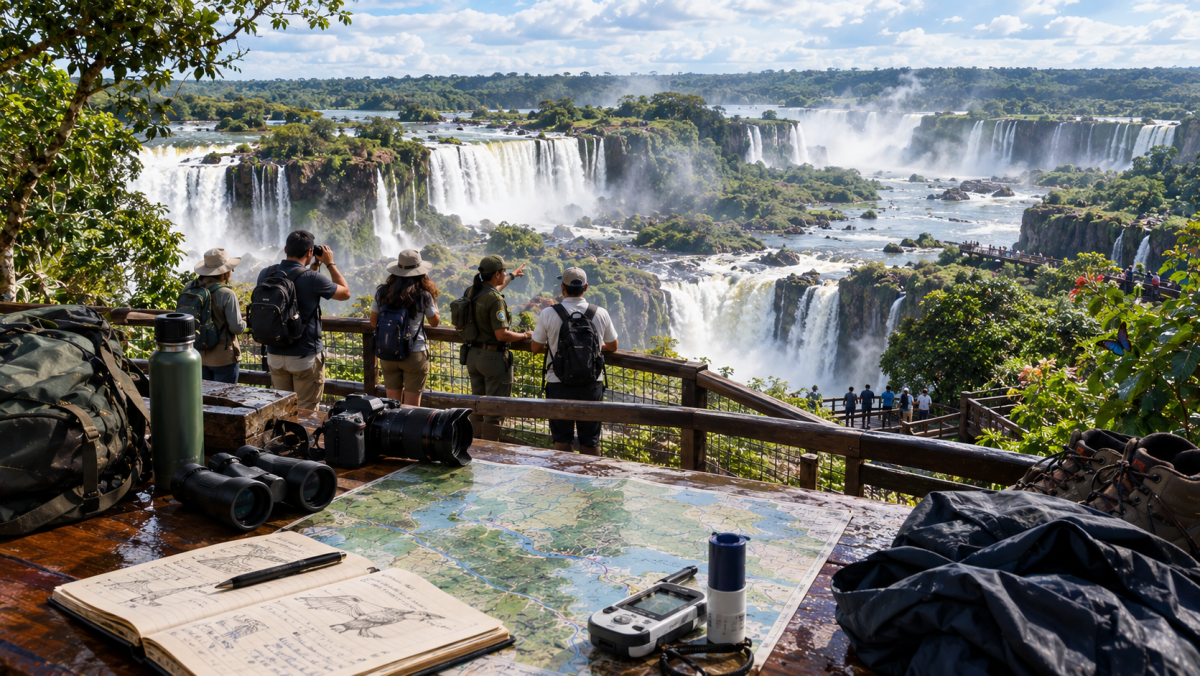
On the frontier between Argentina and Brazil, the Iguazu River reaches a broad basalt plateau and breaks into one of the planet's most memorable waterfall systems. The spectacle is not a single wall of water. It is a wide sequence of channels, islands, rapids and drops surrounded by dense subtropical forest. Mist rises above the gorge, sunlight changes the colour of the spray, and the continuous sound gives the landscape a powerful sense of movement. For readers in the Arab world, Iguazu offers a striking contrast to arid environments while also presenting familiar lessons about the value of water, careful planning and respect for nature.
The falls are protected by two neighbouring national parks: Iguazú National Park in Argentina and Iguaçu National Park in Brazil. UNESCO recognizes both as World Heritage properties. Together they protect the waterfalls and an important remnant of the Interior Atlantic Forest. A thoughtful journey can therefore combine scenery, geography, conservation education and regional culture. The destination rewards visitors who slow down, follow established routes and observe how river, rock, forest and wildlife form one connected system.
How the Waterfalls Were Formed
The physical story begins with layers of volcanic rock created by ancient lava flows. Over long periods, the river cut through fractures and softer zones in this basalt landscape. Erosion gradually moved the edge of the falls upstream and shaped the deep gorge visible today. Different rock layers resist water at different rates, helping create steps, ledges and separate cascades rather than one uniform drop. The result is a dynamic landform that continues to change, even though that change is usually too slow to notice during a visit.
UNESCO describes the waterfall system as almost three kilometres wide, with vertical drops reaching about eighty metres in places. Water volume varies with rainfall across the river basin, so the view is never completely identical. During wetter periods, many channels merge into broad curtains. During lower flow, individual rock faces, islands and separate falls become easier to distinguish. This variability is part of the natural character of Iguazu and a reminder that rivers respond to conditions far beyond the immediate visitor area.
Two National Parks, One Natural Landscape
The Argentine and Brazilian parks offer complementary perspectives. On the Argentine side, a network of walkways brings visitors through forest and across river islands to upper and lower viewpoints. This creates a close experience of individual cascades, moving water and surrounding vegetation. On the Brazilian side, the main visitor route offers broad panoramic views across much of the system. Seeing both perspectives, when time and travel arrangements allow, helps explain the scale and structure of the falls.
The parks are separate visitor destinations with their own entrances, transport systems, tickets and operating information. Travellers should check official guidance for the date of their visit because water levels, trail maintenance, weather and conservation needs can affect access. It is sensible to reserve enough time for each side rather than treating both as a rushed checklist. Border procedures and transport plans should also be confirmed in advance. Good preparation protects valuable time and allows the landscape itself to remain the centre of attention.
The Atlantic Forest Around the Falls
The forest is not merely a background for photographs. Permanent spray creates a humid microclimate on islands and riverbanks, supporting thick vegetation close to the cascades. Farther from the water, differences in soil, elevation and drainage produce varied forest communities. UNESCO notes thousands of plant species across the protected landscape, while official park information records a remarkable diversity of birds and other animals. The richness comes from the meeting of water, warmth, forest layers and connected habitats.
Visitors may notice butterflies, coatis, monkeys, toucans and many smaller forms of life. Wildlife sightings are never guaranteed, and responsible observation is more important than approaching closely. Food should remain secured, animals should not be fed, and marked paths should be respected. A longer camera lens or binoculars can provide a better view without disturbing natural behaviour. Quiet attention also reveals details that hurried groups often miss: leaf textures, bird calls, tracks, changing light and the movement of mist through the trees.
Understanding the Name and Regional Setting
The name Iguazu is commonly linked to an Indigenous expression meaning great water. The name is written differently in Spanish and Portuguese: Iguazú in Argentina and Iguaçu in Brazil. Both forms refer to the same river and waterfall landscape. This bilingual setting adds cultural interest and gives visitors a practical reason to learn a few courteous phrases before arrival. Clear greetings, thanks and simple questions can make transport, ticketing and guiding interactions smoother.
The main urban bases are Puerto Iguazú in Argentina and Foz do Iguaçu in Brazil. Each provides accommodation, transport connections and visitor services. The surrounding region is warm and humid for much of the year, and rain can occur in any season. Lightweight modest clothing, reliable walking shoes and a breathable rain layer are useful. Electronic devices and documents benefit from waterproof protection because spray can reach viewing areas even when the sky is clear.
Planning a Comfortable Visit
An early start usually provides more time to move at a calm pace and pause at viewpoints. Visitors should carry sufficient water, use sun protection and choose footwear with good grip. Walkways can become wet from rain and spray, so running is unsafe. The sound of the falls may also make conversation difficult near major viewpoints; families and groups should agree on meeting points and keep companions in sight. Park transport and accessible routes should be checked in advance for travellers with mobility concerns.
A culturally comfortable itinerary begins with communication. Before booking, Arab travellers can ask hotels and tour providers about privacy, suitable meals, quiet spaces and daily schedules. Options are broader in the nearby cities than inside protected areas, so essential arrangements are best confirmed beforehand. A full day on one side may be more rewarding than attempting too many distant activities. The goal is not to collect the maximum number of stops but to understand the place without exhaustion.
Conservation and Visitor Responsibility
The national parks protect a landscape that is both spectacular and ecologically sensitive. Staying behind barriers protects visitors from fast water and steep edges while preventing damage to vegetation. Natural objects should remain where they are, and waste must be placed in designated containers or carried out. Drones, loud equipment and off-route movement may be restricted. Following staff instructions is part of the experience, not an interruption to it.
Tourism can support conservation when it is well managed, but large visitor numbers also require discipline. Choosing authorized services, respecting capacity controls and learning from trained guides all contribute to responsible travel. The most meaningful souvenir is an accurate understanding of how the site works: rainfall feeds the river, rock shapes the drops, spray sustains specialized habitats, and protected forest supports wider biodiversity. Each element depends on the others.
Educational Value for Arab Readers
Iguazu can serve as an open-air classroom for geography, environmental science, tourism management and photography. Students can examine erosion, river basins, microclimates, forest ecology and visitor infrastructure in one location. Business readers can observe how transport, hospitality, ticketing and conservation standards must work together around a globally recognized landmark. The parks also demonstrate why a successful destination needs maintenance, trained staff, clear communication and long-term protection of its core natural asset.
For water-conscious societies, the landscape offers a vivid lesson in scale and stewardship. Abundance does not remove the need for careful management. River flow changes, paths require maintenance, and forests need connected protected space. Comparing Iguazu with dry-region water systems can deepen understanding without suggesting that one environment is superior to another. Each landscape demands knowledge suited to its climate and resources.
Conclusion
Iguazu Falls is more than a famous viewpoint. It is a living meeting place of river, basalt, subtropical forest and human curiosity. The Argentine and Brazilian parks reveal different angles on the same natural system, while the changing flow ensures that every visit has its own character. For Arab travellers, the destination combines impressive scenery with practical lessons in water, conservation, hospitality and respectful exploration. With advance planning, suitable clothing, patient observation and attention to official guidance, a journey to Iguazu can become one of Latin America's most memorable and educational nature experiences.