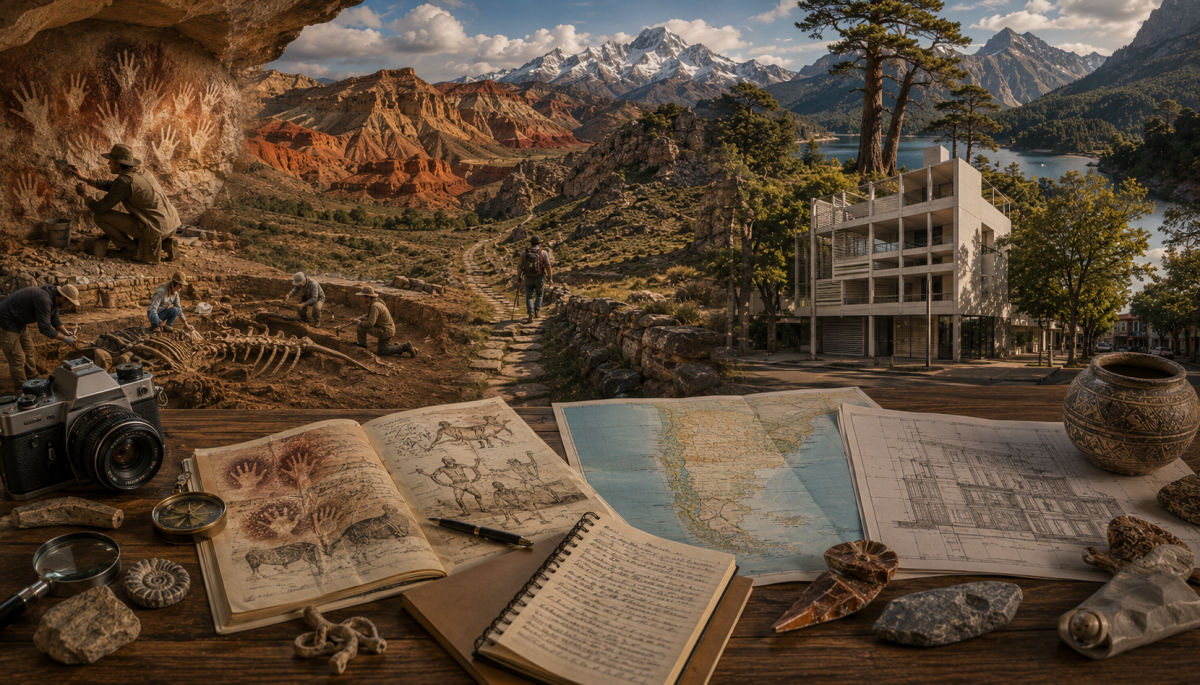
Hidden Heritage: Exploring the Unknown UNESCO Sites in Argentina
When most international travelers think of Argentina’s UNESCO World Heritage Sites, their minds immediately conjure dramatic images of the roaring Iguazú Falls splitting the subtropical border, or the massive, cracking ice walls of the Perito Moreno Glacier in Los Glaciares National Park. While these iconic, globally recognized landmarks absolutely deserve their immense fame and high visitor numbers, they represent only a tiny fraction of the country's rich historical, cultural, and natural legacy. Argentina is actually home to a highly diverse collection of 12 distinct UNESCO World Heritage Sites. Many of these profound locations remain remarkably off the beaten path, hidden away in remote provinces or overshadowed by more famous tourist hubs.
For the intrepid traveler seeking to avoid the heavy crowds and dive much deeper into the continent's history—spanning from the Triassic period millions of years ago all the way up to 20th-century political history—exploring these unknown UNESCO sites in Argentina offers an unforgettable, deeply enriching journey. Here is a comprehensive guide to the hidden heritage of the South American giant.
1. Cueva de las Manos (Cave of the Hands)
Hidden deep within the incredibly arid, wind-swept steppes of the Santa Cruz province in southern Patagonia, lies one of the most significant, mysterious, and mesmerizing archaeological sites in all of the Americas. The Cueva de las Manos (Cave of the Hands) is located within the dramatic, steep walls of the Pinturas River Canyon and features an extraordinary collection of prehistoric cave art that dates back over 9,000 years.
The site gets its famous name from the hundreds of stenciled outlines of human hands that densely adorn the rock walls. These vividly colored handprints—created by ancient hunter-gatherer communities who blew mineral pigments through hollow bone pipes over their own hands—serve as an ancient signature. They are accompanied by intricate depictions of guanacos (a wild relative of the llama), dynamic hunting scenes, and complex geometric patterns. Visiting this remote site requires a long, dusty drive across Patagonia's legendary Route 40, but standing in the absolute silence of the canyon before these ancient, waving hands provides a profound, intimate connection to humanity's deepest past.
2. Ischigualasto and Talampaya Natural Parks
Located in the neighboring northwestern provinces of San Juan and La Rioja, these two contiguous natural parks form a single, massive UNESCO site that serves as an absolute holy grail for paleontologists worldwide. Together, they contain the most complete continental fossil record known anywhere on earth from the Triassic Period, spanning roughly 245 to 208 million years ago. This record reveals the critical evolutionary transition of early dinosaurs and early mammals.
Beyond their immense scientific and evolutionary value, the parks offer landscapes that feel entirely extraterrestrial and visually stunning. Ischigualasto is famously nicknamed the "Valle de la Luna" (Valley of the Moon) due to its barren, multi-colored rock formations, grey ash fields, and bizarre geological pillars sculpted over millennia by wind and water. Talampaya, on the other hand, boasts towering, 150-meter-high sheer red sandstone canyons where ancient condors nest. Exploring these parks feels like stepping back into a time machine onto an ancient Earth, long before massive mammals dominated the landscape.
3. Los Alerces National Park
While the deep blue glaciers of southern Patagonia understandably get most of the international attention, the ancient, temperate rainforests of northern Patagonia are equally spectacular and far less crowded. Nestled high in the Andes mountains of the Chubut province, Los Alerces National Park was specifically inscribed as a UNESCO site to protect some of the last remaining, completely intact tracts of the Patagonian Cypress, known locally as the Alerce tree.
These massive, towering conifers are among the oldest living organisms on the entire planet. Some individual trees deep within the protected zones of the park are scientifically estimated to be over 3,000 years old, reaching staggering heights of 60 meters. The park itself is a pristine, untouched alpine wilderness composed of crystal-clear turquoise lakes, roaring glacial rivers, and snow-capped peaks. It is a true haven for hikers, kayakers, and those seeking absolute tranquility away from the heavy tourist traffic of the deep south.
4. Jesuit Block and Estancias of Córdoba
Moving away from breathtaking natural wonders, Argentina also boasts a remarkably deep, complex colonial history that is excellently preserved. During the 17th and 18th centuries, the Jesuit order established a massive educational, spiritual, and missionary network in the central, mountainous province of Córdoba. The "Jesuit Block" located squarely in the bustling heart of Córdoba city includes the National University of Córdoba (which stands proudly as one of the oldest universities in South America), the Montserrat Secondary School, and a stunning, highly decorated church.
However, the UNESCO designation goes far beyond the city limits. It also officially includes five distinct estancias (massive farming estates) scattered throughout the surrounding rolling countryside: Alta Gracia, Jesús María, Santa Catalina, Caroya, and La Candelaria. These highly productive estates were meticulously built to fund the Jesuits' ambitious educational endeavors in the city. Today, touring these beautifully preserved agricultural and residential complexes offers a fascinating glimpse into the economic and religious engines that heavily shaped early colonial Argentina.
5. Qhapaq Ñan: The Andean Road System
The Qhapaq Ñan is a uniquely massive, transnational UNESCO World Heritage site shared collaboratively by six different South American countries, but its Argentine sections remain some of the least visited and most rugged. This incredible, engineering marvel of a road network was built and expanded by the mighty Inca Empire to connect their vast, sprawling territories for the purposes of trade, communication, and rapid military defense.
In Argentina, raw remnants of this 30,000-kilometer road system can still be physically explored in the high-altitude, arid provinces of Salta, Jujuy, and Tucumán. Hiking portions of the Qhapaq Ñan takes adventurous travelers through breathtaking, oxygen-thin Andean landscapes, across high mountain passes, and directly past ancient, ruined archaeological settlements like Santa Rosa de Tastil. It stands as a striking, enduring testament to the sheer engineering genius and logistical capabilities of pre-Columbian civilizations.
6. The Architectural Work of Le Corbusier (Curutchet House)
In a stark, fascinating pivot to the modern era of the 20th century, Argentina is incredibly proud to host a piece of a serialized global UNESCO site dedicated entirely to the pioneering Swiss-French architect, Le Corbusier. While Le Corbusier's revolutionary architectural work spans across several continents, his only completed project in all of Latin America is the Casa Curutchet, conveniently located in the leafy city of La Plata, just an hour's drive south of Buenos Aires.
Commissioned and designed in 1948 for a successful local surgeon, the house perfectly, practically encapsulates Le Corbusier's famous five points of architecture. Visitors can physically walk through and experience his visionary use of an open floor plan, a meticulously designed roof garden, a free-floating facade, and the seamless, mathematical integration of natural light and space. For architecture enthusiasts, designers, and students, it is a brilliant, hidden masterpiece of the global modernist movement.
7. ESMA Museum and Site of Memory
Added to the prestigious UNESCO list very recently in 2023, this particular site represents a dark, sobering, yet absolutely essential chapter of modern Argentine history. Located in the northern neighborhoods of Buenos Aires, the former Navy School of Mechanics (ESMA) operated as the largest, most notorious clandestine center of illegal detention, torture, and extermination during Argentina’s brutal, right-wing military dictatorship from 1976 to 1983.
Today, the sprawling military complex has been powerfully reclaimed by the state and civil society, transformed into a museum and memorial completely dedicated to the promotion of human rights. While walking its halls is undeniably a heavy, highly emotional experience, visiting the ESMA Museum is crucial for truly understanding the deep resilience of the Argentine people, the pain of the "Mothers of the Plaza de Mayo," and the nation's ongoing, fierce commitment to the concept of "Nunca Más" (Never Again).
Conclusion
Argentina’s UNESCO World Heritage Sites offer a deeply layered, incredibly diverse narrative that stretches far beyond the well-trodden paths of its famous waterfalls and icy glaciers. From the colorful prehistoric handprints scattered in remote Patagonia and the dinosaur-roamed deserts of San Juan, to ancient Inca trade routes, modernist architectural triumphs, and poignant monuments to human rights, these lesser-known sites provide a much richer, more nuanced understanding of the country. For the curious, dedicated traveler, actively seeking out these hidden gems guarantees not only an escape from the typical tourist crowds but a profound, personal encounter with the raw history of the Earth and humanity alike.