Guatemala’s Rebirth: Why Antigua is 2026’s Top Alternative to Crowded European Cities
By the travel seasons of 2026, the global tourism landscape has reached a visible breaking point. Classic European destinations—from the Amalfi Coast and Santorini to Barcelona and Venice—are groaning under the immense weight of unprecedented overtourism. Travelers are increasingly met with exorbitant "tourist taxes," tightly restricted entry zones, staggering price inflations, and, most unfortunately, a growing sense of local hostility born from sheer exhaustion. The dream of a romantic, leisurely stroll through historic cobblestone streets has been replaced by the reality of fighting through shoulder-to-shoulder crowds just to catch a glimpse of a monument. In response, savvy international travelers are actively seeking new horizons that offer the same historical gravitas, architectural beauty, and culinary excellence, but with authenticity and breathing room. Enter the crown jewel of Central America: Antigua, Guatemala.
The Charm of the Old World in the Americas
For travelers mourning the loss of the quiet, romantic European city break, Antigua offers a breathtaking substitute. Founded in the early 16th century and serving as the capital of the Captaincy General of Guatemala for over two hundred years, Antigua is a remarkably preserved showcase of Spanish Baroque architecture. Designated as a UNESCO World Heritage site, the city is a masterclass in colonial urban planning, laid out in a highly walkable, intuitive grid.
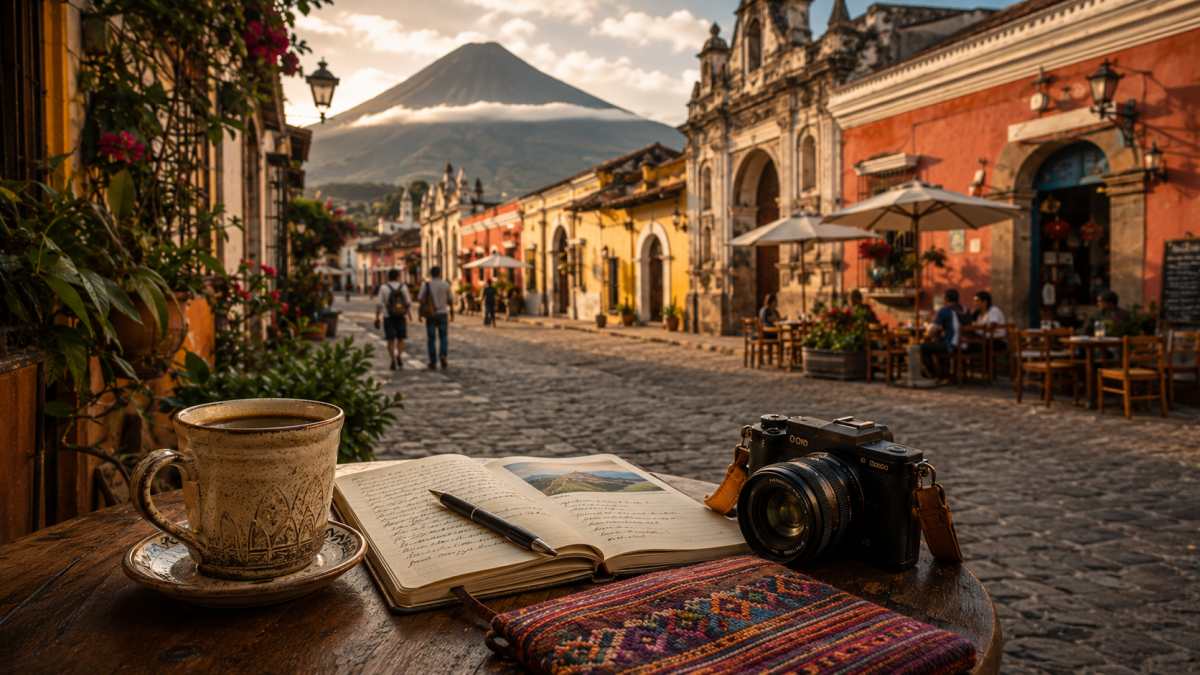
Walking through Antigua feels akin to stepping into a perfectly preserved Andalusian village. The streets are paved with robust cobblestones, and the low-slung buildings are painted in a vibrant, sun-drenched palette of mustard yellows, terracotta reds, and deep cerulean blues. Behind heavy wooden doors accented with forged iron, you will find incredibly lush, hidden courtyard gardens featuring bubbling stone fountains and draped in vibrant bougainvillea. Furthermore, because the city was largely abandoned following a massive earthquake in 1773, it is uniquely dotted with magnificent, partially collapsed cathedrals and convents. These monumental ruins, sitting openly under the Central American sky, give the city an air of romantic melancholy that rivals the ancient ruins of Rome or Athens.
The Volcanic Backdrop: Where Nature Meets Architecture
While European cities offer stunning rivers and rolling hills, Antigua boasts a geographical backdrop that is entirely unmatched in its dramatic intensity. The city sits in a highland valley surrounded by three towering, majestic volcanoes: Volcán de Agua, Volcán de Fuego, and Acatenango. This tectonic reality provides a constant, awe-inspiring visual anchor from almost any street corner.
The iconic image of Antigua is the bright yellow Santa Catalina Arch framing the massive, conical peak of Volcán de Agua in the background. But the true star of the show is Volcán de Fuego, which is highly active. Instead of fighting thousands of tourists to throw a coin into the Trevi Fountain, visitors in Antigua can sit on a beautifully restored rooftop terrace, sipping a world-class local coffee or a craft cocktail, and watch a volcano softly erupt against the twilight sky. For the more adventurous, the overnight hike up the neighboring Acatenango volcano offers a safe, front-row seat to Fuego’s spectacular lava displays—an unforgettable, bucket-list experience that easily eclipses a standard European bus tour.
A World-Class Culinary and Coffee Renaissance
One of the primary drivers of European travel is the pursuit of culinary excellence. Antigua, however, has quietly experienced a massive gastronomic rebirth, positioning itself as one of the most exciting food capitals in Latin America. The city’s culinary scene represents a brilliant fusion of ancient Mayan ingredients, traditional Spanish techniques, and cutting-edge modern gastronomy.
Travelers can dine in incredibly atmospheric restaurants housed inside 17th-century ruins, enjoying farm-to-table menus that utilize the rich volcanic soil of the surrounding valleys. Beyond the high-end dining, the city’s street food culture is highly accessible, safe, and deeply flavorful.
Furthermore, Antigua is synonymous with coffee. The high altitude, consistent climate, and mineral-rich volcanic soil create the perfect microclimate for producing some of the highest-quality Arabica beans on Earth. The café culture here rivals that of Paris or Vienna, but with a profound connection to the source. Visitors can spend their mornings touring lush coffee fincas (estates) located just minutes from the city center, learning the roasting process directly from the farmers, before returning to town to enjoy a perfectly poured flat white in a quiet, sunlit courtyard.
The Ultimate Haven for Slow Travel and Digital Nomads
As the nature of work continues to evolve in 2026, the concept of "slow travel"—staying in one destination for weeks or months rather than rushing through a checklist—has skyrocketed. Antigua is tailor-made for this movement. It has rapidly developed the infrastructure necessary to support digital nomads and extended-stay travelers without losing its fundamental soul.
The city boasts exceptional boutique hotels, reliable high-speed fiber-optic internet, and a proliferation of beautifully designed coworking spaces. Crucially, Guatemala shares a time zone with the central United States, making it infinitely easier for North American professionals to maintain standard working hours compared to navigating a six-to-nine hour time difference from Europe. The pace of life here encourages visitors to slow down, build routines, learn Spanish at one of the city's dozens of highly acclaimed language schools, and actually integrate into the community rather than just passing through.
Economic Value and Authentic Hospitality
Perhaps the most stark contrast between 2026 Europe and Antigua is the economic reality and the reception from locals. In Europe, the euro's strength and inflation have made luxury experiences inaccessible to many, while the sheer volume of visitors has led to understandable "tourist fatigue" among locals.
In Guatemala, the economic value is phenomenal. Travelers can experience a standard of luxury—staying in meticulously restored boutique colonial mansions, enjoying multi-course tasting menus, and hiring private bilingual guides—for a fraction of what a mid-tier experience would cost in Florence or Provence. More importantly, the Guatemalan people are incredibly warm, deeply proud of their heritage, and genuinely welcoming to visitors. Tourism here is still viewed as a vital, appreciated engine of economic growth rather than a societal burden.
Conclusion
The era of automatically defaulting to Europe for a culturally rich, architecturally stunning vacation is over. As overcrowding and inflated prices continue to detract from the European experience, Central America is stepping confidently into the spotlight. With its unparalleled blend of 16th-century colonial charm, dramatic volcanic landscapes, a booming culinary scene, and genuine, warm hospitality, Antigua stands out not just as a backup plan, but as a superior choice. For travelers in 2026 seeking the beauty of the Old World infused with the vibrant, untamed spirit of the Americas, the rebirth of Guatemala offers an unforgettable journey into the future of travel.