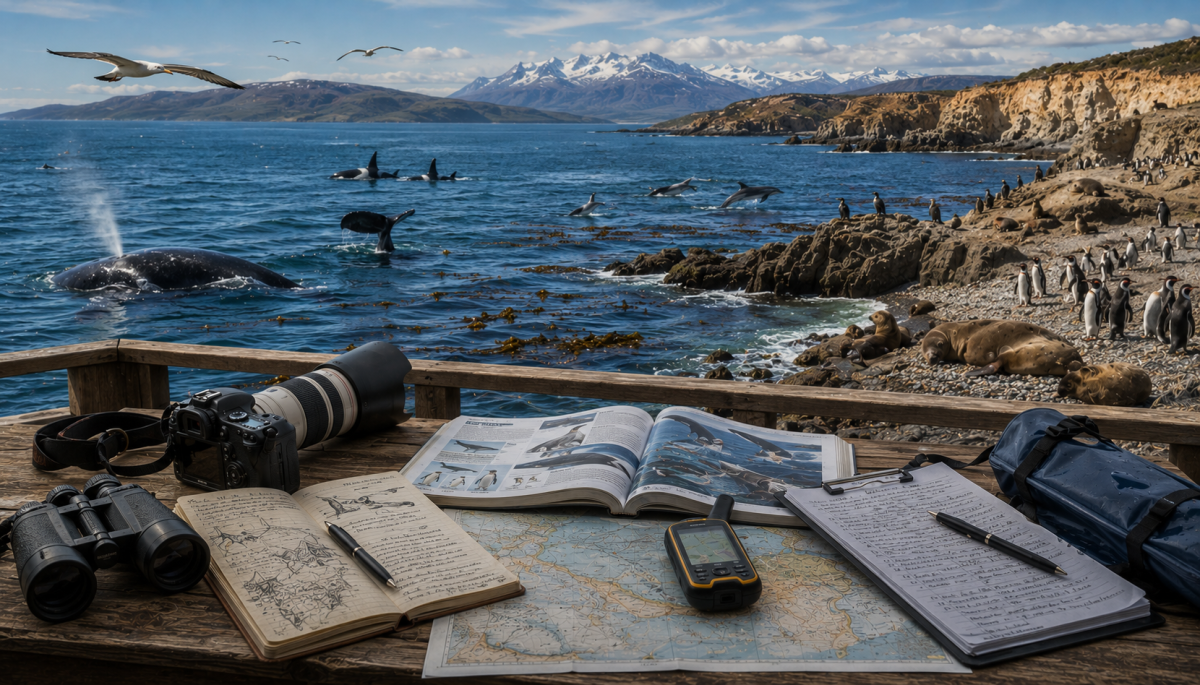
Giants of the Deep: Exploring the Marine Wildlife of Patagonia
When the world thinks of Patagonia, the mind is typically drawn to the towering granite spires of Mount Fitz Roy or the cracking, thunderous ice walls of the Perito Moreno Glacier. However, turning away from the Andes mountains and looking eastward toward the vast, untamed expanse of the Atlantic Ocean reveals a completely different, equally magnificent side of the region. The Patagonian coastline of Argentina spans thousands of kilometers, serving as the dramatic meeting point for the freezing, nutrient-dense currents of the Antarctic and the warmer waters of the South Atlantic. This powerful oceanic collision creates one of the most vibrant, dynamic, and biologically diverse marine ecosystems on the planet. From immense leviathans of the deep to agile seabirds and highly intelligent apex predators, exploring the marine wildlife of Patagonia is a journey into the raw, unfiltered heart of nature.
The Sanctuary of Giants: The Southern Right Whale
The undisputed crown jewel of Patagonian marine wildlife is the Southern Right Whale (Eubalaena australis). Every year, between June and December, hundreds of these massive marine mammals migrate to the sheltered, relatively warm, and shallow gulfs surrounding the Valdés Peninsula (a designated UNESCO World Heritage site). They travel thousands of miles from their icy Antarctic feeding grounds specifically to this sanctuary to mate, give birth, and nurse their calves.
The Southern Right Whale is easily recognizable by its lack of a dorsal fin, its broad back, and the rough, white patches of keratinized skin on its head, known as callosities. Each whale has a unique pattern of callosities, which researchers use to identify individuals. Visitors to the coastal town of Puerto Pirámides can embark on boat tours that offer extraordinarily close encounters. Because these whales are incredibly curious and famously gentle, they frequently approach vessels, swimming gracefully beneath the boats and lifting their massive, 15-meter-long bodies out of the water in spectacular breaches.
The Apex Predators: Orcas and Intentional Stranding
While the Southern Right Whales represent the peaceful giants of the region, the Valdés Peninsula is also globally famous for the thrilling, high-stakes behavior of its apex predators: the Orcas (Killer Whales). Between February and April, particularly around the area of Punta Norte, a highly specialized and localized pod of Orcas engages in a hunting technique seen nowhere else on Earth known as "intentional stranding."
At high tide, these highly intelligent predators utilize the ocean swells to launch their massive bodies completely out of the water and onto the pebble beaches to snatch unsuspecting Sea Lion and Elephant Seal pups. It is an incredibly dangerous maneuver; if the Orca miscalculates the tide or the depth, it risks becoming permanently beached and perishing. This learned behavior is not instinctual but rather a cultural trait, passed down meticulously from older, experienced matriarchs to the younger members of the pod. Witnessing this raw, powerful display of hunting intelligence is a holy grail for wildlife photographers and marine biologists globally.
The March of the Magellanic Penguins
Further south down the Patagonian coast, the arid, wind-swept desert abruptly gives way to one of the most charming and chaotic scenes in the natural world. Punta Tombo is the site of the largest continental rookery of Magellanic Penguins on the planet. Between September and April, over a million of these tuxedo-clad birds arrive on these shores to breed, incubate their eggs, and prepare their chicks for life in the ocean.
The sheer scale of the colony is staggering. The ground is perforated with thousands of small, dug-out burrows. Visitors can walk along elevated wooden boardwalks that wind directly through the colony, allowing for intimate, respectful observation. Magellanic Penguins are highly monogamous, often returning to the exact same nest and the exact same partner year after year. Watching them waddle clumsily across the dusty terrain, only to transform into absolute torpedoes of speed and grace the moment they dive into the freezing Atlantic, is a highlight of any Patagonian wildlife expedition.
The Heavyweights: Southern Elephant Seals and Sea Lions
Sharing the beaches with the penguins and whales are two distinct, highly vocal species of pinnipeds: the Southern Elephant Seal and the South American Sea Lion.
The Southern Elephant Seal is a true behemoth. Adult males (bulls) can weigh up to a staggering 4,000 kilograms (4 tons) and feature a prominent, trunk-like proboscis that gives them their name. During the breeding season in September and October, the beaches become battlegrounds. Dominant alpha males engage in bloody, chest-slamming, and violently loud territorial fights to secure a "harem" of dozens of females.
In contrast, the South American Sea Lion is smaller, more agile, and features a distinct, thick mane of fur around the male's neck, resembling a lion. Sea lion colonies are incredibly noisy and active, constantly barking and diving into the kelp forests to hunt for squid and fish. They are frequently spotted lounging on the docks of southern ports like Ushuaia, much to the delight of tourists.
Dolphins of the Deep: The Commerson's and Peale's
The Patagonian waters are also home to several playful, highly active dolphin species. The most striking of these is the Commerson's Dolphin (known locally as the Tonina Overa). Found frequently in the waters of the Chubut and Santa Cruz provinces, the Commerson's Dolphin is small, blunt-headed, and features a striking, high-contrast black-and-white coloration that often earns it the nickname "panda dolphin." They are highly sociable and frequently ride the bow wakes of passing boats.
Further south, in the frigid, channel-laced waters of Tierra del Fuego and the Beagle Channel, travelers often encounter the Peale's Dolphin. These robust, acrobatic dolphins thrive in the dense, underwater kelp forests, hunting for octopus and small fish. They are an essential part of the intricate, extreme-weather ecosystem at the absolute bottom of the world.
Conservation and the Future of Eco-Tourism
The incredible abundance of marine wildlife in Patagonia is not an accident; it is the result of rigorous, long-standing conservation efforts. Decades ago, species like the Southern Right Whale were hunted to the very brink of extinction. Today, the Argentine government, alongside numerous international NGOs, has established vast Marine Protected Areas (MPAs) that strictly regulate commercial fishing, maritime traffic, and human interaction.
Eco-tourism plays a vital role in this conservation ecosystem. By transforming these animals from commodities to be harvested into treasures to be protected, local communities have a direct economic incentive to safeguard their habitats. Tour operators adhere to strict proximity guidelines to ensure that human presence does not induce stress or alter the natural behavior of the wildlife.
Conclusion
The marine wildlife of Patagonia offers an unparalleled window into the raw, majestic power of the natural world. It is a region defined by extremes—where freezing currents meet barren deserts, where massive whales seek gentle sanctuary, and where apex predators push the very limits of survival on the pebble shores. Whether you are observing the tender bond between a whale and her calf, marveling at the strategic brilliance of a hunting Orca, or simply smiling at the clumsy waddle of a Magellanic Penguin, the coastal ecosystems of Argentina promise a deeply humbling, transformational travel experience that stays with you long after you leave the shores of the South Atlantic.