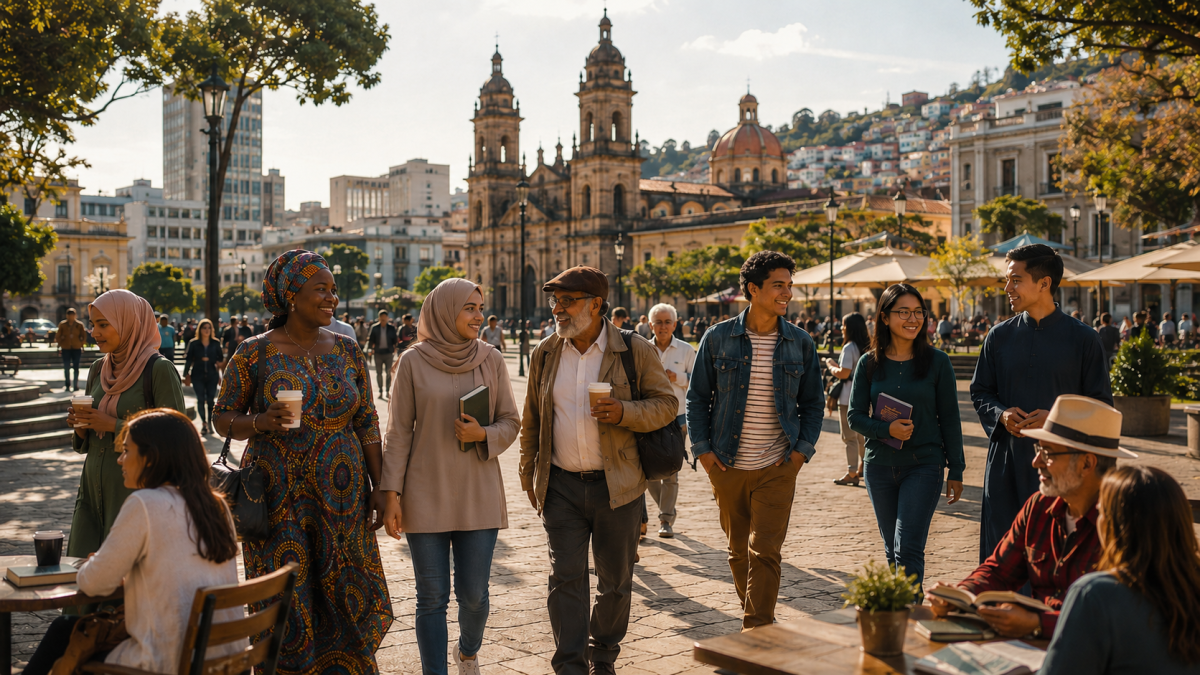
Freedom of Religion in Latin America: A Haven for Diverse Faiths and Backgrounds
For centuries, the global perception of Latin America was inexorably linked to a single, monolithic religious identity: Roman Catholicism. Brought over by European colonizers, the Catholic Church dominated the spiritual, political, and social landscapes of the region from Mexico to Patagonia. However, the Latin America of the 21st century paints a radically different picture. Today, the region is undergoing a profound spiritual transformation characterized by rapid diversification, the rise of secularism, and robust constitutional protections for minority faiths. When analyzing freedom of religion in Latin America, it becomes evident that several nations are actively championing tolerance, making the region increasingly welcoming to people of all religions and cultural backgrounds.
The Historical Shift: From Monopoly to Pluralism
The journey toward religious freedom in Latin America has been complex. Historically, the Catholic Church enjoyed status as the official state religion in almost every newly independent Latin American republic during the 19th century. However, as democratic institutions matured and human rights discourses gained traction, countries began amending their constitutions to guarantee freedom of worship and establish the separation of church and state.
Today, this legal framework protects a booming religious marketplace. While Catholicism remains the largest single denomination, Evangelical Protestantism has grown exponentially. Furthermore, historical waves of immigration from the Middle East, Asia, and Eastern Europe have established deep-rooted communities of Muslims, Jews, Buddhists, and Orthodox Christians. Alongside these global faiths, indigenous spiritualities and Afro-descendant religions have reclaimed their rightful public space. Within this dynamic environment, a few countries stand out as exceptional champions of religious liberty.
Uruguay: The Secular Pioneer
When discussing countries that welcome diverse backgrounds, Uruguay is inevitably the regional gold standard. It is arguably the most secular country in all of the Americas. Uruguay officially separated church and state in its 1917 constitution, long before its neighbors, and actively scrubbed religious references from public life. For instance, in Uruguay, Christmas is officially recognized as "Family Day," and Holy Week is termed "Tourism Week."
This strict secularism, known locally as "laicidad," is not anti-religious; rather, it creates a perfectly neutral public square where no single faith is favored. This environment has fostered a deeply tolerant society where religious minorities, agnostics, and atheists experience virtually no societal friction. For immigrants or expatriates of minority faiths, Uruguay offers a peaceful, pluralistic environment where religious identity is considered a strictly private and universally respected matter.
Argentina: A Model for Inter-Religious Dialogue
Across the Rio de la Plata, Argentina offers a different, yet highly successful, model of religious freedom. While the Argentine Constitution still mandates that the federal government support the Roman Catholic Apostolic faith financially, freedom of religion is fiercely protected, and the country is a remarkable melting pot of global faiths.
Argentina is home to the largest Jewish community in Latin America, heavily concentrated in Buenos Aires, which boasts vibrant synagogues, kosher markets, and Jewish cultural centers. Additionally, the country hosts one of the largest Islamic communities in the region. What makes Argentina particularly welcoming is its strong tradition of interfaith dialogue. Before becoming Pope Francis, Jorge Bergoglio, then the Archbishop of Buenos Aires, was famous for his deep, collaborative relationships with Jewish and Muslim leaders in the city. This top-down culture of mutual respect has permeated Argentine society, making it a highly welcoming environment for people of Middle Eastern, European, and Asian descent to practice their faiths freely.
Brazil: The Ultimate Spiritual Melting Pot
Brazil’s sheer size and demographic diversity make it a fascinating study of religious freedom. The Brazilian Constitution guarantees absolute freedom of conscience and belief, and the country boasts an incredibly vibrant, syncretic religious culture. Brazil is home to the world's largest Catholic population, a rapidly expanding Evangelical community, and profound Afro-Brazilian religions such as Candomblé and Umbanda.
Furthermore, Brazil has a long history of welcoming religious refugees and immigrants. The city of São Paulo is a testament to this, featuring magnificent mosques built by Syrian and Lebanese immigrants, Buddhist temples established by the massive Japanese-Brazilian community, and historic synagogues. While Brazil does face localized challenges—particularly concerning episodes of intolerance directed toward Afro-Brazilian religions by extreme fundamentalist groups—the legal framework and the overarching cultural attitude of the Brazilian public remain deeply accommodating and celebratory of diverse spiritual expressions.
Mexico: Deep Traditions and Strict Separation
Mexico's approach to religious freedom was forged in the fires of conflict, most notably the Cristero War of the 1920s, which resulted from the state's fierce anti-clerical laws. Today, Mexico operates under a strict system of laïcité (secularism). The government maintains a firm distance from religious institutions, and public education is rigorously secular.
This strict legal separation has allowed an incredible diversity of beliefs to flourish. Mexico remains deeply culturally Catholic, but it is a Catholicism heavily infused with indigenous traditions, creating unique syncretic practices seen in celebrations like the Day of the Dead. Furthermore, the constitutional protections ensure that the growing Protestant populations in the south, as well as minority faiths in urban centers, can operate without state interference. For individuals of diverse backgrounds, Mexico's legal secularism guarantees that their civic rights are entirely divorced from their religious affiliations.
Challenges on the Horizon
While the overarching narrative of religious freedom in Latin America is positive, the region is not without its challenges. The primary threat today often comes from the intersection of religion and politics. In several countries, the rise of powerful religious voting blocs has led to attempts to legislate morality based on specific theological doctrines, which can marginalize minority groups and secular citizens.
Furthermore, authoritarian regimes present severe threats to religious liberty. In Nicaragua, for example, the government has actively persecuted Catholic clergy, expelling priests and shutting down church-affiliated charities and universities in retaliation for the Church's support of democratic protests. This serves as a stark reminder that religious freedom is intimately tied to broader democratic health and political rights.
Conclusion
Latin America has successfully discarded the monolithic religious identity of its colonial past to embrace a vibrant, pluralistic future. Countries like Uruguay, Argentina, Brazil, and Mexico demonstrate that it is entirely possible to balance deep historical traditions with modern constitutional protections that welcome people of all faiths. For global citizens, expatriates, and immigrants seeking a region where diverse religious backgrounds are not only tolerated but woven into the national fabric, Latin America stands as one of the most welcoming, dynamic, and spiritually free regions in the modern world.