Beyond the Beach: Why Toluca Is Mexico’s Most Surprising Day-Trip Destination in 2026
When travelers begin planning a trip to Mexico, the usual destinations often dominate the list. Some book flights to the beautiful beaches of Oaxaca or the turquoise waters of the Riviera Maya. Others prefer to spend a full week exploring Mexico City, a capital filled with culture, history, restaurants, art, and the rhythm of everyday urban life. But if you ask experienced expats or local Mexico City residents, known as “chilangos,” about one of the most exciting shifts in regional travel this year, they probably will not point you toward the coast. Instead, they will tell you to head west, over the mountains, to the high-altitude capital of the State of Mexico: Toluca.
Historically, Toluca did not receive much attention from international tourists. Many saw it as a busy industrial city, a place known for cold winter mornings, or simply a stop along the way to the monarch butterfly reserves in Michoacán. But in 2026, Toluca is experiencing a clear tourism revival. The main reason behind this transformation is a major improvement in public infrastructure, which has turned a city long overlooked by mainstream tourism into one of the easiest, richest, and most surprising day-trip destinations from Mexico City.
The Game Changer: Riding El Insurgente
To understand Toluca’s rise in 2026, you first need to look at how people are reaching the city. For decades, traveling from Mexico City to Toluca meant taking a winding, heavily congested mountain highway connecting the two valleys. A journey that should have taken around 45 minutes could easily become a two-hour ordeal, especially on a Friday afternoon. That traffic made the idea of a quick day trip feel more exhausting than enjoyable.
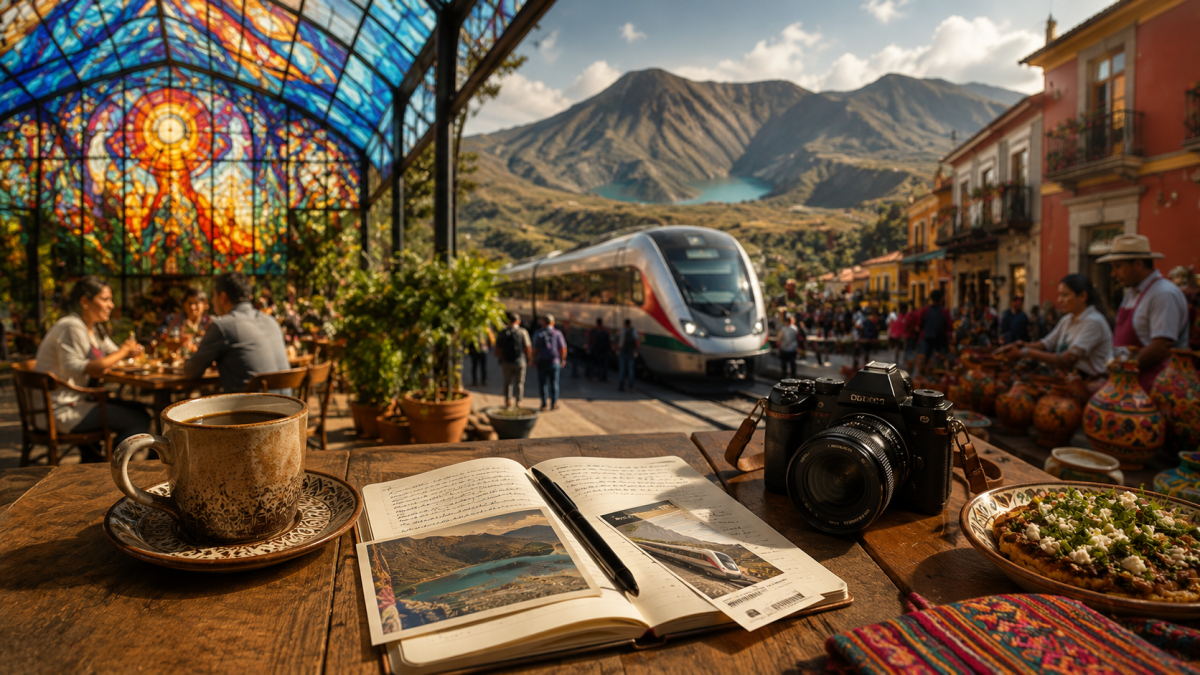
Then came El Insurgente, the interurban train that changed the equation completely. After years of anticipation, delays, and gradual rollout phases, this modern train has begun to fulfill its real potential, connecting the Observatorio station in Mexico City directly with the Toluca Valley and Zinacantepec.
This train is a true turning point. For a fare close to a regular commuter ticket, travelers can now glide smoothly over the mountains, enjoy panoramic views of pine forests, and arrive in Toluca much faster than before. This new level of connectivity means that a visitor staying in trendy neighborhoods such as Roma or Condesa can wake up, grab a coffee, board the train, and find themselves before midday in a completely different Mexican city. In practical terms, El Insurgente has removed the geographical and logistical barrier that kept Toluca outside the usual tourist routes for so many years.
The Stained-Glass Masterpiece: Cosmovitral Botanical Garden
If you only have time to visit one landmark in Toluca’s historic center, it should be the Cosmovitral. Even if you have traveled widely, there is a good chance you have never seen anything quite like it.
Located near the city’s central square, the building originally served as the Mercado 16 de Septiembre, a glass-and-iron market built in the early 20th century. In the 1970s, local artist Leopoldo Flores proposed a radical transformation of the space. He turned the huge market into a botanical garden, but the real magic is not only in the plants. It is in the architectural shell itself. Flores replaced the walls and ceiling with 71 enormous stained-glass panels, using more than 45 tons of blown glass and 25 tons of lead.
The result is a visual masterpiece that surrounds visitors on every side, telling a luminous story of the eternal struggle between light and darkness, good and evil, day and night. The central work, known as El Hombre Sol or “The Sun Man,” was designed to capture sunlight in a special way during the spring equinox. Walking through the Cosmovitral, surrounded by hundreds of tropical and regional plant species under shifting colored light, feels almost surreal and deeply moving. It can easily rival the great stained-glass cathedrals of Europe.
Above the Clouds: The Majestic Nevado de Toluca
Just beyond the city limits lies one of Mexico’s most accessible and breathtaking natural wonders: Nevado de Toluca. This dormant volcano is the fourth-highest peak in Mexico, rising above the valley to more than 15,000 feet, or around 4,680 meters.
What makes Nevado de Toluca especially attractive as a day-trip destination is how accessible it is compared with other massive volcanoes. Unlike peaks that require days of technical climbing, Nevado de Toluca has a winding dirt road that allows vehicles, when weather conditions permit, to reach the crater area itself. Once inside the crater, visitors find themselves in a landscape that feels almost otherworldly: volcanic rocks, a lunar atmosphere, and two stunning high-altitude lakes known as Laguna del Sol and Laguna de la Luna, the Lake of the Sun and the Lake of the Moon.
With eco-tourism continuing to grow in 2026, local guided tours now make the experience even easier. Many tours can pick visitors up from Toluca’s train station and take them toward the volcano. You can spend the afternoon walking along the ridges around the lakes, breathing the crisp mountain air, and enjoying views that stretch across several Mexican states. Just remember to bring a warm jacket. At that altitude, the cold can be sharp even in the middle of summer.
Artisanal Magic: The Neighboring Town of Metepec
Although Metepec is technically its own municipality, it functions in many ways as a seamless extension of Toluca. It is officially recognized as one of Mexico’s Pueblos Mágicos, or Magical Towns, and it is absolutely worth visiting. If Toluca gives you the weight of history, industry, and a larger city, Metepec offers the artistic, bohemian, and handcrafted soul of the region.
Metepec is internationally known for one highly intricate craft: the Árbol de la Vida, or Tree of Life. These colorful clay sculptures were originally used by Spanish friars to teach the biblical story of creation to Indigenous communities. Over time, however, they evolved into complex works of art that can tell stories of family, history, Mexican folklore, and local imagination.
While walking through Metepec’s historic center, you can visit the workshops of master potters whose techniques have been passed down through generations. You can watch them shape the clay, fire it in traditional kilns, and paint it with astonishingly delicate details. Beyond pottery, Metepec’s lively main square offers a relaxing atmosphere, especially around the fountain of Tlanchana, a mythical mermaid-like figure from local Indigenous tradition. It is the perfect stop for anyone who wants to experience the charm of a smaller town after visiting a larger and busier city.
Culinary Adventures: Green Chorizo and Toluca’s Local Flavors
No day trip in Mexico is complete without exploring the local cuisine, and Toluca has a flavor identity of its own. The city’s most famous specialty is undoubtedly green chorizo, one of the foods most closely associated with Toluca’s culinary heritage.
Many people are familiar with the traditional red chorizo found in different parts of the world, but Toluca’s butchers developed a very different recipe. Green chorizo is made by blending meat with local green chilies, cilantro, tomatillos, spinach, and pumpkin seeds. The result is a bright green, herbal, spicy flavor that stands apart from the usual varieties. One of the best ways to try it is in a torta de chorizo verde, a green chorizo sandwich, from one of the many stalls beneath the historic arches known as the Portales de Toluca, one of the most recognizable features of the city center.
But Toluca’s food scene is not limited to chorizo. Its traditional markets offer a warm and local experience filled with fresh bread, cheese, corn-based dishes, sweets, and hot drinks that suit the city’s cool high-altitude climate. Visitors can enjoy Mexican coffee, hot chocolate, or atole, a traditional warm corn-based drink. These options give the trip a family-friendly and culturally rich character suitable for different kinds of travelers.
In this sense, food in Toluca becomes part of the city experience itself. It is not just a quick meal during a short trip. It is a window into daily life, local markets, popular traditions, and the culinary diversity that makes Mexico so much richer than the usual tourist images suggest.
Conclusion
For many years, the magic of the Toluca Valley remained hidden behind a wall of logistical difficulty. Many travelers were not willing to endure heavy traffic for a one-day visit. But as travel patterns change and infrastructure develops in 2026, that wall has largely disappeared.
Thanks to the efficiency and convenience of El Insurgente, Toluca has become an ideal escape for travelers who want to step away from the intensity of Mexico City without taking a flight or planning a long trip across the country. Whether you are looking for the architectural wonder of the Cosmovitral, the rugged beauty of a volcanic crater, the artisanal heritage of Metepec, or the local flavors of the city’s markets, Toluca is ready to offer more than you expect. It is time to look beyond the beach and discover one of Mexico’s most surprising day-trip destinations.