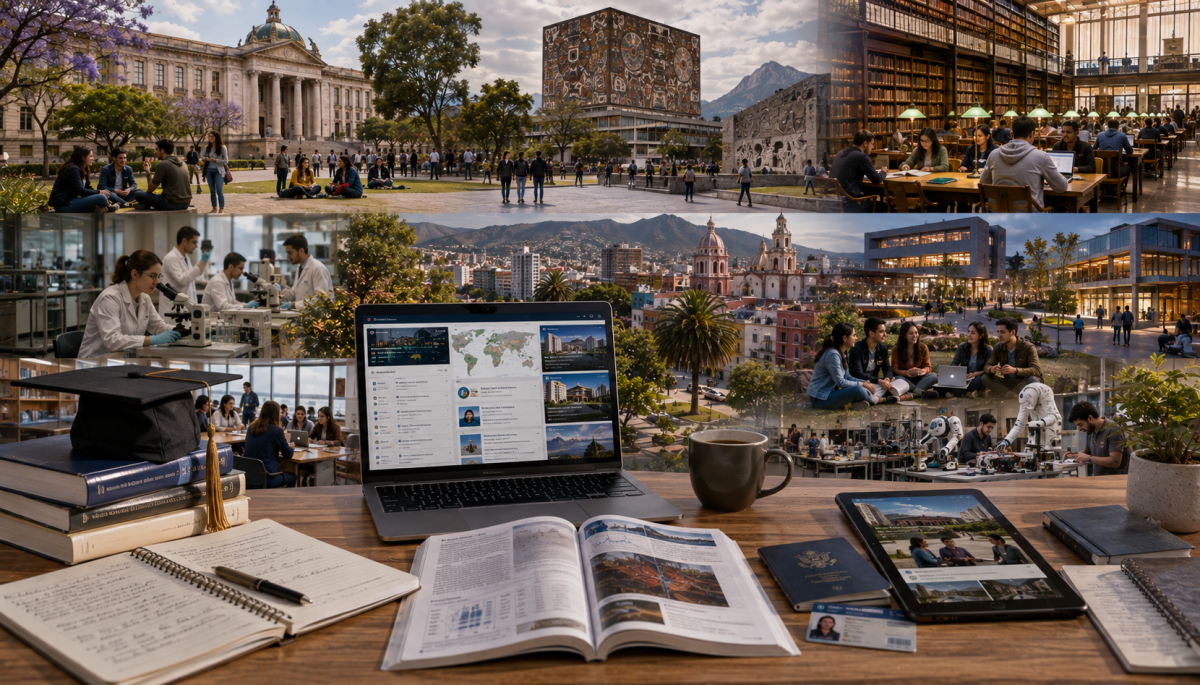
Academic Excellence: Top Universities and Student Cities in Latin America
Higher education tends to get evaluated through an incredibly narrow lens. Prospective students and academic advisors often obsess over global rankings, research output metrics, and campus prestige, while entirely ignoring the single factor that actually shapes a student's daily experience the most: the city itself. A world-class university located in a city that feels closed off, prohibitively expensive, or socially isolating rarely produces the kind of formative, transformative years that students remember fondly. Latin America's leading academic hubs succeed brilliantly on both fronts simultaneously. They combine genuinely strong, globally recognized institutions with vibrant urban landscapes built for the unique rhythms of student life.
Buenos Aires: The Academic Anchor of the South
Buenos Aires anchors the region's academic reputation, largely on the immense strength of the University of Buenos Aires (UBA). Consistently ranked among the absolute top universities across the entire Western Hemisphere, UBA is a historical powerhouse and the proud source of several Nobel laureates, particularly in the sciences and medicine. However, what truly sets the city apart is not just the institution's impressive research output, but the surrounding urban fabric.
Buenos Aires is a city fundamentally built for walking and intellectual engagement. It boasts a legendary café culture that doubles as an informal, city-wide study environment. Students can be found at all hours debating philosophy, economics, and art over a cortado in historic neighborhoods like Recoleta or Palermo. Furthermore, the public transport network is extensive and highly affordable, meaning that most students never need to worry about owning a car throughout their entire degree. The city's late-night culture, paired with its deep appreciation for literature and theater, makes it an intellectually stimulating playground for young academics.
São Paulo: The Economic and Research Giant
São Paulo operates on a different scale entirely. Functioning as Latin America's largest and most economically significant metropolis, it is home to the University of São Paulo (USP), widely regarded by ranking agencies like QS as one of the strongest research institutions in the Southern Hemisphere. For international students, the city's sheer, monumental size brings obvious, tangible advantages.
USP offers deep, structural industry connections across nearly every field imaginable, from agricultural technology and engineering to finance and the creative arts. The city hosts a genuinely international population, offering a cosmopolitan environment where global ideas intersect. More importantly, São Paulo features a dynamic, hungry job market that regularly absorbs top graduates directly into the major regional and global companies headquartered within its borders. Studying here means you are stepping directly into the economic engine of Latin America, providing unparalleled networking opportunities before you even graduate.
Mexico City: History and Scale at UNAM
Further north, Mexico City hosts the National Autonomous University of Mexico (UNAM). This is not just a university; it is an institution of monumental scale. As one of the oldest and largest universities in the Americas, UNAM possesses a student population and a research infrastructure that rivals institutions several times its geographic footprint. Its central campus is so architecturally and historically significant that it has been designated a UNESCO World Heritage site.
Beyond the university itself, Mexico City offers an unusually rich cultural backdrop for daily student life. It boasts one of the highest concentrations of museums of any city on earth, alongside a sprawling historic center that essentially functions as an open-air classroom in art, architecture, and history. For students of the humanities, anthropology, or the arts, the city is an endless source of inspiration. The vibrant street life and culinary scene also ensure that students can live richly and fully on a modest budget, immersing themselves completely in Mexican culture.
Santiago: Stability and Institutional Rigor
Santiago, Chile, brings a very different, yet highly sought-after, reputation to the table: consistency, safety, and institutional stability. Chilean universities, particularly the Pontificia Universidad Católica de Chile (PUC) and the Universidad de Chile, are globally known for their exceptionally rigorous academic standards. PUC frequently battles USP for the number one spot in regional rankings.
Beyond the classroom, Santiago offers a political and economic environment that has remained comparatively stable relative to much of the region. This is a factor that matters considerably for international students planning to commit to several years of study abroad. The city itself is highly modernized, featuring excellent infrastructure, reliable public transit, and a safe urban environment. Framed by the breathtaking Andes mountains, it also offers students a unique lifestyle balance, where one can study in a modern high-rise in the morning and hike world-class alpine trails in the afternoon.
Bogotá: The Rising Star of the Andes
Bogotá rounds out the list with a rapidly growing reputation in specific, high-demand fields, particularly business, economics, and international relations. This reputation is anchored by elite private institutions like the Universidad de los Andes, which boasts a stunning campus nestled right against the city's eastern mountains.
The city's high altitude and cooler, temperate climate—often a surprise to foreigners expecting tropical heat—combined with a rapidly modernizing downtown core, have made it an increasingly popular choice. Bogotá caters to students seeking a serious, focused academic environment without the overwhelming intensity or exorbitant cost of studying in a larger global capital like London or New York. The city's famous ciclovía (where major roads are closed to cars on Sundays for cyclists) and its booming youth culture in neighborhoods like Chapinero offer a vibrant, community-focused student experience.
A Natural Fit for International and Arab Students
For international students specifically, and Arab students in particular, these Latin American student cities offer a unique combination that is increasingly hard to find anywhere else in the world. They provide genuinely respected, internationally recognized academic credentials at a cost of living and tuition that is dramatically lower than equivalent programs in North America or Western Europe.
Perhaps more importantly, the cultural environments of these cities place an incredibly high value on family, community integration, and warm hospitality. These core social values tend to translate smoothly across the language barrier. Arab students frequently report feeling a strong sense of cultural familiarity and welcome, finding that the Latin American emphasis on interpersonal relationships and community support makes the transition to studying abroad—even before full language fluency sets in—a remarkably comfortable and rewarding experience.