Since the arrival of Juan Díaz de Solís in 1516, the current territory of Uruguay became a strategically contested space between the Iberian empires. Lacking significant mineral wealth, it was largely ignored for decades until 1726, when the Spanish founded Montevideo as a military stronghold against Portuguese ambitions. From 1776, Uruguay became part of the Viceroyalty of the Río de la Plata, while a feudal-style agrarian structure based on vast livestock estates began to consolidate. During this period, indigenous labor was gradually replaced by enslaved Africans, due to the progressive extermination of native peoples.
The independence wars of the 19th century were led by criollo landowners and merchants seeking to break free from Spanish commercial monopolies, but without altering the colonial property structures. Although popular sectors—such as gauchos, freed slaves, and indigenous people—participated in these struggles, the new order continued to benefit the elites. José Gervasio Artigas, a key figure in the emancipation process, proposed a radical social program based on land redistribution, but his ideas were marginalized by both local oligarchies and foreign powers. Uruguay finally achieved independence in 1828 and adopted its first constitution in 1830.
During the first half of the 19th century, the country faced internal civil wars among military caudillos, leading to the consolidation of the Blanco and Colorado parties, representing dominant factions. The "Guerra Grande" (Great War) and other conflicts caused instability, while the economy remained tied to an agro-export model centered on hides and later wool.
In the second half of the century, a modernization process began, driven by British capital. The dictatorship of Colonel Lorenzo Latorre in 1875 institutionalized the fencing of rural lands, strengthening large private landholdings and displacing rural workers. At the same time, British imperial penetration deepened through the purchase of railways and massive inflows of foreign capital. In parallel, the Church was separated from the State, and a secular, free, and compulsory primary education system was implemented—aimed at forming citizens suited to the new liberal order.
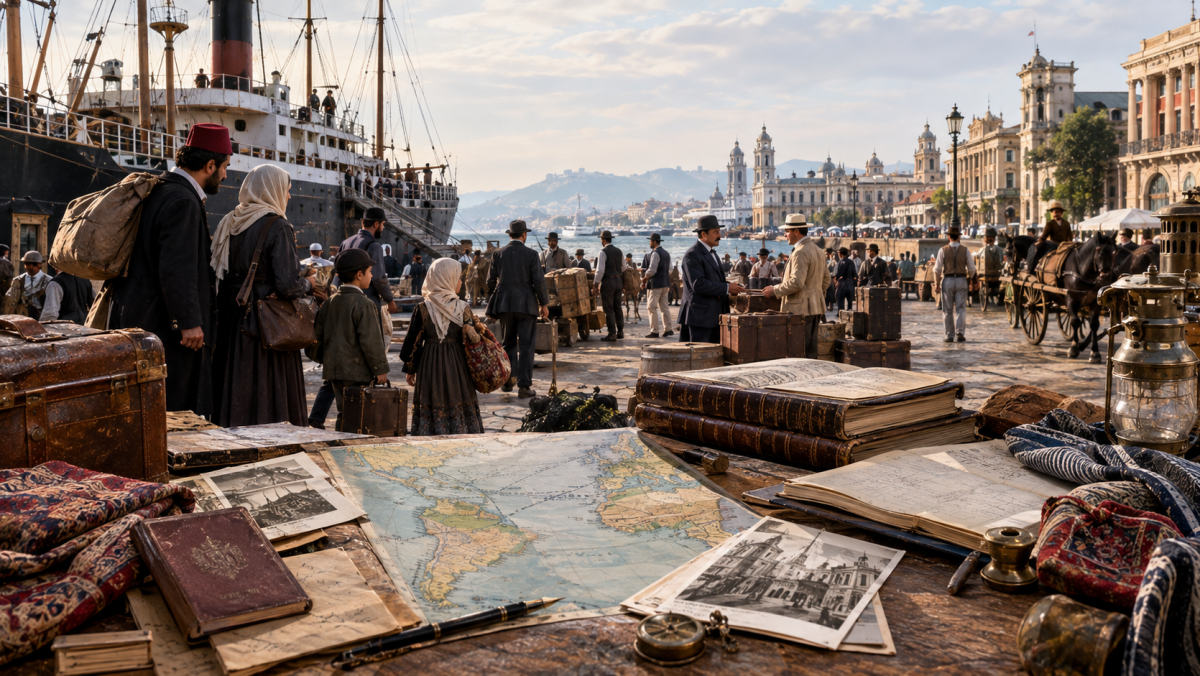
The massive arrival of European immigrants at the end of the 19th century fueled urban growth and the emergence of the labor movement. Unions began to organize, and various rural uprisings occurred—such as those led by Timoteo Aparicio and Aparicio Saravia—demanding political participation and electoral reform in opposition to the dominance of the Colorado Party, which ruled uninterrupted from 1865 to 1958. In 1904, José Batlle y Ordóñez suppressed the last rural rebellion, consolidating the Uruguayan state and strengthening ties with the United States, a new imperial power challenging Britain for control over Latin America.
Under Batlle y Ordóñez’s governments, social reforms and nationalizations of basic services were implemented, aiming to balance the interests of the national bourgeoisie with popular demands. Nevertheless, the economic structure remained dependent on livestock exports and large rural estates. The 1929 crisis severely impacted the country, and in 1933, a coup d'état marked the end of the first Batllismo era, as new markets—particularly in Europe, including Germany—were sought.
After World War II, Uruguay experienced a period of import-substitution industrialization and state strengthening. This process, known as "Neobatllismo," was led by Batlle’s nephew and developed under strong dependence on foreign inputs and imperial capital, without altering the agrarian structure. In 1955, amid a new economic crisis, Uruguay signed its first letter of intent with international financial institutions, marking the beginning of increasing economic subordination.
In this context of economic decline and rising social protest, revolutionary movements such as the Tupamaros emerged, while the state resorted to systematic repression. In 1973, a fascist military dictatorship was established, backed by the oligarchy, the large landowners, and U.S. imperial hegemony. The response was immediate: on that very day, the working class launched a 15-day general strike, staging the most significant popular mobilization in Uruguayan history. Despite their heroism, the lack of unity with peasants and middle sectors prevented a decisive victory. The dictatorship lasted until 1985, leaving a deep mark on the nation's collective memory.
Today, Uruguay stands on a history of social struggle, structural dependency, and popular resistance—a history shaped by the efforts of working classes to transform a nation molded by external domination and internal exclusion.