The First Nations of the South: Who Were the Indigenous Peoples of Argentina?
When envisioning Argentina, the global imagination often conjures images of European-style architecture in Buenos Aires, passionate tango dancers, and sprawling cattle ranches. For decades, a popular national myth suggested that Argentines "descended from the ships," implying a purely European heritage. However, this narrative obscures a profound and complex truth: long before the arrival of Spanish galleons, the vast and geographically diverse territory of Argentina was home to a rich tapestry of indigenous civilizations. To truly understand the cultural DNA of the nation, one must ask: who were the indigenous peoples of Argentina?
The Masters of the Mountains: The Northwest
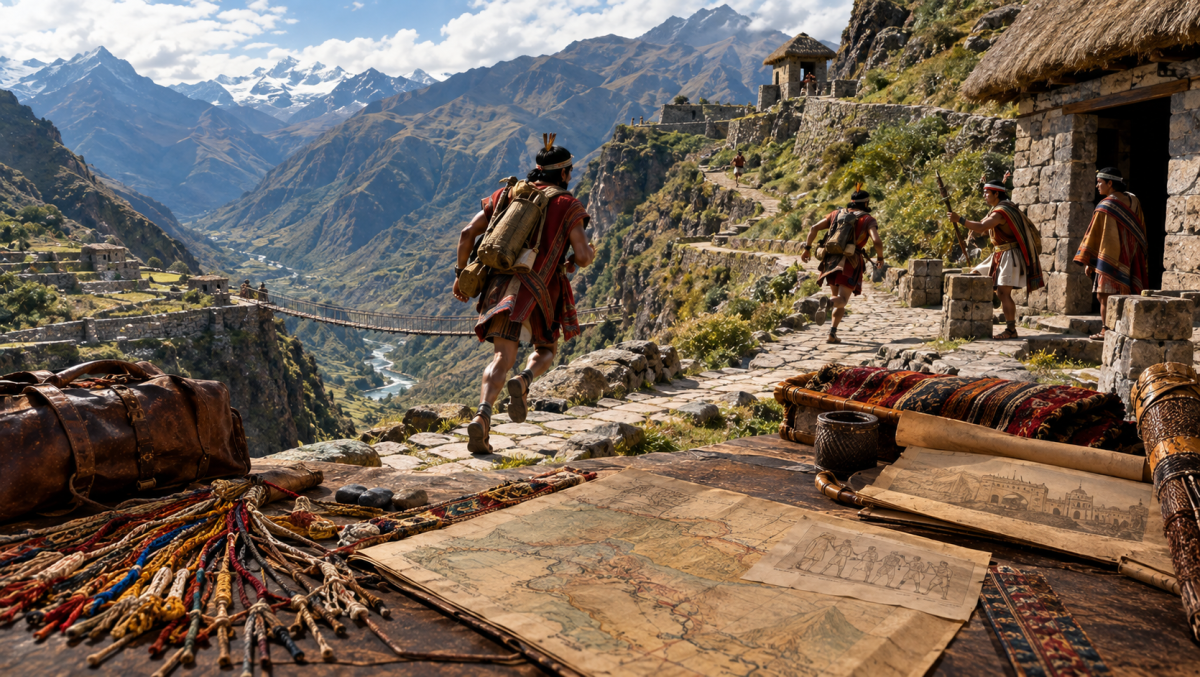
In the rugged, mountainous terrain of northwestern Argentina—encompassing modern-day provinces like Salta, Jujuy, and Tucumán—lived some of the most socially and technologically advanced indigenous groups in the region, most notably the Diaguita. Heavily influenced by the expanding Inca Empire, the Diaguita were sedentary agriculturalists. They masterfully adapted to their arid environment by building sophisticated stone terraces into the mountainsides and developing complex irrigation canals to cultivate corn, quinoa, and potatoes.
They were also highly skilled metallurgists and potters, known for their distinctive urns. When the Spanish arrived, the Diaguita fiercely resisted conquest. The Calchaquí Wars, a series of rebellions led by indigenous leaders, lasted for over a century, cementing the Diaguita's legacy as some of the most resilient defenders of native sovereignty in the Americas.
The Jungle and the River: The Northeast
Moving eastward to the lush, humid ecosystems of the Mesopotamia region and the dense forests of the Gran Chaco, the indigenous landscape shifted dramatically. The Guaraní people populated the river basins of the Paraná and Uruguay rivers. They were semi-sedentary, living in large communal houses and practicing slash-and-burn agriculture. The Guaraní left an indelible mark on modern South American culture: they were the first to cultivate and consume yerba mate, the highly caffeinated herbal infusion that remains the national drink of Argentina today.
Further inland, in the harsh and dry Gran Chaco region, tribes such as the Wichi and the Qom (historically known as the Toba) thrived. These groups were primarily nomadic hunter-gatherers, expertly navigating the dense scrublands. They hunted tapirs and peccaries, fished the rivers, and gathered the sweet pods of the carob tree (algarrobo), which they used to make a fermented beverage for spiritual rituals.
Hunters of the Plains: The Central Pampas
The vast, flat grasslands of central Argentina, known as the Pampas, were the domain of the Querandí. These nomadic hunter-gatherers were uniquely adapted to the endless plains. They did not practice agriculture; instead, they survived by hunting guanacos (a wild relative of the llama) and the rhea (a large, flightless bird).
The Querandí were master hunters, utilizing a unique weapon known as the boleadora—heavy stones wrapped in leather and tied together with animal sinew, which they would throw to entangle the legs of their fleeing prey. When the Spanish explorer Pedro de Mendoza founded the first settlement of Buenos Aires in 1536, it was the fierce resistance of the Querandí—and their refusal to be subjugated or feed the colonizers—that forced the Spanish to abandon the city for several decades.
The Giants of the South: Patagonia and the Mapuche
South of the Pampas lies the sprawling, wind-swept expanse of Patagonia. This was the historical homeland of the Tehuelche (also known as the Aonikenk). They were nomadic hunters of formidable physical stature. When Ferdinand Magellan’s expedition arrived in the 1520s, the Europeans were so struck by their size and the large footprints left by their fur-wrapped boots that they named them "Patagones" (big feet), which gave the region its modern name.
In the 17th and 18th centuries, a profound cultural shift occurred known as the "Araucanization" of Patagonia. The Mapuche people, originally from the western side of the Andes (modern-day Chile), began migrating eastward. The Mapuche brought with them a complex language (Mapudungun), advanced weaving techniques, and, crucially, a mastery of the horse, which had been introduced by the Spanish. The Mapuche and Tehuelche cultures eventually synthesized, creating powerful, highly mobile equestrian societies that successfully defended Patagonia from European settlement well into the late 19th century.
Survival at the End of the World: Tierra del Fuego
At the extreme southern tip of the continent, separated from the mainland by the Strait of Magellan, lies Tierra del Fuego. In this freezing, unforgiving environment lived the Selk'nam (Ona) and the Yámana (Yaghan). The Selk'nam were terrestrial hunters, surviving the biting cold by wrapping themselves in guanaco skins. The Yámana were remarkable maritime nomads who spent most of their lives in bark canoes, diving into the freezing ocean to gather shellfish and hunt seals. To survive the cold, they famously slathered their bodies in animal fat and kept small fires burning continuously inside their wooden canoes.
The Dark Legacy of Conquest
The late 19th century brought catastrophic changes to the indigenous peoples of Argentina. Under the banner of modernization and the need to secure land for massive agricultural exports, the Argentine government launched the "Conquest of the Desert" in the 1870s, led by General Julio Argentino Roca. This brutal military campaign systematically decimated the Mapuche and Tehuelche populations of the Pampas and Patagonia. Those who were not killed were often captured, enslaved, or forced onto barren reservations, their ancestral lands distributed to wealthy European settlers. A similar tragedy befell the Selk'nam in Tierra del Fuego, where European sheep ranchers actively hunted them down, leading to a devastating genocide.
A Resurgence of Identity
Despite centuries of violence, displacement, and forced assimilation, the indigenous peoples of Argentina were not erased. Today, there is a powerful resurgence of indigenous identity. The 1994 amendment to the Argentine Constitution formally recognized the "ethnic and cultural pre-existence of the indigenous peoples of Argentina," guaranteeing their rights to bilingual education and ancestral lands—though the practical implementation of these rights remains an ongoing struggle.
Today, nearly a million Argentines self-identify as belonging to or descending from indigenous groups. From the Wichi in the northern forests to the Mapuche in the southern mountains, the First Nations of Argentina are actively fighting to preserve their languages, protect their environments, and reclaim their rightful place in the historical narrative. The true story of Argentina is not just one of European migration, but of the profound endurance and enduring spirit of its original inhabitants.