Introduction
The ancient history of Venezuela reveals a deep and complex human past that predates European arrival by thousands of years. Long before the Spanish reached South America in the late 15th century, the territory of modern Venezuela was inhabited by diverse indigenous groups who adapted to a wide range of environments, from the Andes Mountains to the Orinoco River basin and Caribbean coasts. These early societies developed agriculture, trade networks, and belief systems that laid the cultural foundations of the region.
Understanding Venezuela’s pre-Columbian past is essential for appreciating its indigenous heritage, regional diversity, and historical continuity within Latin America.
Early Human Settlement in Venezuela
Archaeological evidence suggests that humans first arrived in Venezuela between 15,000 and 20,000 years ago. These early inhabitants were part of broader migration movements from North America into South America during the late Ice Age.
Sites such as Taima-Taima have provided key insights into this early period, revealing stone tools and fossils of extinct animals like mastodons. These findings indicate that the earliest populations were hunter-gatherers who relied on large game, fishing, and wild plants for survival.
As environmental conditions changed and megafauna became extinct, these groups gradually shifted toward more diverse subsistence strategies, including small-game hunting, fishing, and plant cultivation.
Geographic Diversity and Cultural Regions
Venezuela’s geography played a decisive role in shaping its ancient cultures. The country’s varied landscapes led to the emergence of distinct regional societies rather than a single centralized civilization.
In the Andes Mountains, cooler climates and fertile valleys supported sedentary agricultural communities. The Llanos plains, characterized by seasonal flooding, encouraged semi-nomadic lifestyles based on fishing and livestock-like management of natural resources.
Meanwhile, the Orinoco River basin and Amazon rainforest regions were home to dispersed groups who relied on hunting, fishing, and shifting agriculture. Along the Caribbean coast, communities developed maritime skills and engaged in regional trade.
This environmental diversity fostered cultural variation and innovation across the territory.
Major Indigenous Groups
The Arawaks
The Arawaks were one of the most widespread indigenous groups in northern South America and the Caribbean. In Venezuela, they inhabited coastal and riverine areas.
They practiced agriculture, growing cassava, maize, and sweet potatoes, and lived in organized villages. Their expertise in navigation enabled trade and cultural exchange across regions, linking Venezuela to the wider Caribbean world.
The Caribs
The Caribs occupied eastern Venezuela and were known for their mobility and strong warrior traditions. They relied on fishing, hunting, and limited agriculture.
Their seafaring abilities allowed them to travel across the Caribbean, and they frequently competed with Arawak groups for territory. European accounts later exaggerated their reputation, but they were undeniably influential in regional dynamics.
The Timoto-Cuicas
In the Andean region, the Timoto-Cuicas developed one of the most advanced societies in ancient Venezuela.
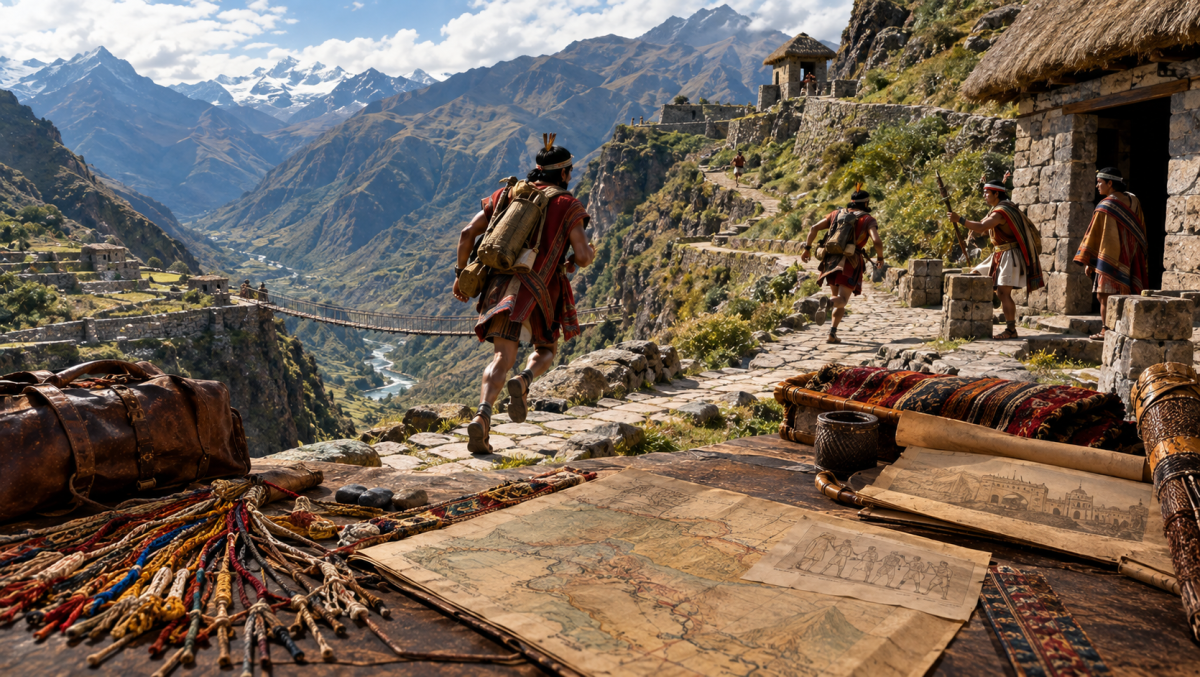
They practiced intensive agriculture using terracing and irrigation systems, built permanent settlements, and cultivated crops such as maize, potatoes, and cacao. Their level of social organization and agricultural sophistication distinguished them from many other groups in the region.
Agriculture and Technological Development
Agriculture was a cornerstone of many indigenous societies in Venezuela. While some groups remained semi-nomadic, others developed stable farming systems adapted to their environments.
Common techniques included slash-and-burn agriculture in forested areas and terracing in mountainous regions. Irrigation systems were also used in more advanced communities.
Cassava became a staple crop due to its adaptability and nutritional value. It was processed into casabe, a durable flatbread that remains part of Venezuelan cuisine today.
Technological advancements included pottery for storage and cooking, weaving for textiles and baskets, and canoe construction for transportation and trade. These innovations supported both daily life and regional interaction.
Trade Networks and Cultural Exchange
Ancient Venezuelan societies were connected through extensive trade networks. Rivers, particularly the Orinoco, served as major transportation routes linking inland and coastal regions.
Communities exchanged goods such as salt, ceramics, agricultural products, and decorative items. Coastal groups also maintained maritime trade with Caribbean islands, facilitating cultural diffusion.
These interactions allowed for the spread of technologies, agricultural practices, and cultural traditions across different regions.
Social Organization and Belief Systems
Social structures in ancient Venezuela were typically organized around small communities or villages led by chiefs or elders. Leadership was often based on kinship, experience, or spiritual authority.
Religious beliefs were closely tied to nature. Many indigenous groups practiced animism, attributing spiritual significance to natural elements such as rivers, mountains, and animals.
Shamans played a central role as healers and spiritual leaders, conducting rituals and ceremonies that reinforced community identity and cultural continuity.
Conclusion
The ancient history of Venezuela reflects a rich mosaic of cultures shaped by geography, adaptation, and interaction. From early hunter-gatherers to organized agricultural societies like the Timoto-Cuicas, indigenous peoples developed complex systems that sustained life for millennia.
Their legacy continues to influence modern Venezuelan identity through language, traditions, and cuisine. Studying this pre-Columbian past not only deepens historical understanding but also highlights the importance of preserving indigenous heritage in Latin America.
References
- UNESCO – Indigenous Cultures of South America
- Encyclopaedia Britannica – Pre-Columbian Civilizations
- Smithsonian Institution – Early Human Migration in the Americas
- Academic studies on Orinoco Basin archaeology
- Venezuelan National Institute of Anthropology publications