Mexico’s Amate Paper: Bark, Texture and the Craft of San Pablito
Introduction
A sheet of amate invites a different kind of attention from an ordinary notebook page. Fibres remain visible, colour can change across the surface, and the edges may reveal the work that joined plant material into a coherent sheet. Before a picture is painted, the paper already has a visual character. Mexico’s amate tradition offers Arab readers a way to explore craft through something familiar: the surface on which an image or an idea takes shape. Its interest lies in the relationship between material, skilled hands and design, rather than in a finished picture alone.
A place behind the paper
San Pablito, in the municipality of Pahuatlán in Puebla, is an important centre of amate production. UNAM’s Institute of Biology identifies the community as Hñähñu, also known as Otomí, and describes a tradition that continues to develop through contemporary creativity. [1] Keeping these place names attached to the object matters. “Mexican handmade paper” is a broad description; “amate from San Pablito” gives the reader a more useful starting point. It encourages questions about the maker and the material instead of treating every textured sheet sold in a shop as interchangeable.
A visitor or an online buyer can begin with a simple conversation. Who made the sheet? Was it produced in San Pablito, or was the finished work painted elsewhere? Is the seller offering the paper itself, a painted composition, or a decorative object assembled from several materials? These are different kinds of work. Recognizing the distinction allows credit to follow the actual contribution of each craftsperson, without assuming that one person necessarily completed every stage.
From separate fibres to a continuous surface
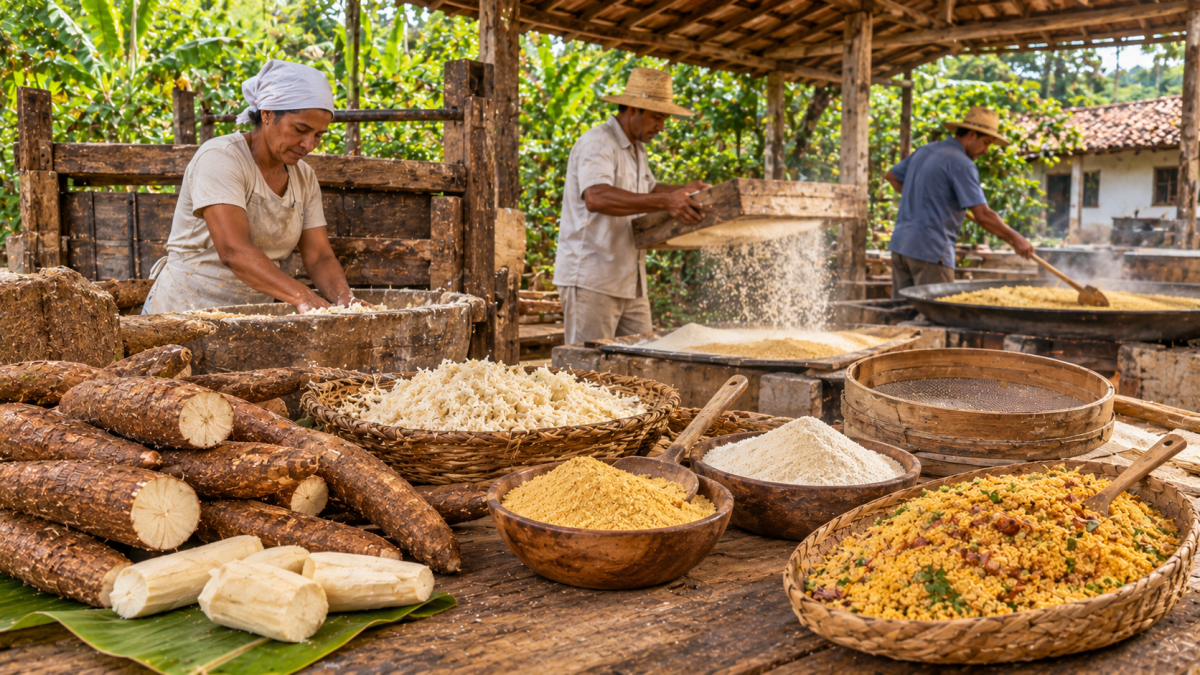
A demonstration documented by INAH in 2025 explains the use of white and red jonote bark and the softening of the material before the sheet is dried. [2] The process is best understood as a sequence of changes in the material. Bark begins as something that protects a plant; the craftsperson prepares it so that its fibres can become part of another structure. The final sheet is therefore neither a slice of wood nor an ordinary woven cloth.
The cultural information system’s craft record describes strips arranged in a grid on a wooden board and worked with a flat stone until a sheet forms. [3] This makes the visible network especially interesting. Look for places where fibres overlap, where a thicker strand crosses a thinner area, and where the surface becomes more compact. The observations do not establish quality by themselves. They help explain how the sheet was constructed, and why no two areas need look exactly alike.
Reading texture without confusing it with damage
For a reader accustomed to smooth printing paper, irregularity may initially look like a flaw. A better approach is to distinguish intentional texture from a condition problem. A visible fibre can belong to the design of the material; an accidental tear needs a different explanation. Ask the maker to show the front, back and edges under ordinary light. This creates a more informative view than a heavily filtered photograph that hides surface detail.
When considering a piece for a frame, think about the relationship between the sheet and the picture. Does the artist leave part of the paper visible? Do darker fibres interrupt the painted line or become part of its rhythm? A natural border may work well with a simple composition, while a densely painted surface creates another effect. Neither approach is automatically more authentic. The useful question is how deliberately the maker has worked with the particular sheet.
Paper and painting are separate skills
Mexico’s cultural information system documents white, coloured and variegated amate used as a support for painting. [4] This variety is a reminder that the paper is a material available to an artist, not a promise of one fixed style. The person preparing the sheet makes decisions about fibre and surface. The person adding a drawing makes decisions about line, colour and spacing. A finished work can bring these decisions together while still allowing each contribution to be described clearly.
For an Arab reader interested in lettering, this distinction suggests a practical design exercise. Imagine a small, spare word placed against an active fibrous background. The surface may contribute enough movement that additional ornament becomes unnecessary. This is a proposed way to think about composition, not a claim that amate has a particular historical connection with Arabic lettering. Any experiment should begin on a sample, with advice from the supplier about suitable media.
Ask concrete questions about resources
Handmade does not automatically mean environmentally harmless. The Institute of Biology highlights the importance of sustainable fibre extraction, waste management and effective sales channels for the future of the craft. [1] Buyers can turn that broad concern into useful questions: what fibres were used, what does the workshop say about sourcing, and can it explain the materials involved in colouring or preparation? A clear answer is more meaningful than a vague green label.
This also changes how a commission is discussed. Specify the intended size, whether natural variation is welcome, how many sheets are needed and whether matching is essential. Leave room for the maker to explain what is realistic. If a design requires identical surfaces, the designer may need to adapt the proposal rather than ask handmade work to imitate a factory product. Respect begins with understanding the material’s possibilities.
Bringing the sheet into everyday appreciation
A family activity can focus on observation without attempting bark processing at home. Compare photographs of different sheets, sketch the paths of their fibres, and discuss why a quiet background changes the appearance of a line. If purchasing a finished work, request packing instructions from its maker and avoid folding a sheet that is intended to remain flat. Keep the maker’s name and the place of production with the object so its story remains available.
Conclusion
Amate becomes more rewarding when viewed as a constructed surface with a specific origin. San Pablito gives that surface a place; preparation and patient working give it continuity; an artist can then give it a further visual purpose. Learning to notice those stages makes a modest sheet a rich introduction to Mexican craft. The result is appreciation based on material understanding, careful questions and credit for skilled work.