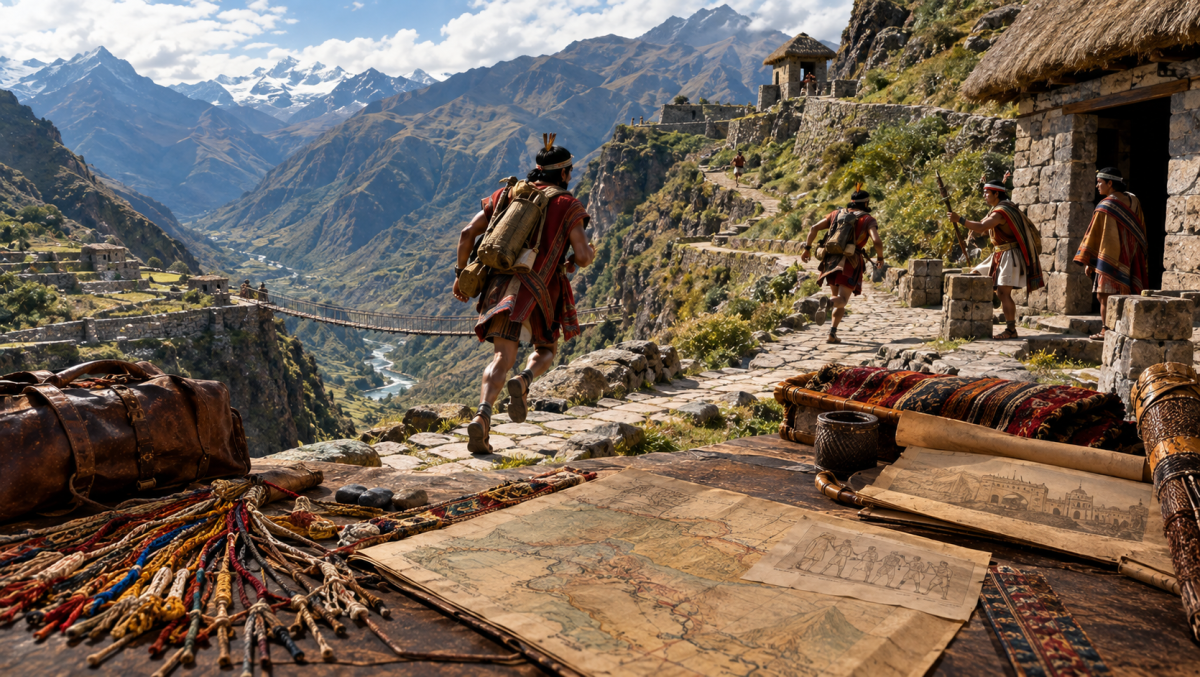
The history of Brazil spans from ancient times, long before the arrival of Europeans in 1500, to the present day. Traditionally, it is divided into five major periods: Pre-Cabral, Pre-Colonial, Colonial, Imperial, and Republican. This summary highlights especially the Pre-Cabral period, a fundamental and often overlooked chapter of the country’s history.
Pre-Cabral Period (before 1500)
The Pre-Cabral period encompasses the long history of the indigenous peoples who inhabited Brazilian territory for millennia before Pedro Álvares Cabral’s arrival in 1500. During this era, thousands of indigenous communities developed complex cultures, diverse languages, organized social structures, and deep relationships with the environment.
It is estimated that, before contact with Europeans, Brazil was inhabited by between 2 and 5 million people, distributed among hundreds of ethnic groups such as the Tupinambás, Guaraní, Pataxós, Xavantes, Caiapós, Xucurus, among others. These societies maintained varied lifestyles: from nomadic hunter-gatherers to sedentary farmers who domesticated plants and animals, built villages, and formed exchange networks.
Culture and Indigenous Knowledge
The indigenous peoples possessed vast knowledge about biodiversity, natural cycles, medicinal properties of plants, and sustainable agricultural techniques. They practiced slash-and-burn agriculture, cultivating manioc, corn, beans, squash, and more. They also developed unique forms of spirituality, art, music, political organization, and conflict resolution.
Linguistic Diversity
Precolonial Brazil was a linguistic mosaic. Hundreds of languages were spoken, belonging to families such as Tupi-Guarani, Macro-Jê, Arawak, and Carib, many of which are now endangered or extinct. These languages not only communicated but also transmitted ancestral knowledge, worldviews, and ways of relating to the environment.
Relations Among Peoples
Contrary to the myth of the “peaceful” or “savage” indigenous person, indigenous communities were diverse in their ways of life. Some lived peacefully, others maintained conflicts or strategic alliances with neighboring groups. There was also intertribal trade, marriage between different clans, and periodic migrations.
Examples of Prominent Indigenous Peoples:
Tupinambás: They inhabited the Atlantic coast, especially the current Bahia region. They were farmers, fishers, and warriors. They had direct contact with the first European explorers.
Guaraní: Present in southern Brazil, Paraguay, Argentina, and Uruguay. They had a rich spiritual tradition and a language that still survives.
Xavantes: From central Brazil, they were nomads with a strong warrior organization.
Caiapós: In Mato Grosso, they lived in large villages and were skilled farmers.
Pataxós hã-hã-hãe: A cultural subgroup of the Pataxós, with a strong identity and artisanal traditions.
This period was abruptly interrupted by contact with Europeans, which brought diseases, violence, slavery, and a colonization process that radically transformed indigenous societies.
Later Periods
Pre-Colonial Period (1500–1530)
Began with Cabral’s arrival. The Portuguese were mainly interested in extracting brazilwood. During this phase, contact with indigenous peoples was sporadic and based on exchange of goods. There was no systematic colonization yet.
Colonial Period (1530–1822)
Portuguese colonization intensified with sugarcane cultivation and later gold exploitation. African slavery expanded massively. The territory was divided into hereditary captaincies and later governed by a centralized system.
Imperial Period (1822–1889)
Begins with Brazil’s independence, proclaimed by Dom Pedro I. The country became a constitutional monarchy. Slavery was officially abolished in 1888, and the republic was proclaimed the following year.
Republican Period (1889–present)
Includes various phases: the Old Republic, the Vargas Era, the Populist Republic, the Military Regime (1964–1985), and the New Republic, which continues today. It has been marked by political, economic, and social transformations, including the return to democracy and challenges such as inequality, corruption, and environmental sustainability.
Conclusion
Brazil’s history did not begin in 1500. For millennia, the territory was inhabited by indigenous peoples with complex and rich cultures. Recognizing this Pre-Cabral past is essential to understanding Brazilian identity and valuing the diversity that still persists. Later periods brought important transformations, but it is in the indigenous roots where the deep foundation of Brazilian history is found.