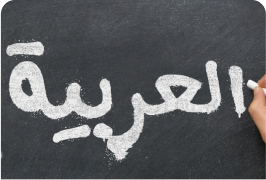
For many non-native speakers, the Arabic language appears as a magnificent but impenetrable fortress. Its sweeping, cursive script looks like intricate art rather than a functional alphabet. Its sounds—deep, resonant, and entirely foreign to the English ear—seem impossible to replicate. Because of these initial perceptions, millions of eager learners abandon their dream of speaking Arabic before they even begin.
But what if learning Arabic is not nearly as impossible as the rumors suggest? What if, beneath the beautiful calligraphy and the unfamiliar phonetics, there lies one of the most logical, mathematically structured languages in the world?
This is the exact philosophy behind our intensive 3-Month Arabic Course for Non-Native Speakers. Designed to strip away the intimidation and replace it with actionable, daily progress, this 90-day program takes you from looking at Arabic as an alien code to confidently ordering coffee, discussing your day, and reading street signs in the Middle East. Here is exactly how we break down the seemingly impossible into a thrilling, achievable journey.
Why Learn Arabic? The Value Beyond the Words
Before diving into the mechanics of the course, it is vital to understand the immense value of unlocking this language. Arabic is not just a language; it is a bridge to one of the richest historical, cultural, and economic regions on the planet. Spoken by over 400 million people across 22 countries, it is a key that opens doors to deep historical literature, booming emerging markets, and unparalleled hospitality.
When a non-native speaker makes the effort to speak Arabic, even at a basic level, the cultural response is overwhelmingly positive. It transforms you from a tourist into an honored guest. This course is built to get you to that point of connection as quickly and efficiently as possible.
Month 1: Demystifying the Script and Finding Your Voice
The biggest hurdle for any non-native speaker is the visual shock of the Arabic script. It is written from right to left, the letters connect like a continuous ribbon, and the short vowels are often hidden.
Conquering the Alphabet
Our first month is dedicated entirely to breaking the ice. We do not overwhelm students with complex grammar rules right out of the gate. Instead, we spend the first two weeks decoding the alphabet. There are only 28 letters, and while their shapes change slightly depending on where they sit in a word (beginning, middle, or end), the patterns are highly predictable. Within fourteen days, the script transitions from looking like abstract art to readable text. You will experience the profound thrill of writing your own name from right to left.
Mastering New Phonetics and Survival Vocabulary
The second half of Month 1 is all about phonetics and your practical survival toolkit. Arabic utilizes sounds that originate deep in the throat—sounds that simply do not exist in English or Romance languages. We use targeted vocal exercises to train your mouth and throat muscles to comfortably pronounce the deep "Qaf," the breathy "Ha," and the famous "Ayn."
Simultaneously, we equip you with high-frequency vocabulary. By day 30, you will know how to introduce yourself, ask for directions, navigate a busy market, and use polite cultural greetings that instantly win the respect of native speakers.
Month 2: The Architecture of Arabic
Once the alphabet is conquered and your pronunciation is grounded, Month 2 reveals the true magic of the Arabic language: the root system.
The Genius of the Root System
Arabic is built like a beautifully engineered building. Almost every word in the language can be traced back to a three-letter root that carries a core meaning. For example, the root K-T-B revolves around the concept of writing. Once you know this, you can unlock dozens of words. Add a few vowels, and it becomes "Kitab" (book). Alter the pattern slightly, and it becomes "Maktab" (office or desk). Shift it again, and you have "Katib" (writer).
This mathematical root system means that your vocabulary will explode in the second month. You are not just memorizing random strings of letters; you are learning the underlying formulas of the language. When you encounter a new word, you will often be able to guess its meaning simply by identifying its three-letter root.
Building Sentences Without the Verb "To Be"
During this month, we also introduce sentence structure. You will be relieved to discover that in the present tense, Arabic does not even use the verb "to be." Saying "I am happy" translates simply to "I happy." We focus on building simple, declarative sentences, asking questions, and understanding possession. By day 60, you are no longer just memorizing phrases; you are building your own sentences from scratch.
Month 3: Bridging the Gap Between Classroom and Street
The final month is where the training wheels come off and true fluency begins to take root. A unique challenge of learning Arabic is the dynamic between formal standard Arabic and the spoken dialects.
Navigating Fusha and Ammiya
Fusha (Modern Standard Arabic) is the language of literature, news broadcasts, and formal documents. Ammiya (the dialect) is what people actually speak in the cafes, streets, and homes. Month 3 bridges this gap. While maintaining a strong foundation in standard Arabic, we introduce the crucial, everyday vocabulary of widely understood dialects. For instance, we integrate highly recognizable variations like cultured Egyptian colloquial, which is historically understood across the entire Arab world due to the immense reach of cinema and media.
Cultural Immersion and Conversational Stamina
We transition completely from textbooks to real-world application. You will listen to Arabic podcasts, dissect clips from Arabic news channels, and analyze popular songs. We focus heavily on conversational stamina. You will practice engaging in 10- to 15-minute uninterrupted conversations, learning how to express your opinions, describe your past experiences, and talk about your future plans.
We also dive deep into cultural nuances. Language and culture are inseparable in the Arab world. You will learn the unspoken rules of hospitality, the polite ways to decline an offer, and the generous phrases used to congratulate or comfort others during major life events.
The Magic of the 90-Day Window
Why three months? Linguistic research shows that 90 days is the optimal window for adult learners to achieve a dramatic breakthrough without suffering from academic burnout. It is long enough to build lasting neural pathways and turn language practice into an unbreakable daily habit, yet short enough to keep the finish line in sight and motivation soaring.
By the end of this 3-month course, the Arabic language will no longer be a fortress. The script will be familiar, the sounds will feel natural, and the logic of the grammar will make sense. You will have transitioned from a curious outsider to a confident participant in one of the most culturally rich regions on earth.
Are you ready to stop wishing you spoke Arabic and finally take the first step? Let the 90-day countdown begin.